MinuteRead
30 min
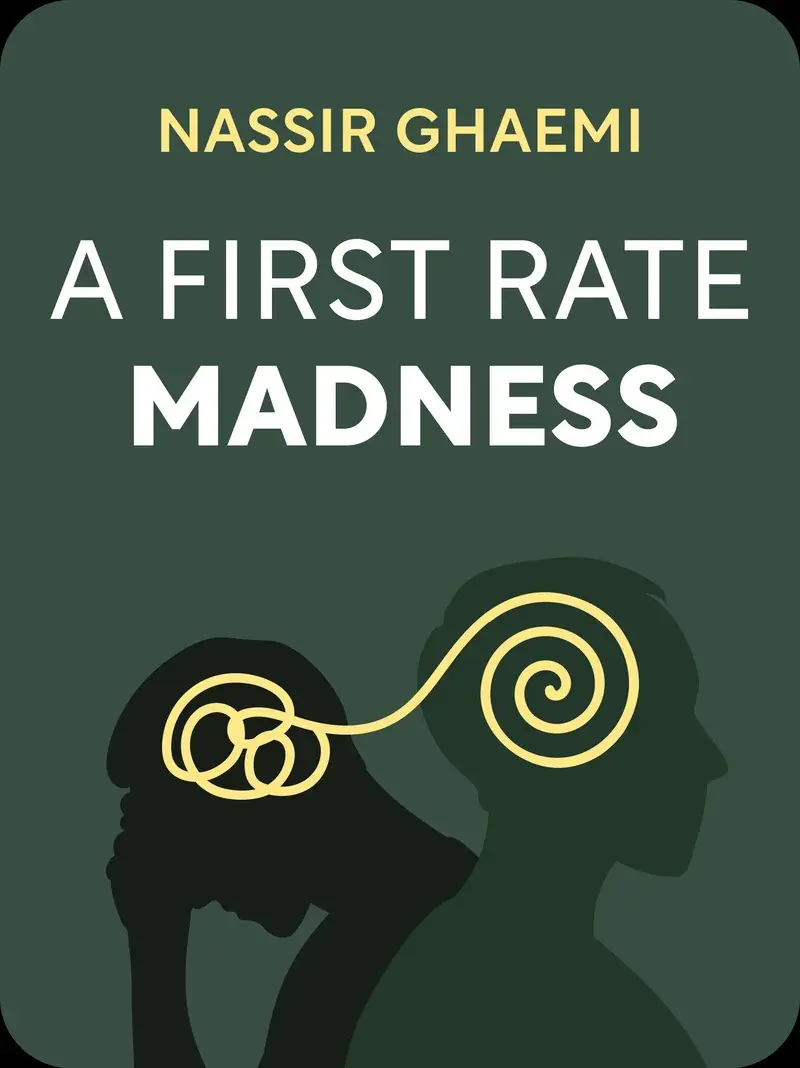
A First-Rate Madness shares the stories of many world leaders and explains how they prevailed despite their mental illnesses and struggles, showing you how to turn your psychological disadvantages into leadership strengths.
A First-Rate Madness shares the stories of many world leaders and explains how they prevailed despite their mental illnesses and struggles, showing you how to turn your psychological disadvantages into leadership strengths.
The serious and devastating nature of depression and anxiety makes us easily ashamed of them. Depression runs in my family, and we’ve always struggled to talk about it. Although we are getting better, the social taboo around mental illness still lingers today. But there’s hope in the abilities mentally unwell individuals have that others don’t.
Let’s take a look at Major Depressive Disorder and Bipolar Disorder as examples. Major Depressive Disorder, or more commonly known as depression, is, for simplicity’s sake, like a deep, unbreakable sadness.
Ghaemi claims that because of what most people with depression feel, or sometimes don’t feel, they are more empathetic. People who are depressed can thus better understand the difficulties of human experience.
Bipolar Disorder, on the other hand, is when people experience depressive episodes but also manic periods as well. They may oscillate between sadness and euphoria frequently, even within hours. Often spontaneous, these people have heightened moods on both ends of the spectrum.
People with Bipolar Disorder spend time in the outlier regions of emotional highs and lows, where most other people never go. Ghaemi believes that because of this, they’re more likely to see things from those outlier perspectives. They may be more creative than the rest of us. Let’s see how this, along with the benefits of depression, have helped society in times past.
Did you know that Martin Luther King Jr. and Gandhi both tried to commit suicide when they were young? The two of them suffered from depression that started in childhood. Later in life, it appears the stresses they had made their mental state worsen. This makes sense knowing the great changes each of these individuals brought about in the world. Consider the heightened sense of compassion depressed people have. The civil rights movements of King and Gandhi both were, at their core, just radical empathy. Both of these great men highlighted the importance of love above all else. They knew of the despair others were feeling because they had felt it themselves. Their level of concern for others is well-summarized by a quote from King: Winston Churchill was another case of a depressed leader making better decisions because of his illness. In 1938 British Prime Minister Neville Chamberlain heroically declared he would meet with Hitler directly. Chamberlain hoped to persuade Hitler that war wasn’t necessary. Churchill, on the other hand, was more realistic because of his depression. His sound mind helped him make better decisions throughout his leadership. Here’s one last example, this time of…
Continue reading in the MinuteRead app
Get the complete 5-minute summary of A First-Rate Madness
Get the complete summary in the appThe benefits of illnesses like bipolar disorder and depression can be good to have as a leader.
Nations have made it through difficult times throughout history because of their mentally ill leaders.
Recognizing that mental illness has its good sides is a step toward breaking the stigma around it.
"A First-Rate Madness" is a strong fit if you want practical ideas around culture, history, leadership, especially themes like the benefits of illnesses like bipolar disorder and depression can be good to have as a leader; nations have made it through difficult times throughout history because of their mentally ill leaders. The MinuteRead summary distills these concepts into a focused read, whether you're deciding whether to buy the book or applying its lessons at work.
Motivated to help readers with first-Rate Madness shares the stories of many world leaders and explains how they prevailed despite their, Nassir Ghaemi wrote “A First-Rate Madness” to package those ideas for a fast, focused read. In “A First-Rate Madness”, Nassir Ghaemi focuses on first-Rate Madness shares the stories of many world leaders and explains how they prevailed despite their. Through “A First-Rate Madness”, Nassir Ghaemi distills the core ideas on history into lessons readers can absor…
View all summaries by Nassir GhaemiContinue Reading
Access the complete 5-minute summary and thousands more nonfiction books in the MinuteRead app.

Continue reading the complete summary in the MinuteRead app.