MinuteRead
30 min
Book summary
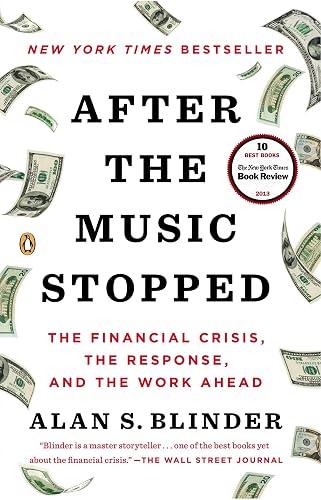
by Alan S. Blinder
Premium summary · Opens in the app · 30 min read
In September 2008, the American financial system nearly collapsed. Lehman Brothers filed for bankruptcy. AIG, one of the world's largest insurance companies, required an emergency government rescue. Money market funds, long considered as safe as bank accounts, experienced runs. Credit markets froze. For a few terrifying weeks, the global economy stood on the edge of an abyss.
**Author:** Alan S. Blinder
**Estimated Reading Time:** 45 minutes
**What You'll Learn:** How the 2007-2009 financial crisis happened, why it was avoidable, what the government did to prevent a second Great Depression, and the reforms designed to prevent future crises.
**Who This Book Is For:** Anyone who wants to understand the most severe economic crisis since the Great Depression without wading through academic jargon. Whether you are an investor, a student, a policymaker, or simply a citizen who lived through those turbulent years, this book will give you a clear picture of what went wrong and what we should do differently.
In September 2008, the American financial system nearly collapsed. Lehman Brothers filed for bankruptcy. AIG, one of the world's largest insurance companies, required an emergency government rescue. Money market funds, long considered as safe as bank accounts, experienced runs. Credit markets froze. For a few terrifying weeks, the global economy stood on the edge of an abyss. Alan Blinder watched these events unfold from a unique vantage point. As a former Vice Chairman of the Federal Reserve, he understood the machinery of central banking. As a Princeton economist, he could analyze the structural weaknesses that led to the crisis. And as a citizen, he shared the frustration and anger that millions of Americans felt as they watched Wall Street receive bailouts while Main Street suffered. The question that drives this book is simple: How did we get here? The answer, Blinder argues, is equally direct. The crisis was not an act of nature. It was not an unavoidable consequence of market cycles. It was the result of specific decisions, specific failures, and specific vulnerabilities that built up over years. The Financial Crisis Inquiry Commission, established by Congress to investigate the causes, concluded that the crisis "did not have to happen." Blinder agrees. The story begins with two bubbles. The housing bubble is well known. Between 1997 and 2006, real house prices soared by 85 percent. Americans came to believe that housing prices would rise forever. Lenders relaxed their standards. Borrowers took on mortgages they could not afford. When prices reversed, the damage was catastrophic. But there was a second bubble, less visible but equally dangerous. The bond bubble formed as investors, hungry for yield in a low-interest-rate environment, poured money into mortgage-backed securities and other complex financial instruments. They believed these assets were safe. They were wrong. These bubbles were inflated by excessive leverage. Banks, investment banks, and even ordinary homebuyers borrowed heavily to amplify their returns. When asset prices fell, the leverage that had magnified gains now magnified losses. Institutions that had operated with leverage ratios of 30 to 1 or 40 to 1 found themselves insolvent almost…
Continue reading in the MinuteRead app
Get the complete 30-minute summary of After the Music Stopped
Get the complete summary in the appThe financial crisis was avoidable. It was caused by specific, identifiable failures, not by an act of nature.
Two bubbles, housing and bonds, inflated the crisis. Both burst with devastating consequences.
Excessive leverage amplified the damage. Institutions with leverage ratios of 30 to 1 or 40 to 1 were wiped out by small
Lax regulation allowed risky behavior to flourish. The shadow banking system operated almost entirely without oversight.
Subprime lending was predatory. Many loans were designed to default.
Complex securities obscured risk. Investors did not understand what they were buying.
"After the Music Stopped" is a strong fit if you want practical ideas around economics, history, finance, especially themes like the financial crisis was avoidable. it was caused by specific, identifiable failures, not by an act of nature; two bubbles, housing and bonds, inflated the crisis. both burst with devastating consequences. The MinuteRead summary distills these concepts into a focused read, whether you're deciding whether to buy the book or applying its lessons at work.
Motivated to turn hard-won expertise into something readers can use every day, Alan S. Blinder wrote “After the Music Stopped” to distill the ideas behind the work into clear, actionable lessons. Through “After the Music Stopped”, Alan S. Blinder distills the core ideas on economics into lessons readers can absorb in a single short sitting. Readers turn to this work when they want Alan S. Blinder's perspective on the subject without working through the entire original volume. The book is structu…
Continue Reading
Access the complete 30-minute summary and thousands more nonfiction books in the MinuteRead app.

Continue reading the complete summary in the MinuteRead app.