MinuteRead
30 min
Book summary
Premium summary · Opens in the app · 30 min read
Most economic disasters begin with a plausible idea. A politician announces that housing costs too much, so the government will cap rents. A legislator declares that wages are too low, so the state will mandate higher pay. A regulator insists that certain prices are unfair, so the law will freeze them. Each proposal sounds reasonable. Each promises immediate relief. Each wins applause.
### Thinking Beyond Stage One
**Author:** Thomas Sowell **Estimated Reading Time:** 45 minutes
**What You'll Learn:**
Why politically popular policies often produce disastrous economic results. How markets coordinate human activity without central direction. What actually causes prosperity and poverty across nations. Why discrimination carries costs for everyone involved. How to think about economic decisions beyond their immediate, visible effects.
**Who This Book Is For:**
Anyone who wants to understand why good intentions do not guarantee good outcomes. Readers who suspect that political rhetoric often obscures economic reality. Those who want a framework for evaluating policies, institutions, and decisions with clarity rather than emotion. Anyone willing to examine the hidden costs and unintended consequences that shape our world.
Most economic disasters begin with a plausible idea. A politician announces that housing costs too much, so the government will cap rents. A legislator declares that wages are too low, so the state will mandate higher pay. A regulator insists that certain prices are unfair, so the law will freeze them. Each proposal sounds reasonable. Each promises immediate relief. Each wins applause. Then the shortages begin. Landlords stop maintaining buildings. Employers hire fewer workers. Shelves empty. Waiting lists grow. The people who were supposed to be helped find themselves worse off, often dramatically so. And the politicians who promised relief move on to the next plausible idea. Thomas Sowell has spent decades examining this pattern. His central observation is uncomfortable but essential: economic decisions have consequences that extend far beyond their immediate effects. A policy that looks beneficial in the first stage often produces harm in the second, third, and fourth stages. The politician thinks only about stage one. The economist must think about all of them. This book is about learning to see beyond stage one. It is about understanding how economies actually work, not how we wish they worked. It is about recognizing that scarce resources have alternative uses, that incentives shape behavior, and that the market process reveals information that no central planner can possess. Sowell writes from a perspective that many find unfashionable. He trusts markets more than governments. He values empirical evidence over moral posturing. He judges policies by their results, not their intentions. This approach has made him controversial. It has also made him indispensable. The problem this book addresses is not ignorance of economics. It is the prevalence of economic fallacies that feel like common sense. When rents rise, it seems obvious that rent control will help tenants. When wages are low, it seems obvious that minimum wage laws will help workers. When healthcare costs grow, it seems obvious that more government involvement will make things better. Each of these "obvious" conclusions is wrong, and the…
Continue reading in the MinuteRead app
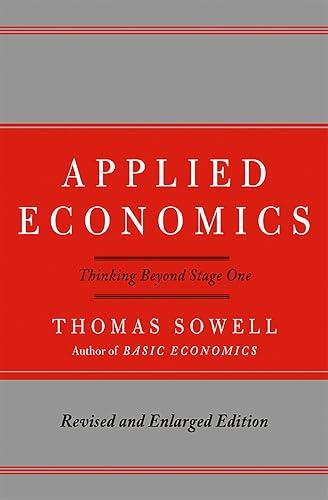
Get the complete 30-minute summary of Applied Economics
Get the complete summary in the appEconomic decisions must be evaluated by their actual consequences, not their intended effects.
Prices are information. When governments override prices, they create shortages and misallocation.
Third-party payments cause overconsumption by reducing the cost faced by the consumer.
Property rights are the foundation of economic development. The poor suffer most when property rights are weak.
Geographic factors shape economic development, but policy choices determine outcomes.
Discrimination imposes costs on discriminators, and competitive markets tend to reduce it.
"Applied Economics" is a strong fit if you want practical ideas around economics, politics, business, especially themes like economic decisions must be evaluated by their actual consequences, not their intended effects; prices are information. when governments override prices, they create shortages and misallocation. The MinuteRead summary distills these concepts into a focused read, whether you're deciding whether to buy the book or applying its lessons at work.
Motivated to help readers with 1) Economic principles often conflict with political incentives 2) Free markets allocate labor more, Thomas Sowellm wrote “Applied Economics” to package those ideas for a fast, focused read. In “Applied Economics”, Thomas Sowellm focuses on 1) Economic principles often conflict with political incentives 2) Free markets allocate labor more. Through “Applied Economics”, Thomas Sowellm distills the core ideas on economics into lessons readers can absorb in a single sh…
View all summaries by Thomas SowellmContinue Reading
Access the complete 30-minute summary and thousands more nonfiction books in the MinuteRead app.

Continue reading the complete summary in the MinuteRead app.