MinuteRead
30 min
Book summary
Premium summary · Opens in the app · 30 min read
There is a question that haunts every civilized society. It surfaces whenever a serial killer is apprehended and neighbors express shock that such a monster lived quietly among them. It emerges when a trusted professional betrays a vulnerable client. It appears when a workplace erupts in violence, when a cult ends in mass death, when a terrorist attack leaves a community reeling. The question is simple: How could this happen?
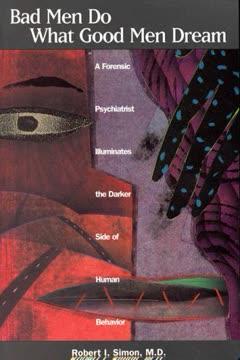
**Author:** Robert I. Simon
**Estimated Reading Time:** 42 minutes
**What You'll Learn:**
* Why the capacity for darkness exists within every human mind, not just criminals * How childhood trauma shapes the neurological and emotional foundations of violence * What drives serial killers, cult leaders, and workplace shooters * Why professionals sometimes betray the trust placed in them * How understanding the dark side of human nature can strengthen your own character
**Who This Book Is For:**
This book is for anyone who has ever wondered how ordinary people become capable of extraordinary evil. It is for readers who want to understand the psychological mechanisms behind violence, manipulation, and self-destruction. It is for professionals in mental health, law enforcement, education, and leadership who need to recognize warning signs before tragedy strikes. Most importantly, it is for anyone willing to look honestly at the darker corners of their own mind in order to build a more resilient, ethical life.
There is a question that haunts every civilized society. It surfaces whenever a serial killer is apprehended and neighbors express shock that such a monster lived quietly among them. It emerges when a trusted professional betrays a vulnerable client. It appears when a workplace erupts in violence, when a cult ends in mass death, when a terrorist attack leaves a community reeling. The question is simple: How could this happen? The answer most people reach for is equally simple. The perpetrator was evil. The perpetrator was insane. The perpetrator was fundamentally different from the rest of us. This answer is comforting because it creates distance. It draws a bright line between the ordinary person and the monster. It reassures us that we could never become what they became. Robert I. Simon, a forensic psychiatrist with decades of experience evaluating violent offenders, offers a far more disturbing answer. The line between good and evil does not run between people. It runs through every human heart. The capacity for darkness is not a rare aberration found only in the broken and the wicked. It is a universal feature of the human mind, present in every person who has ever lived. This is not a comfortable message. Most people prefer to believe that violence, cruelty, and exploitation are the products of some fundamental otherness. They want to believe that serial killers are born monsters, that terrorists are simply insane, that professionals who abuse their power were always predators. Simon's clinical experience tells a different story. The people who commit terrible acts are often more like us than we want to admit. They share our psychological architecture. They experience the same impulses, the same resentments, the same desires. What differs is not the presence of dark…
Continue reading in the MinuteRead app
Get the complete 30-minute summary of Bad Men Do what Good Men Dream
Get the complete summary in the appThe capacity for darkness exists in every human being, not just in criminals and monsters.
The difference between good and bad people is not the presence of dark impulses but the ability to resist acting on them
Childhood abuse and neglect are major risk factors for future violent behavior, but most abuse victims do not become abu
Serial killers are driven by fantasy systems that fuse violence with sexual gratification, and these fantasies develop y
Cults exploit universal human needs for belonging, purpose, and certainty, targeting vulnerable individuals during perso
Workplace violence is rarely unpredictable. Most perpetrators exhibit clear warning signs that are overlooked or dismiss
"Bad Men Do what Good Men Dream" is a strong fit if you want practical ideas around psychology, mental health, psychiatry, especially themes like the capacity for darkness exists in every human being, not just in criminals and monsters; the difference between good and bad people is not the presence of dark impulses but the ability to resist acting on them. The MinuteRead summary distills these concepts into a focused read, whether you're deciding whether to buy the book or applying its lessons at work.
Robert I. Simon is a forensic psychiatrist and author known for his work in criminal psychology. He has extensive experience in the field, having worked with various criminal cases and mental health issues. Simon's approach in Bad Men Do what Good Men Dream combines his clinical expertise with accessible writing for a general audience. He explores the psychological continuum between normal behavior and criminal acts, emphasizing that all individuals possess both good and bad impulses. Simon's wo…
View all summaries by Robert I. SimonContinue Reading
Access the complete 30-minute summary and thousands more nonfiction books in the MinuteRead app.

Continue reading the complete summary in the MinuteRead app.