MinuteRead
30 min
Book summary
Premium summary · Opens in the app · 30 min read
Oprah Winfrey spent decades interviewing people. She sat across from presidents and prisoners, celebrities and survivors, heroes and those who had done terrible things. Over time, she noticed a pattern. Every single person she spoke with, regardless of their story, seemed to be carrying something from their past into their present. The successful executive who could not trust. The talented artist who sabotaged every relationship. The devoted mother who could not stop yelling at her children.
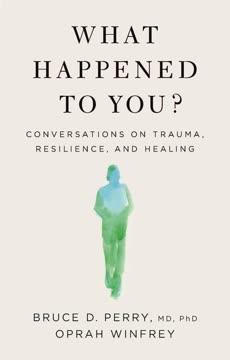
**Conversations on Trauma, Resilience, and Healing**
**Authors:** Bruce D. Perry, M.D., Ph.D. and Oprah Winfrey **Estimated Reading Time:** 45 minutes
**What You'll Learn** The groundbreaking science of how early experiences shape the brain, why understanding a person's past transforms how we see their present, and the essential role of human connection in healing from trauma.
**Who This Book Is For** Anyone who has ever wondered why they react the way they do. Anyone who works with children, leads teams, or cares for others. Anyone who has experienced pain they cannot explain. And anyone ready to replace judgment with curiosity.
Oprah Winfrey spent decades interviewing people. She sat across from presidents and prisoners, celebrities and survivors, heroes and those who had done terrible things. Over time, she noticed a pattern. Every single person she spoke with, regardless of their story, seemed to be carrying something from their past into their present. The successful executive who could not trust. The talented artist who sabotaged every relationship. The devoted mother who could not stop yelling at her children. She began asking a different question. Not "What's wrong with you?" but "What happened to you?" This question changed everything. Bruce Perry is a psychiatrist and neuroscientist who has spent his career studying the effects of trauma on the developing brain. He has worked with children who survived genocide, neglect, abuse, and violence. He has seen how the brain adapts to chaos, how it learns to survive environments that should be unthinkable. And he has seen something else too: that healing is possible, that connection is medicine, and that understanding the brain's response to trauma opens the door to genuine recovery. This book emerged from conversations between Oprah and Dr. Perry. It weaves together neuroscience and storytelling, clinical insight and hard-won personal wisdom. Oprah brings her own history of childhood abuse and neglect, her decades of listening to human stories, and her relentless belief in human potential. Dr. Perry brings the science: how the brain develops, why early experiences matter so much, and what actually works when it comes to healing. The central argument is simple but profound. The question we ask about people struggling with difficult behaviors, painful emotions, or destructive patterns shapes everything. "What's wrong with you?" implies a defect, a moral failing, a character flaw. "What happened to you?" opens the door to understanding. It acknowledges that our brains are shaped by experience, that adaptation is not pathology, and that what looks like dysfunction is often a brilliant survival strategy that has outlived its usefulness. This shift in perspective is not just about being kind. It is about being accurate. The brain is an organ of adaptation. From the moment we are…
Continue reading in the MinuteRead app
Get the complete 30-minute summary of What Happened To You?
Get the complete summary in the appAsk "What happened to you?" instead of "What's wrong with you?"
The brain develops from the bottom up, and early experiences shape the foundation.
A sensitized stress response is an adaptation, not a defect.
Regulation must come before reasoning. You cannot think your way out of dysregulation.
Connection is the most powerful regulator of the human brain.
Dissociation is a survival strategy that can become a barrier to living fully.
"What Happened To You?" is a strong fit if you want practical ideas around psychology, self help, mental health—especially themes like ask "what happened to you?" instead of "what's wrong with you?"; the brain develops from the bottom up, and early experiences shape the foundation. The MinuteRead summary distills these concepts into a focused read, whether you're deciding whether to buy the book or applying its lessons at work.
Bruce D. Perry is a renowned American psychiatrist specializing in childhood trauma. As the senior fellow of the Child Trauma Academy in Houston and an adjunct professor at the Feinberg School of Medicine in Chicago, he has dedicated his career to understanding the impact of trauma on brain development and behavior. Perry's work combines neuroscience with clinical experience, focusing on how adverse childhood experiences shape mental health. He has authored several books and collaborated with no…
View all summaries by Bruce D. PerryContinue Reading
Access the complete 30-minute summary and thousands more nonfiction books in the MinuteRead app.

Continue reading the complete summary in the MinuteRead app.