MinuteRead
30 min
Book summary
Premium summary · Opens in the app · 30 min read
In 1974, Bangladesh was dying. A brutal war of independence had ended only three years earlier, leaving the new nation shattered. Then came the famine. Muhammad Yunus was a young economics professor at Chittagong University, teaching elegant theories in beautiful classrooms while people starved in the villages just beyond the campus gates.
**Author:** Muhammad Yunus **Estimated Reading Time:** 45 minutes
**What You'll Learn:** How a simple idea born in a famine-ravaged village in Bangladesh grew into a global movement that has lifted millions out of poverty. You will discover why conventional banking fails the poor, how trust can replace collateral, why women hold the key to sustainable development, and how social business can reshape capitalism itself.
**Who This Book Is For:** Anyone who has ever wondered whether poverty is an unsolvable problem. Anyone who suspects that the economic system is missing something fundamental. Anyone who wants to understand how small actions, rooted in direct human connection, can create structural change. This book is for skeptics of conventional wisdom and believers in human potential.
In 1974, Bangladesh was dying. A brutal war of independence had ended only three years earlier, leaving the new nation shattered. Then came the famine. Muhammad Yunus was a young economics professor at Chittagong University, teaching elegant theories in beautiful classrooms while people starved in the villages just beyond the campus gates. The disconnect became unbearable. Here was a man with a doctorate in economics from Vanderbilt University, teaching his students about optimal investment strategies and utility curves, while skeletal figures collapsed on railway platforms. The theories felt hollow. The models felt useless. The knowledge felt like a betrayal. Yunus began walking into the villages. Not as a researcher with a clipboard, but as a human being trying to understand. What he found was not a population lacking intelligence, initiative, or work ethic. He found people trapped by circumstances so tight that escape seemed impossible. They worked hard every day, yet remained poor. They had skills, ideas, and determination, yet could not accumulate even the smallest amount of capital. The problem, he discovered, was not the people. The problem was the system. Specifically, the financial system that had written off the poor as unworthy of credit. Without access to small amounts of capital, a poor person could not buy raw materials, could not invest in tools, could not break free from the moneylenders who charged usurious interest rates. They were trapped in a cycle that no amount of hard work could break. The conventional wisdom was clear: the poor are poor because they lack skills, education, or motivation. Banks could not lend to them because they had no collateral. They were too risky. They were not creditworthy. Yunus looked at the actual people in the village of Jobra and saw something entirely different. He saw skilled bamboo stool makers who earned only pennies because they were forced to buy their bamboo from moneylenders at exploitative prices. He saw women who could weave beautiful fabrics but could never afford the…
Continue reading in the MinuteRead app
Get the complete 30-minute summary of Banker to the Poor
Get the complete summary in the appPoverty is caused by lack of access to capital, not lack of ability.
The poor are creditworthy. Trust can replace collateral.
Women are the key to sustainable development. Lend to women first.
Group lending leverages social capital to ensure repayment and provide support.
Credit alone is not enough. Poverty is multidimensional and requires a holistic response.
The poor can leapfrog directly to the latest technology.
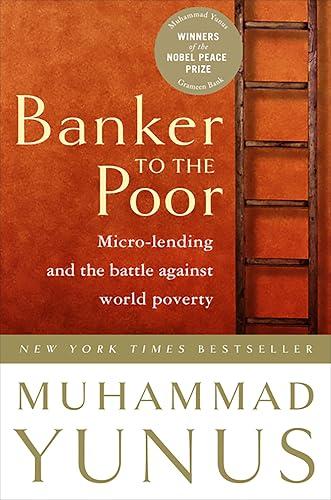
"Banker to the Poor" is a strong fit if you want practical ideas around economics, business, biography, especially themes like poverty is caused by lack of access to capital, not lack of ability; the poor are creditworthy. trust can replace collateral. The MinuteRead summary distills these concepts into a focused read, whether you're deciding whether to buy the book or applying its lessons at work.
Motivated to help readers with "All that is needed for evil to triumph is for good men to do nothing." Breaking the poverty cycle, Muhammad Yunus wrote “Banker to the Poor” to package those ideas for a fast, focused read. In “Banker to the Poor”, Muhammad Yunus focuses on "All that is needed for evil to triumph is for good men to do nothing." Breaking the poverty cycle. Through “Banker to the Poor”, Muhammad Yunus distills the core ideas on economics into lessons readers can absorb in a single s…
View all summaries by Muhammad YunusContinue Reading
Access the complete 30-minute summary and thousands more nonfiction books in the MinuteRead app.

Continue reading the complete summary in the MinuteRead app.