MinuteRead
30 min
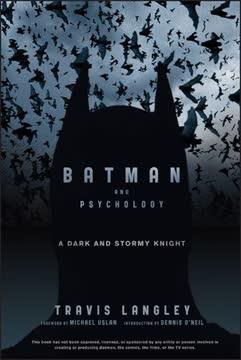
Book summary
Premium summary · Opens in the app · 30 min read
A young boy stands in a dark alley. Two gunshots ring out. Pearls scatter across wet pavement. In that moment, Bruce Wayne's childhood ends and something else begins.
**A Dark and Stormy Knight**
By Travis Langley
**Estimated Reading Time:** 45 minutes
**What You'll Learn:** Why the Dark Knight has captivated audiences for over eighty years, what his origin story reveals about universal human trauma, how his rogues gallery mirrors his own fractured psyche, and what Batman's moral code teaches us about resilience, identity, and the human capacity to transform suffering into strength.
**Who This Book Is For:** Anyone who has ever wondered why a man dressed as a bat resonates so deeply across cultures and generations. This book is for readers curious about the psychology behind heroism, the science of trauma and recovery, and the ways fictional characters illuminate truths about our own minds.
A young boy stands in a dark alley. Two gunshots ring out. Pearls scatter across wet pavement. In that moment, Bruce Wayne's childhood ends and something else begins. That scene has played out in countless comic panels, animated series, and feature films. It has been retold so many times that even people who have never read a Batman comic know the story. But why does this particular origin resonate so powerfully? Why does a billionaire who dresses like a bat and punches criminals in the night hold such an enduring place in our cultural imagination? The answer lies not in the cape or the gadgets or the Batmobile. The answer lies in the psychology. Travis Langley, a professor of psychology and lifelong comic book enthusiast, argues that Batman endures because he represents something profoundly human. Unlike Superman, who arrives on Earth already possessing extraordinary abilities, or Wonder Woman, who is born of myth and magic, Batman is entirely self-made. He has no superpowers. He has only his trauma, his training, and his will. That makes him accessible in a way other heroes are not. We cannot fly or deflect bullets with bracelets, but we can understand loss. We can understand the desire to make meaning from suffering. This book examines Batman through the lens of psychological science. It explores what his origin story tells us about childhood trauma. It investigates whether his behavior meets the criteria for post-traumatic stress disorder or whether he represents something more hopeful: post-traumatic growth. It analyzes his villains as manifestations of his own repressed fears and impulses. It traces how his portrayal across decades reflects changing societal attitudes toward heroism, justice, and mental health. But this is not merely an academic exercise. By understanding Batman, we understand something about ourselves. His struggles with trust, intimacy, identity, and moral clarity mirror our own. His ability to channel pain into purpose offers a model for resilience that psychological research validates. The Dark Knight turns out to be a surprisingly illuminating guide…
Continue reading in the MinuteRead app
Get the complete 30-minute summary of Batman and Psychology
Get the complete summary in the appBatman is a trauma fantasy, not a power fantasy. His appeal lies in the transformation of suffering into strength.
Post-traumatic growth and PTSD symptoms can coexist. Batman displays both.
Batman's villains are mirrors of his own psyche. Each represents an aspect of himself taken to pathological extreme.
The no-kill rule is a psychological necessity, not just an ethical principle. Killing would destroy him.
Neither Bruce Wayne nor Batman is the true self. Both are constructions, and the tension between them is productive.
Alfred provides the secure base that attachment theory identifies as essential for psychological health.
"Batman and Psychology" is a strong fit if you want practical ideas around psychology, batman, comics, especially themes like batman is a trauma fantasy, not a power fantasy. his appeal lies in the transformation of suffering into strength; post-traumatic growth and ptsd symptoms can coexist. batman displays both. The MinuteRead summary distills these concepts into a focused read, whether you're deciding whether to buy the book or applying its lessons at work.
Dr. Travis Langley is a Distinguished Professor of Psychology at Henderson State University and author of "Batman and Psychology: A Dark and Stormy Knight." He has edited and contributed to the Popular Culture Psychology series, examining various fictional characters and stories through a psychological lens. Langley is a frequent speaker at conventions and universities, particularly at Wizard World shows. He maintains a blog on PsychologyToday.com called "Beyond Heroes and Villains." Langley has…
View all summaries by Travis LangleyContinue Reading
Access the complete 30-minute summary and thousands more nonfiction books in the MinuteRead app.

Continue reading the complete summary in the MinuteRead app.