MinuteRead
30 min
Book summary
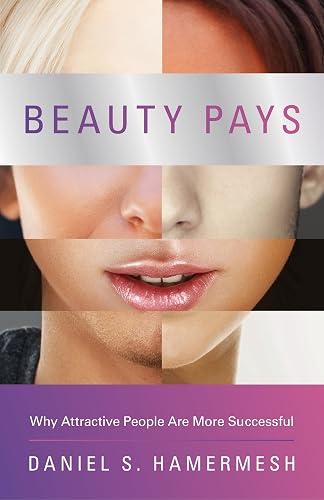
by Daniel S. Hamermesh
Premium summary · Opens in the app · 30 min read
We like to believe we live in a meritocracy. We tell ourselves that hard work, intelligence, and character determine life outcomes. We teach our children that what matters is on the inside. We insist that beauty is only skin deep.
### Why Attractive People Are More Successful
**Author:** Daniel S. Hamermesh
**Estimated Reading Time:** 45 minutes
**What You'll Learn:**
- Why beauty functions as a scarce economic resource - How much good looks actually add to lifetime earnings - Where beauty matters most in careers and relationships - Why employers rationally pay more for attractive workers - What legal protections exist for the looks-challenged - How to navigate a world where appearance affects outcomes
**Who This Book Is For:**
Anyone who has ever wondered whether looks matter in life, which is to say everyone. This condensed edition is for readers who want to understand the hidden economics of appearance without wading through academic papers. It is for professionals curious about workplace dynamics, for parents thinking about their children's futures, for anyone who has felt the sting of being judged by appearance, and for those who want to know what the data actually says about beauty's power.
We like to believe we live in a meritocracy. We tell ourselves that hard work, intelligence, and character determine life outcomes. We teach our children that what matters is on the inside. We insist that beauty is only skin deep. The data tells a different story. Economist Daniel S. Hamermesh has spent decades studying what he calls "pulchreconomics," the economics of beauty. His research, drawn from large-scale surveys, controlled experiments, and real-world market data, reveals something uncomfortable: attractive people earn more money, get better jobs, find more desirable spouses, and receive more favorable treatment in nearly every domain of life. The unattractive face systematic penalties that compound over a lifetime. This is not a self-help book about becoming more beautiful. It is not a lament about the superficiality of modern culture. It is a clear-eyed examination of how beauty operates as an economic force, one that shapes markets, influences decisions, and creates winners and losers in ways most people never consciously notice. The problem is that most of us are blind to our own biases. We think we judge people on merit, but we respond to faces before we process credentials. We believe employers hire the most qualified candidate, but research shows that appearance tips the scales in ways that are measurable and significant. We imagine that love conquers all, but marriage markets reveal systematic patterns of exchange where beauty is traded for income, status, and security. Why does this matter? Because beauty's effects are not random noise. They are consistent, substantial, and persistent. A good-looking worker earns roughly what someone with an additional year or two of education earns. Over a career, the beauty premium can amount to hundreds of thousands of dollars. The penalty for below-average looks is even larger for men…
Continue reading in the MinuteRead app
Get the complete 30-minute summary of Beauty Pays
Get the complete summary in the appBeauty is a scarce resource with measurable economic value.
Attractive people earn more; unattractive people earn less.
The ugliness penalty for men is larger than the beauty premium for women.
Beauty effects compound over a lifetime, amounting to hundreds of thousands of dollars.
Workers sort into occupations based on where their looks are rewarded.
Employers pay for beauty because it generates revenue, not just because of bias.
"Beauty Pays" is a strong fit if you want practical ideas around economics, sociology, psychology, especially themes like beauty is a scarce resource with measurable economic value; attractive people earn more; unattractive people earn less. The MinuteRead summary distills these concepts into a focused read, whether you're deciding whether to buy the book or applying its lessons at work.
Motivated to help readers with the economic approach treats beauty as scarce and tradable, Daniel S. Hamermesh wrote “Beauty Pays” to package those ideas for a fast, focused read. In “Beauty Pays”, Daniel S. Hamermesh focuses on the economic approach treats beauty as scarce and tradable. Through “Beauty Pays”, Daniel S. Hamermesh distills the core ideas on economics into lessons readers can absorb in a single short sitting. Readers turn to this work when they want Daniel S. Hamermesh's perspecti…
Continue Reading
Access the complete 30-minute summary and thousands more nonfiction books in the MinuteRead app.

Continue reading the complete summary in the MinuteRead app.