MinuteRead
30 min
Book summary
by Dan Ariely
Premium summary · Opens in the app · 30 min read
Every year, millions of people make resolutions. They promise to eat healthier, save more money, exercise regularly, and spend less time scrolling through their phones. They mean it. They believe it. And within weeks, most of those resolutions are abandoned.
**Author:** Dan Ariely
**Estimated Reading Time:** 45 minutes
**What You'll Learn:**
* Why your best intentions consistently fail and what to do about it * How predictable patterns of irrationality shape your daily decisions * Practical strategies for designing better choices in health, money, work, and relationships * Why experiences matter more than possessions for lasting happiness * How to use behavioral insights to improve your life without relying on willpower alone
**Who This Book Is For:**
Anyone who has ever made a plan to save money, eat better, exercise more, or stop procrastinating and then watched those plans collapse. Anyone curious about why smart people make foolish decisions. Anyone who wants to understand the hidden forces driving human behavior and use that understanding to live more intentionally.
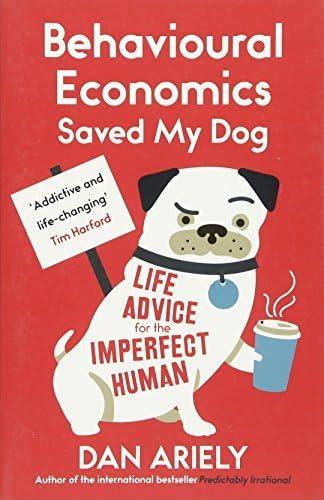
Every year, millions of people make resolutions. They promise to eat healthier, save more money, exercise regularly, and spend less time scrolling through their phones. They mean it. They believe it. And within weeks, most of those resolutions are abandoned. Why does this happen? Are people simply weak? Lazy? Incapable of following through? Dan Ariely spent decades studying this question, and his answer is both surprising and liberating. The problem is not that people are broken. The problem is that we have designed our lives around an incorrect assumption: that humans are rational creatures who make decisions by carefully weighing costs and benefits. We are not. Ariely's work in behavioral economics reveals something profound about human nature. Our irrationality is not random. It follows predictable patterns. We make the same mistakes over and over, in ways that can be measured, mapped, and understood. And once we understand these patterns, we can design environments, systems, and strategies that help us make better decisions despite our irrational tendencies. The title of this book comes from a personal story. Ariely received an email from a reader who had written to him about a problem with her dog. The dog refused to eat its food. The reader had tried everything: different brands, different bowls, different feeding times. Nothing worked. Then she applied a principle from behavioral economics. She started feeding the dog from a paper plate instead of a fancy bowl. The dog ate immediately. This small story captures the essence of Ariely's approach. The dog was not being stubborn or difficult. The dog was responding to its environment in a way that made sense to the dog. The solution was not to force the dog to change but to change the environment in a way that made the desired behavior easier. The same principle applies to humans. We struggle with temptation, procrastination, and poor decisions not because we are fundamentally flawed but because our environment…
Continue reading in the MinuteRead app
Get the complete 30-minute summary of Behavioural Economics Saved My Dog
Get the complete summary in the appIrrationality is predictable. We make the same mistakes in the same situations, over and over again.
Design your environment to make good choices easy and bad choices hard. Do not rely on willpower.
Use pre-commitment devices to lock in good decisions before you face temptation.
Losses hurt about twice as much as equivalent gains feel good. Use this insight to motivate yourself and understand othe
Expectations shape experience. Set expectations that are slightly optimistic but achievable.
Experiences bring more lasting happiness than possessions. Invest in memories, not stuff.
"Behavioural Economics Saved My Dog" is a strong fit if you want practical ideas around economics, psychology, self help, especially themes like irrationality is predictable. we make the same mistakes in the same situations, over and over again; design your environment to make good choices easy and bad choices hard. do not rely on willpower. The MinuteRead summary distills these concepts into a focused read, whether you're deciding whether to buy the book or applying its lessons at work.
Motivated to help readers with "The sad thing is that we have fantastic ideals about our future selves, Dan Ariely wrote “Behavioural Economics Saved My Dog” to package those ideas for a fast, focused read. In “Behavioural Economics Saved My Dog”, Dan Ariely focuses on "The sad thing is that we have fantastic ideals about our future selves. Through “Behavioural Economics Saved My Dog”, Dan Ariely distills the core ideas on economics into lessons readers can absorb in a single short sitting. Read…
View all summaries by Dan ArielyContinue Reading
Access the complete 30-minute summary and thousands more nonfiction books in the MinuteRead app.

Continue reading the complete summary in the MinuteRead app.