MinuteRead
30 min
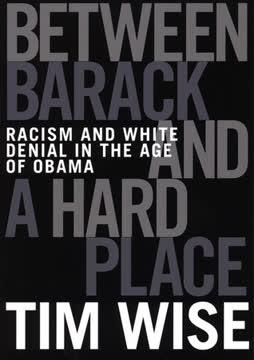
When Barack Obama won the presidency in November 2008, millions of Americans wept with joy. The moment felt transformative. A nation built on slavery had elected a black man to its highest office. Pundits declared the dawn of a post-racial America. Commentators suggested that the country had finally overcome its original sin. The arc of history seemed to bend dramatically toward justice.
By Tim Wise
**Estimated Reading Time:** 45 minutes
**What You'll Learn**
How Barack Obama's election revealed the persistence of racism rather than its end. Why symbolic victories can mask systemic inequality. What Racism 2.0 looks like and how it operates. Why white denial remains the greatest obstacle to racial justice. What genuine anti-racist action requires from white Americans.
**Who This Book Is For**
Anyone who wondered if Obama's presidency meant America had finally moved beyond race. White readers willing to examine uncomfortable truths about privilege and denial. Activists seeking a deeper understanding of how racism adapts and survives. Anyone committed to building a genuinely equitable society rather than celebrating symbolic progress.
When Barack Obama won the presidency in November 2008, millions of Americans wept with joy. The moment felt transformative. A nation built on slavery had elected a black man to its highest office. Pundits declared the dawn of a post-racial America. Commentators suggested that the country had finally overcome its original sin. The arc of history seemed to bend dramatically toward justice. Tim Wise watched these celebrations with a mixture of hope and deep unease. Wise had spent decades studying racism in America. He understood something that most white commentators missed. The election of a single black president, however historic, did not dismantle the structures that had produced racial inequality for centuries. It did not erase the wealth gap between black and white families. It did not reform a criminal justice system that incarcerated black men at staggering rates. It did not fix underfunded schools in communities of color. It did not address the daily indignities that people of color continued to face. What worried Wise most was not the celebration itself. It was the interpretation. Many white Americans saw Obama's victory as proof that racism was no longer a significant barrier. If a black man could become president, the reasoning went, then anyone could succeed. The system must be fair. The playing field must be level. Those who still complained about racism must be making excuses. This interpretation was not just wrong. It was dangerous. Wise recognized a pattern that had repeated throughout American history. Each time a person of color achieved a visible success, white society used that individual as evidence of progress. Each time, the achievement was held up as proof that systemic barriers had fallen. Each time, the deeper realities of inequality were ignored. This pattern allowed white Americans to feel good about racial progress without actually doing anything to create it. It provided cover for complacency. It enabled denial. The problem was not Obama himself. Wise admired Obama's intelligence, his political skill, his ability to inspire. The problem was what white America projected onto…
Continue reading in the MinuteRead app
Get the complete 30-minute summary of Between Barack and a Hard Place
Get the complete summary in the appObama's election did not end racism. It revealed that racism had adapted into new, subtler forms.
Racism 2.0 allows white Americans to celebrate exceptional people of color while maintaining negative views about the br
Racial inequality persists across every major indicator. The wealth gap between white and black families is ten to one.
White denial is a historical pattern. Each generation claims racism is over, and each generation is wrong.
People of color are reliable reporters of their own experiences. Listen to them and believe them.
American history includes genocide, slavery, and systematic discrimination. Confronting this history is essential for un
"Between Barack and a Hard Place" is a strong fit if you want practical ideas around race, politics, social justice, especially themes like obama's election did not end racism. it revealed that racism had adapted into new, subtler forms; racism 2.0 allows white americans to celebrate exceptional people of color while maintaining negative views about the br. The MinuteRead summary distills these concepts into a focused read, whether you're deciding whether to buy the book or applying its lessons at work.
Tim Wise is a prominent anti-racist writer and activist in the United States. He has spoken at numerous colleges and universities, and served as an advisor to the Fisk University Race Relations Institute. Wise has written extensively on institutional racism and white privilege, earning praise from notable race scholars. He is the Director of the Association for White Anti-Racist Education (AWARE) and a featured columnist for ZNet Commentary. His work is taught at many colleges and has appeared i…
View all summaries by Tim WiseContinue Reading
Access the complete 30-minute summary and thousands more nonfiction books in the MinuteRead app.

Continue reading the complete summary in the MinuteRead app.