MinuteRead
30 min
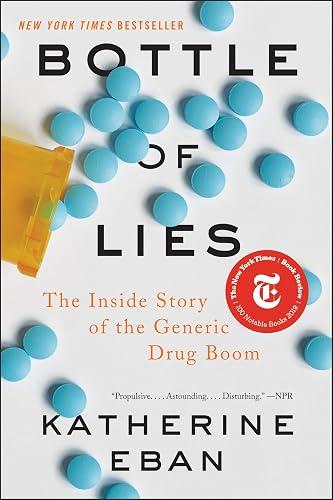
Book summary
by Katherine Eban
Premium summary · Opens in the app · 30 min read
Every day, hundreds of millions of people around the world swallow a pill and trust that it will make them better. They trust that the medicine contains what the label says it contains. They trust that it was manufactured under clean conditions. They trust that someone, somewhere, verified its quality before it reached the pharmacy shelf.
**Author:** Katherine Eban
**Estimated Reading Time:** 45 minutes
**What You'll Learn:**
- How the generic drug industry transformed global healthcare while creating unprecedented risks - The inside story of the Ranbaxy fraud, one of the largest pharmaceutical scandals in history - Why the FDA struggled to regulate a rapidly globalizing drug supply - How data manipulation became endemic in generic manufacturing - What the path forward looks like for ensuring drug safety worldwide
**Who This Book Is For:**
Anyone who takes medication, works in healthcare, cares about public safety, or wants to understand how the systems we trust can fail. This book is essential reading for patients, doctors, pharmacists, regulators, policymakers, and citizens concerned about the integrity of the medicines they rely on every day.
Every day, hundreds of millions of people around the world swallow a pill and trust that it will make them better. They trust that the medicine contains what the label says it contains. They trust that it was manufactured under clean conditions. They trust that someone, somewhere, verified its quality before it reached the pharmacy shelf. For most of modern history, that trust was reasonably well placed. Pharmaceutical manufacturing happened in visible, regulated facilities. Inspectors walked factory floors. Companies faced consequences for cutting corners. The system was not perfect, but it was comprehensible. Then everything changed. The generic drug revolution transformed medicine. Beginning in the 1980s, legislation opened the door for companies to produce low-cost versions of brand-name drugs once their patents expired. The results were dramatic. Generic drugs now account for roughly nine out of every ten prescriptions filled in the United States. They have saved patients and healthcare systems trillions of dollars. They have made essential medicines accessible to people who could never have afforded brand-name versions. But the revolution came with a shadow. As competition intensified and profit margins shrank, manufacturing shifted to countries with lower labor costs and weaker regulatory oversight. India and China became the world's pharmacy. The active ingredients in American medicines increasingly came from factories that American regulators rarely visited and sometimes could not even locate. The supply chain grew longer, more complex, and far more opaque. Katherine Eban spent years investigating this hidden world. What she found was deeply disturbing. Fraud was not an occasional aberration. It was woven into the fabric of the industry. Companies fabricated test results. They shipped drugs that had never been properly tested. They maintained secret laboratories where they could pre-test batches before submitting them for official analysis. They lied to regulators, to doctors, and to patients. The story at the center of this book is Ranbaxy Laboratories, once one of India's most celebrated pharmaceutical companies. Ranbaxy was a symbol of India's…
Continue reading in the MinuteRead app
Get the complete 30-minute summary of Bottle of Lies
Get the complete summary in the appGeneric drugs account for 90 percent of prescriptions in the United States, making their quality a critical public healt
The economics of the generic drug industry create powerful incentives to cut corners, and companies that cheat gain a co
Ranbaxy Laboratories engaged in systematic fraud, fabricating test results and shipping drugs that had never been proper
The practices that Ranbaxy employed were widespread across the generic drug industry, not unique to one company.
The FDA was not prepared for the globalization of pharmaceutical manufacturing and lacks the resources and authority to
FDA approval does not guarantee drug quality. The agency relies on data submitted by companies, and that data is often f
"Bottle of Lies" is a strong fit if you want practical ideas around science, business, health, especially themes like generic drugs account for 90 percent of prescriptions in the united states, making their quality a critical public healt; the economics of the generic drug industry create powerful incentives to cut corners, and companies that cheat gain a co. The MinuteRead summary distills these concepts into a focused read, whether you're deciding whether to buy the book or applying its lessons at work.
Motivated to help readers with "Generic drugs are essential to our health care system, Katherine Eban wrote “Bottle of Lies” to package those ideas for a fast, focused read. In “Bottle of Lies”, Katherine Eban focuses on "Generic drugs are essential to our health care system. Through “Bottle of Lies”, Katherine Eban distills the core ideas on science into lessons readers can absorb in a single short sitting. Readers turn to this work when they want Katherine Eban's perspective on the subject wit…
Continue Reading
Access the complete 30-minute summary and thousands more nonfiction books in the MinuteRead app.

Continue reading the complete summary in the MinuteRead app.