MinuteRead
30 min
The twentieth century produced no shortage of horrors. Two world wars, the rise of totalitarian ideologies, and the constant threat of nuclear annihilation left deep scars on the human psyche. But it also produced extraordinary individuals who refused to surrender their minds or their consciences to the pressures of their age.
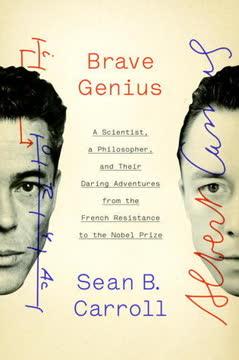
**Author:** Sean B. Carroll **Estimated Reading Time:** 2 hours 15 minutes
**What You'll Learn**
How two remarkable men, the writer Albert Camus and the scientist Jacques Monod, forged a friendship in the crucible of war and used their distinct talents to defend truth against totalitarianism. You will learn how the French Resistance shaped their character, how the Hungarian Revolution of 1956 galvanized their activism, how a scientific fraud in the Soviet Union exposed the rot at the heart of ideological thinking, and how the discovery of gene regulation changed our understanding of life itself. This is a story about courage, intellect, and the enduring power of standing up for what is true.
**Who This Book Is For**
This book is for anyone who wants to understand how ideas matter in the real world. It is for readers drawn to the intersection of science, philosophy, and history. It is for those who wonder what it truly means to live with integrity when the world around you demands conformity. And it is for anyone who believes that individual acts of bravery can still shape the course of history.
The twentieth century produced no shortage of horrors. Two world wars, the rise of totalitarian ideologies, and the constant threat of nuclear annihilation left deep scars on the human psyche. But it also produced extraordinary individuals who refused to surrender their minds or their consciences to the pressures of their age. Sean B. Carroll's *Brave Genius* tells the story of two such individuals: Albert Camus and Jacques Monod. One was a Nobel Prize-winning writer and philosopher. The other was a Nobel Prize-winning biologist. On the surface, they occupied different worlds. Camus wrestled with the absurdity of existence, the nature of revolt, and the demands of justice. Monod probed the molecular machinery of life, seeking to understand how genes are regulated and how organisms develop. But their lives intersected in profound ways. Both joined the French Resistance during World War II. Both emerged from that experience with an unshakeable commitment to human dignity. Both watched with growing alarm as the Soviet Union, which claimed to represent the hopes of the working class, revealed itself to be a brutal empire built on lies. And both decided to do something about it. The problem they confronted was not merely political. It was epistemological. The Soviet system did not just suppress dissent. It suppressed reality. In biology, this took the form of Lysenkoism, a pseudoscientific doctrine that rejected Mendelian genetics in favor of the idea that acquired characteristics could be inherited. Lysenkoism was not a scientific error. It was a state-enforced delusion, backed by Stalin and used to destroy the careers and lives of genuine scientists. Camus and…
Continue reading in the MinuteRead app
Get the complete 30-minute summary of Brave Genius
Get the complete summary in the appAlbert Camus and Jacques Monod forged a friendship in the French Resistance that sustained their postwar battles against
Lysenkoism was a state-enforced pseudoscience that destroyed Soviet biology and revealed the rot at the heart of ideolog
The Hungarian Revolution of 1956 exposed the brutality of the Soviet empire and galvanized intellectual resistance in th
The PaJaMa experiments discovered gene repression, transforming our understanding of how life works.
Monod used his Resistance skills to rescue scientists from Eastern Europe, including Agnes Ullmann.
Camus's Nobel Prize recognized both his literary achievement and his moral authority as a defender of human dignity.
"Brave Genius" is a strong fit if you want practical ideas around science, history, biography, especially themes like albert camus and jacques monod forged a friendship in the french resistance that sustained their postwar battles against; lysenkoism was a state-enforced pseudoscience that destroyed soviet biology and revealed the rot at the heart of ideolog. The MinuteRead summary distills these concepts into a focused read, whether you're deciding whether to buy the book or applying its lessons at work.
Sean B. Carroll is a distinguished molecular biologist and geneticist at the University of Wisconsin-Madison. His research focuses on the evolution of cis-regulation in biological development, using Drosophila as a model organism. As a Howard Hughes Medical Institute investigator, Carroll has made significant contributions to the field of evolutionary developmental biology. Since 2010, he has served as vice-president for science education at the Howard Hughes Medical Institute, demonstrating his…
View all summaries by Sean B. CarrollContinue Reading
Access the complete 30-minute summary and thousands more nonfiction books in the MinuteRead app.

Continue reading the complete summary in the MinuteRead app.