MinuteRead
30 min
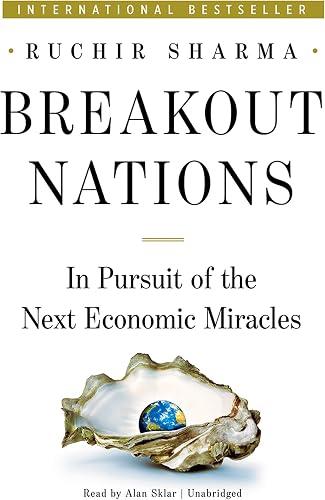
For more than a decade, the world embraced a simple and seductive story. The story said that a group of countries, loosely gathered under the label "emerging markets," had finally arrived. China, India, Brazil, Russia, and a dozen others were rising together, lifting hundreds of millions out of poverty and reshaping the global balance of power. Investors poured trillions of dollars into these markets, confident that the future belonged to them. The old powers of the West, the story went, were in
**Author:** Ruchir Sharma
**Estimated Reading Time:** 45 minutes
**What You'll Learn:**
- Why the era of all emerging markets rising together has ended - Which countries are positioned to break out and which will break down - The specific economic, political, and social factors that separate success stories from disappointments - How to evaluate any nation's growth prospects with a clear-eyed framework - The surprising resilience of developed economies in a slow-growth world
**Who This Book Is For:**
This book is for investors, business leaders, policymakers, and curious readers who want to understand the real forces shaping global economic growth. If you have grown tired of sweeping narratives about "emerging markets" as a single asset class, and you want to know which countries actually deserve your attention, this book will give you the tools to see the world economy with fresh eyes.
For more than a decade, the world embraced a simple and seductive story. The story said that a group of countries, loosely gathered under the label "emerging markets," had finally arrived. China, India, Brazil, Russia, and a dozen others were rising together, lifting hundreds of millions out of poverty and reshaping the global balance of power. Investors poured trillions of dollars into these markets, confident that the future belonged to them. The old powers of the West, the story went, were in decline, burdened by debt, aging populations, and political dysfunction. Then the story broke. The global financial crisis of 2008 exposed the fragility beneath the surface. The synchronized boom that had lifted nearly every emerging market from 2003 to 2007 gave way to something far messier. Some countries recovered quickly. Others stalled. A few began to slide backward. The convenient label "emerging markets" turned out to hide enormous differences in economic health, political stability, and future potential. Ruchir Sharma wrote *Breakout Nations* to make sense of this new reality. As the head of Morgan Stanley's global emerging markets equity team, Sharma spent years traveling to the countries that investors were betting on. He met with finance ministers, central bankers, business leaders, and ordinary citizens. What he found often contradicted the prevailing wisdom. The countries that looked strongest on paper were sometimes the most fragile. The countries that were ignored by the global investment community sometimes had the most promising foundations. Sharma's central argument is simple but profound: the era of emerging markets moving in lockstep is over. From now on, individual country performance will diverge sharply. Some nations will break out and join the ranks of the world's wealthy economies. Others will stagnate or decline. The difference will come down to specific choices: how a country manages its finances, whether it encourages competition or protects monopolies, how…
Continue reading in the MinuteRead app
Get the complete 30-minute summary of Breakout Nations
Get the complete summary in the appThe era of synchronized emerging market growth is over, and future performance will diverge sharply by country.
China faces an inevitable slowdown as it hits the middle-income trap, with demographics, debt, and overinvestment constr
India's potential is held back by crony capitalism, weak infrastructure, and poor governance, and its success is not ine
Commodity dependence creates vulnerability to boom-bust cycles, as seen in Russia and Brazil.
Oligopolies stifle competition and innovation, as Mexico's experience demonstrates.
Indonesia is the best-run large commodity economy, with prudent fiscal management and political stability.
"Breakout Nations" is a strong fit if you want practical ideas around economics, business, finance, especially themes like the era of synchronized emerging market growth is over, and future performance will diverge sharply by country; china faces an inevitable slowdown as it hits the middle-income trap, with demographics, debt, and overinvestment constr. The MinuteRead summary distills these concepts into a focused read, whether you're deciding whether to buy the book or applying its lessons at work.
Motivated to help readers with "The unthinking faith in the hot growth stories of the last decade also ignores the high odds against, Ruchir Sharma wrote “Breakout Nations” to package those ideas for a fast, focused read. In “Breakout Nations”, Ruchir Sharma focuses on "The unthinking faith in the hot growth stories of the last decade also ignores the high odds against. Through “Breakout Nations”, Ruchir Sharma distills the core ideas on economics into lessons readers can absorb in a single shor…
View all summaries by Ruchir SharmaContinue Reading
Access the complete 30-minute summary and thousands more nonfiction books in the MinuteRead app.

Continue reading the complete summary in the MinuteRead app.