MinuteRead
30 min
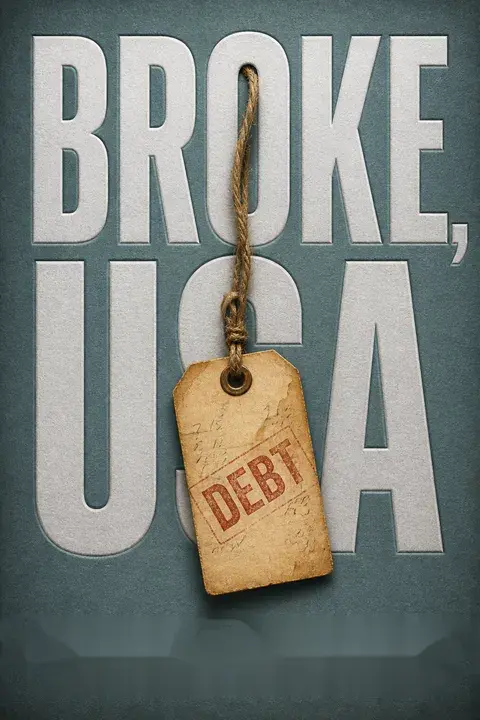
Book summary
by Gary Rivlin
Premium summary · Opens in the app · 30 min read
There is a parallel economy in America, one that most people never see. It operates out of strip malls and storefronts, in neighborhoods where traditional banks fear to tread. It serves millions of customers every day, handles billions of dollars in transactions, and generates profits that would make Wall Street envious. Yet this economy exists almost entirely off the radar of mainstream financial journalism and public policy.
**Author:** Gary Rivlin
**Estimated Reading Time:** 4 hours
**What You'll Learn:** How a vast industry emerged to extract billions from America's working poor, the key players who built it, the activists who fought it, and the human cost of financial exploitation.
**Who This Book Is For:** Anyone who wants to understand the hidden economy of payday lenders, check cashers, subprime mortgage brokers, and rent-to-own stores that has reshaped American inequality.
There is a parallel economy in America, one that most people never see. It operates out of strip malls and storefronts, in neighborhoods where traditional banks fear to tread. It serves millions of customers every day, handles billions of dollars in transactions, and generates profits that would make Wall Street envious. Yet this economy exists almost entirely off the radar of mainstream financial journalism and public policy. This is the poverty industry. Gary Rivlin spent years investigating this hidden world for his book *Broke, USA*. What he found was not a collection of small-time operators scraping by on the margins. He found a sophisticated, well-funded, politically connected network of businesses that had turned financial desperation into one of America's most reliable profit centers. The story begins with pawnshops, the oldest form of collateralized lending. For most of American history, pawnbroking was a small, local business, often run by families who knew their customers by name. But in the 1980s, a new breed of entrepreneur saw something different. They saw a market waiting to be consolidated, standardized, and taken public on Wall Street. From pawnshops, the industry expanded. Check cashers emerged to serve the growing ranks of Americans without bank accounts. Rent-to-own stores offered furniture and appliances at effective interest rates that would be illegal if disclosed as loans. Payday lenders exploded across the country, offering two-week loans at annual percentage rates that routinely exceeded 400 percent. Subprime mortgage brokers brought the same practices to home lending, with consequences that nearly brought down the global financial system. The scale of this industry is staggering. By the mid-2000s, the poverty industry was generating more than $100 billion in annual revenue. Payday lending alone grew from virtually nothing in the early 1990s to a $40 billion industry by 2007. Check cashers processed more than $80 billion in checks annually. The subprime mortgage market peaked at over $600 billion in new loans in a single year. What makes this story important is not just the money. It is what the money represents. Every dollar earned by the poverty industry comes from someone who could least afford to pay it. Every fee, every interest charge, every late penalty is extracted from a household already struggling to make ends meet. The industry's growth has paralleled the…
Continue reading in the MinuteRead app
Get the complete 30-minute summary of Broke, USA
Get the complete summary in the appThe poverty industry is a multi-billion dollar business that profits from the financial struggles of the working poor.
The industry exists because traditional banks abandoned low-income communities.
Payday lending is among the most expensive forms of credit available, with APRs that can exceed 500 percent.
The payday lending business model depends on trapping borrowers in cycles of debt.
The subprime mortgage crisis was predictable and preventable.
The victims of predatory lending are not foolish; they are outmatched by an industry designed to exploit them.
"Broke, USA" is a strong fit if you want practical ideas around economics, business, finance, especially themes like the poverty industry is a multi-billion dollar business that profits from the financial struggles of the working poor; the industry exists because traditional banks abandoned low-income communities. The MinuteRead summary distills these concepts into a focused read, whether you're deciding whether to buy the book or applying its lessons at work.
Motivated to help readers with but the poverty industry—making money off the impoverished and the working poor as big business—can be said, Gary Rivlin wrote “Broke, USA” to package those ideas for a fast, focused read. In “Broke, USA”, Gary Rivlin focuses on but the poverty industry—making money off the impoverished and the working poor as big business—can be said. Through “Broke, USA”, Gary Rivlin distills the core ideas on economics into lessons readers can absorb in a single short sitting. R…
View all summaries by Gary RivlinContinue Reading
Access the complete 30-minute summary and thousands more nonfiction books in the MinuteRead app.

Continue reading the complete summary in the MinuteRead app.