MinuteRead
30 min
On November 5, 2009, Major Nidal Malik Hasan walked into the Soldier Readiness Processing Center at Fort Hood, Texas, and opened fire. Thirteen people died. More than thirty were wounded. In the aftermath, investigators searched for answers. They combed through emails, phone records, and financial transactions. They interviewed colleagues and family members. They tried to piece together the puzzle of how a quiet army psychiatrist became a mass murderer.
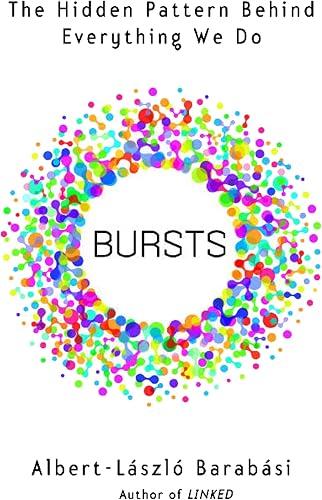
**Author:** Albert-László Barabási **Estimated Reading Time:** 45 minutes
**What You'll Learn:**
- Why human behavior follows predictable patterns despite feeling random - How bursts of activity shape everything from email to warfare - What power laws reveal about outliers and extreme events - How prioritization drives the rhythms of daily life - What modern data collection means for privacy and prediction - How understanding human dynamics can transform society
**Who This Book Is For:**
This book is for anyone curious about the hidden patterns that govern human behavior. If you have ever wondered why your inbox floods with messages after hours of silence, why some ideas spread like wildfire while others fade, or why history seems to repeat itself in unexpected ways, this book will change how you see the world. It is for readers who want to understand the science behind predictability, the mathematics of everyday life, and the profound implications of living in an age where our every move leaves a digital trace.
On November 5, 2009, Major Nidal Malik Hasan walked into the Soldier Readiness Processing Center at Fort Hood, Texas, and opened fire. Thirteen people died. More than thirty were wounded. In the aftermath, investigators searched for answers. They combed through emails, phone records, and financial transactions. They interviewed colleagues and family members. They tried to piece together the puzzle of how a quiet army psychiatrist became a mass murderer. The Department of Homeland Security had a problem. They had collected vast amounts of data about Hasan before the attack. His emails showed a man growing increasingly radicalized. His communications with a radical cleric in Yemen were documented. The warning signs were there, buried in databases, scattered across agencies, hidden in plain sight. Yet no one connected the dots in time. This book begins with that story, but it is not about Hasan. It is not about terrorism. It is about something deeper and more universal. It is about the question that haunted investigators after Fort Hood: Can we predict human behavior? Can we see the patterns in the chaos of daily life clearly enough to know what comes next? For most of human history, the answer seemed obvious. People are unpredictable. Free will means we can choose anything at any moment. Our actions are as random as dice rolls, as uncertain as a box of chocolates. This belief is comforting in some ways. It means no one can truly know what we will do. It means we are sovereign over our own choices. But there is a problem with this comforting belief. It is wrong. Over the past two decades, a quiet revolution has been taking place in science. Researchers from physics, computer science, sociology,…
Continue reading in the MinuteRead app
Get the complete 30-minute summary of Bursts
Get the complete summary in the appHuman behavior follows predictable patterns, not random noise.
Activity comes in bursts: long quiet periods interrupted by short intense periods.
Power laws govern many aspects of human life, from wealth to city sizes to war casualties.
Outliers are expected, not anomalous. Prepare for extreme events.
Prioritization drives burstiness. We process tasks by importance, not by arrival order.
Digital breadcrumbs make modern behavior trackable and predictable at unprecedented scale.
"Bursts" is a strong fit if you want practical ideas around science, psychology, sociology, especially themes like human behavior follows predictable patterns, not random noise; activity comes in bursts: long quiet periods interrupted by short intense periods. The MinuteRead summary distills these concepts into a focused read, whether you're deciding whether to buy the book or applying its lessons at work.
Motivated to help readers with "Despite the facts of my first story, Albert-László Barabási wrote “Bursts” to package those ideas for a fast, focused read. In “Bursts”, Albert-László Barabási focuses on "Despite the facts of my first story. Through “Bursts”, Albert-László Barabási distills the core ideas on science into lessons readers can absorb in a single short sitting. Readers turn to this work when they want Albert-László Barabási's perspective on the subject without working through the ent…
View all summaries by Albert-László BarabásiContinue Reading
Access the complete 30-minute summary and thousands more nonfiction books in the MinuteRead app.

Continue reading the complete summary in the MinuteRead app.