MinuteRead
30 min
Book summary
by The Bank of England
Premium summary · Opens in the app · 30 min read
Every day, you make hundreds of economic decisions. Most of them happen so quickly and so automatically that you barely register them as decisions at all. You decide whether to buy a coffee or save the money. You decide whether to drive to work or take the train. You decide whether to accept a job offer, ask for a raise, or look for something better. You decide whether to put money into a pension or spend it on a holiday. These choices feel personal, even private. But they are connected to somet
**Author:** The Bank of England
**Estimated Reading Time:** 45 minutes
**What You'll Learn:**
- Why economics shapes every decision you make, often without you noticing - How money actually works and why printing more of it causes problems - What inflation really is and why central banks target two percent - Why markets usually work well but sometimes fail spectacularly - How economic growth transformed human life in just a few centuries - What policymakers can and cannot do to manage the economy
**Who This Book Is For:**
This book is for anyone who has ever wondered why prices rise, why wages stagnate, why financial crises happen, or why governments cannot simply create more money to solve their problems. You do not need any background in economics. You only need curiosity about the forces that shape your financial life, your job prospects, and the society you live in.
Every day, you make hundreds of economic decisions. Most of them happen so quickly and so automatically that you barely register them as decisions at all. You decide whether to buy a coffee or save the money. You decide whether to drive to work or take the train. You decide whether to accept a job offer, ask for a raise, or look for something better. You decide whether to put money into a pension or spend it on a holiday. These choices feel personal, even private. But they are connected to something much larger. Economics is the study of how people make choices when resources are limited. That might sound abstract, but it is actually the most practical subject in the world. Every time you make a choice, you are giving up something else. Economists call this an opportunity cost. When you spend an hour watching television, you give up an hour you could have spent working, learning, or resting. When a government spends money on roads, it gives up the chance to spend that money on hospitals or schools. When a business invests in new machinery, it gives up the chance to distribute that money to its shareholders. Opportunity cost is everywhere. Most people think economics is about money. It is not. Money is just the measuring stick. Economics is about choices, trade-offs, and the systems that emerge when millions of people make choices at the same time. Those systems are called markets, and they are remarkable things. A market can coordinate the actions of millions of strangers without anyone being in charge. No one tells farmers how much wheat to grow. No one tells bakers how many loaves to bake. No one tells you what to buy for breakfast. Yet somehow, every morning, there is bread on the shelves. This…
Continue reading in the MinuteRead app
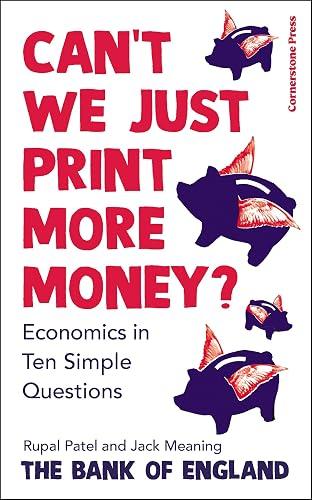
Get the complete 30-minute summary of Can’t We Just Print More Money?
Get the complete summary in the appEvery choice involves an opportunity cost: the value of the next best alternative you give up.
Markets coordinate millions of decisions through prices, but they can fail when there are externalities, public goods, i
Labor markets have frictions that create unemployment, especially structural unemployment when workers lack the skills e
Economic growth, driven by technology, capital, human capital, and institutions, is why you are richer than your ancesto
Comparative advantage means specializing in what you are relatively best at, and it explains why trade benefits all part
Money is a system of trust, and most money is created by banks when they make loans.
"Can’t We Just Print More Money?" is a strong fit if you want practical ideas around economics, finance, business, especially themes like every choice involves an opportunity cost: the value of the next best alternative you give up; markets coordinate millions of decisions through prices, but they can fail when there are externalities, public goods, i. The MinuteRead summary distills these concepts into a focused read, whether you're deciding whether to buy the book or applying its lessons at work.
Motivated to help readers with economics affects all of us every day of our lives, The Bank of England wrote “Can’t We Just Print More Money?” to package those ideas for a fast, focused read. In “Can’t We Just Print More Money?”, The Bank of England focuses on economics affects all of us every day of our lives. Through “Can’t We Just Print More Money?”, The Bank of England distills the core ideas on economics into lessons readers can absorb in a single short sitting. Readers turn to this work wh…
Continue Reading
Access the complete 30-minute summary and thousands more nonfiction books in the MinuteRead app.

Continue reading the complete summary in the MinuteRead app.