MinuteRead
30 min
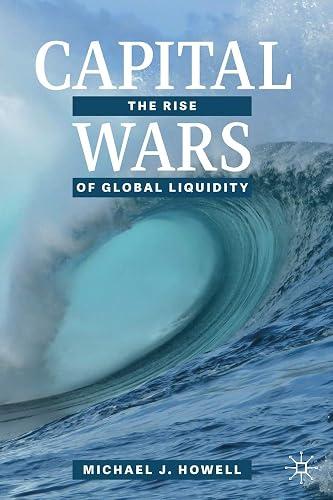
Book summary
by Michael J. Howell
Premium summary · Opens in the app · 30 min read
The key idea in this book is that economic cycles are driven by financial flows, namely quantities of savings and credits, and not by high street inflation or the level of interest rates.
**Author:** Michael J. Howell
**Estimated Reading Time:** 2 hours 15 minutes
**What You'll Learn:**
- Why global liquidity, not interest rates or inflation, drives economic cycles - How the scarcity of safe assets creates systemic fragility - Why China's financial rise is reshaping the global monetary order - How modern finance became a refinancing system dependent on balance sheet capacity - What the emerging regional capital blocs mean for investors and policymakers
**Who This Book Is For:**
This book is for investors, policymakers, financial professionals, and anyone seeking to understand the hidden forces that drive economic booms, busts, and the shifting balance of global power. If you have sensed that conventional economic explanations no longer explain the world around you, this book offers a more complete framework.
The world economy does not behave the way most people think it does. For decades, economists, central bankers, and financial commentators have trained their attention on two primary variables: the rate of consumer price inflation and the level of interest rates. The prevailing wisdom holds that when inflation rises, central banks must raise rates to cool the economy. When growth falters, they cut rates to stimulate spending. This framework has dominated policy discussions, shaped investment strategies, and filled countless textbooks. Michael J. Howell argues that this entire framework is built on a fundamental misunderstanding. The true engine of economic cycles, he contends, is not the price of money but the quantity of money. More precisely, it is the vast and constantly shifting pool of global liquidity: the savings and credit that flow across borders, through wholesale money markets, and into asset prices long before they ever touch the real economy of goods and services. This pool is enormous. Howell estimates global liquidity at roughly $130 trillion, a figure two-thirds larger than world GDP. This is footloose cash, money that can move across borders in seconds, seeking returns, fleeing risk, and reshaping economies in its wake. When this liquidity expands, asset prices rise, credit flows freely, and economic activity accelerates. When it contracts, the opposite occurs with often brutal speed. The problem is that most policymakers do not see this pool clearly. They focus on high street inflation, which measures the price of goods and services consumed by households. But the vast majority of global liquidity never reaches the high street. It circulates in the asset economy, inflating stock prices, bond prices, and real estate values while leaving consumer prices relatively stable. This explains one of the great puzzles of the post-2008 era. Central banks injected trillions of dollars into the financial system through quantitative easing programs. Conventional theory predicted this would trigger runaway inflation. Instead, consumer prices remained subdued while asset prices soared.…
Continue reading in the MinuteRead app
Get the complete 30-minute summary of Capital Wars
Get the complete summary in the appGlobal liquidity, not interest rates or inflation, is the primary driver of economic cycles.
Liquidity flows primarily into the asset economy, not the real economy, explaining the disconnect between asset prices a
Money is created within the economic system in response to the demand for credit, not by central banks.
The scarcity of safe assets makes the financial system inherently fragile and procyclical.
Modern finance is a refinancing system, making balance sheet capacity more important than the cost of capital.
Central banks have power but not control over the complex global financial system.
"Capital Wars" is a strong fit if you want practical ideas around economics, finance, business, especially themes like global liquidity, not interest rates or inflation, is the primary driver of economic cycles; liquidity flows primarily into the asset economy, not the real economy, explaining the disconnect between asset prices a. The MinuteRead summary distills these concepts into a focused read, whether you're deciding whether to buy the book or applying its lessons at work.
Motivated to help readers with the key idea in this book is that economic cycles are driven by financial flows, Michael J. Howell wrote “Capital Wars” to package those ideas for a fast, focused read. In “Capital Wars”, Michael J. Howell focuses on the key idea in this book is that economic cycles are driven by financial flows. Through “Capital Wars”, Michael J. Howell distills the core ideas on economics into lessons readers can absorb in a single short sitting. Readers turn to this work when th…
Continue Reading
Access the complete 30-minute summary and thousands more nonfiction books in the MinuteRead app.

Continue reading the complete summary in the MinuteRead app.