MinuteRead
30 min
Book summary
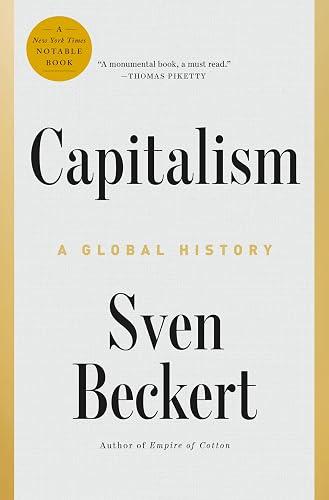
by Sven Beckert
Premium summary · Opens in the app · 5 min read
Capitalism shows you how the movement of money in the world really works by outlining the dominant system in the world and its origins and future.
Capitalism shows you how the movement of money in the world really works by outlining the dominant system in the world and its origins and future.
Although most of the world runs on this system, the details of its implementation vary. However, there are a few prevailing ingredients that we can see all around the world.
First and foremost is that capitalists use capital, which can be money or anything that they can turn into it, to make more money. Profit is whatever extra they make after spending their money to earn more.
For individuals, a home can be a form of capital, for example. You can sell it to take out the equity you’ve built in it or rent it to get a monthly revenue from it.
Companies work a little differently, however. They use their cash to create a product or offer a service with wage labor. In other words, they pay people wages to work. The business then sells these goods and services, or capital, to earn more money.
But another reason wages are important is because it stimulates consumers to buy what companies are selling. Demand for the necessities and luxuries of life comes from people not being able to produce them on their own.
And when people want these goods, that becomes the driving force behind companies paying people to produce them.
Markets are another important piece of the puzzle. Our ancient ancestors used to only consume what they could produce. But over time and with advancements, they could make money from their craft that they could use to purchase other items. And today we have a wide variety of products we can buy because of this system.
We can’t really say for sure when the exact beginning of capitalism was. But by looking at historical conditions we have a pretty good idea. We at least know that it came from the absence of a uniform and domineering elite. The political system of medieval Europe, as opposed to ancient Rome or China’s dynasties, was in splinters. Their feudalism and multi-state arrangement was the perfect breeding ground for capitalism’s roots to grow. Under this system, producers within the economy had more flexibility than slaves did. That meant that their small amount of freedom allowed them to trade in more ways. But they also still had to give their surplus to a feudal lord. Eventually, when this surplus became money, it was easy for the peasant class to make the transition to the wage laborers that we have today. Additionally, with a central government and then several lower jurisdictions underneath that, it was a lot easier for people to move about. Entrepreneurs especially could go to where…
Continue reading in the MinuteRead app
Get the complete 5-minute summary of Capitalism
Get the complete summary in the appCapitalism is all about using money to make more.
Medieval Europe is where the roots of this system began as best as we can tell.
Financial crises are inevitable with capitalism and society should look for ways to correct this.
"Capitalism" is a strong fit if you want practical ideas around culture, economics, history, especially themes like capitalism is all about using money to make more; medieval europe is where the roots of this system began as best as we can tell. The MinuteRead summary distills these concepts into a focused read, whether you're deciding whether to buy the book or applying its lessons at work.
Motivated to help readers with capitalism shows you how the movement of money in the world really works by outlining the dominant system in, Sven Beckert wrote “Capitalism” to package those ideas for a fast, focused read. In “Capitalism”, Sven Beckert focuses on capitalism shows you how the movement of money in the world really works by outlining the dominant system in. Through “Capitalism”, Sven Beckert distills the core ideas on economics into lessons readers can absorb in a single short sitti…
View all summaries by Sven BeckertContinue Reading
Access the complete 5-minute summary and thousands more nonfiction books in the MinuteRead app.

Continue reading the complete summary in the MinuteRead app.