MinuteRead
30 min
Book summary
by Ben Parr
Premium summary · Opens in the app · 30 min read
"We have the same 1,440 minutes per day our ancestors had but far more information and distractions to fill that time." Information overload: In today's digital age, we are bombarded with an unprecedented amount of information.
By Ben Parr
**Estimated Reading Time:** 45 minutes
**What You'll Learn:**
- Why attention has become the most valuable currency in the modern world - The three stages of attention and how to master each one - Seven psychological triggers that reliably capture and hold attention - How to apply these triggers in marketing, leadership, education, and relationships - A practical system for building lasting attention and influence
**Who This Book Is For:**
Anyone who needs to capture and hold attention in a noisy world. Entrepreneurs pitching investors. Marketers launching products. Teachers competing with smartphones. Leaders trying to inspire teams. Creators building audiences. And anyone who has ever felt invisible in a crowded room.
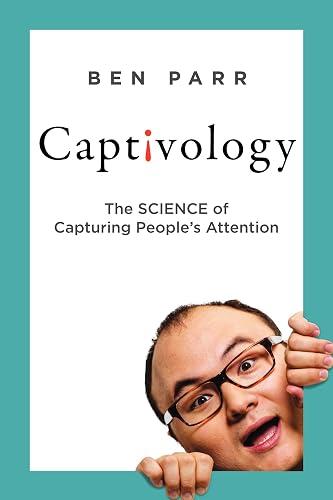
We are living through the greatest attention crisis in human history. Every day, the average person encounters more information than their grandparents encountered in a month. Notifications ping from pockets. Screens glow from every surface. Advertisements compete for glances on highways, in elevators, and inside the apps we use to escape other advertisements. The modern mind is under siege. The numbers tell a stark story. In 1986, the average person was exposed to roughly forty newspapers' worth of information each day. By 2006, that figure had more than quadrupled to 174 newspapers' worth. Today, with smartphones in every pocket and algorithms engineered to hijack focus, the figure is almost certainly higher still. Yet our brains have not evolved to handle this flood. We still have the same cognitive machinery our ancestors used to scan savannas for predators and prey. That machinery was designed for a world of scarcity, not abundance. It was built to notice sudden movements, novel sounds, and unexpected changes. It was never meant to process thousands of competing signals every hour. The result is a world where attention itself has become the scarcest resource. Companies spend billions fighting for seconds of your focus. Content creators obsess over thumbnails and headlines. Politicians craft sound bites designed to pierce through the noise. And ordinary people struggle to be heard by the people who matter most to them. This is not just a marketing problem. It is a human problem. Teachers cannot teach students who are mentally elsewhere. Leaders cannot inspire teams whose focus is fragmented. Parents cannot connect with children who are lost in screens. Relationships wither when attention is perpetually divided. The ability to capture and hold attention is no longer a nice-to-have skill. It is a fundamental requirement for influence, connection, and success. Ben Parr wrote Captivology to solve this problem. As a journalist at Mashable and CNET, he spent years studying why some stories went viral while others vanished. As a venture capitalist at DominateFund, he watched startups succeed or fail based…
Continue reading in the MinuteRead app
Get the complete 30-minute summary of Captivology
Get the complete summary in the appAttention operates in three stages: immediate, short, and long. Each requires different strategies.
The Automaticity Trigger uses sensory cues like color, contrast, and sound to capture instant attention.
The Framing Trigger adapts to or changes the mental models through which people see the world.
The Disruption Trigger violates expectations to redirect attention and create memorability.
The Reward Trigger motivates attention through extrinsic and intrinsic rewards, with intrinsic rewards sustaining long-t
The Reputation Trigger uses credibility from experts, authorities, and the crowd to command attention.
"Captivology" is a strong fit if you want practical ideas around psychology, business, self help, especially themes like attention operates in three stages: immediate, short, and long. each requires different strategies; the automaticity trigger uses sensory cues like color, contrast, and sound to capture instant attention. The MinuteRead summary distills these concepts into a focused read, whether you're deciding whether to buy the book or applying its lessons at work.
Motivated to help readers with "We have the same 1, Ben Parr wrote “Captivology” to package those ideas for a fast, focused read. In “Captivology”, Ben Parr focuses on "We have the same 1. Through “Captivology”, Ben Parr distills the core ideas on psychology into lessons readers can absorb in a single short sitting. Readers turn to this work when they want Ben Parr's perspective on the subject without working through the entire original volume. Ben Parr (born February 12, 1985) is an American jo…
Continue Reading
Access the complete 30-minute summary and thousands more nonfiction books in the MinuteRead app.

Continue reading the complete summary in the MinuteRead app.