MinuteRead
30 min
Book summary
by Johann Hari
Premium summary · Opens in the app · 5 min read
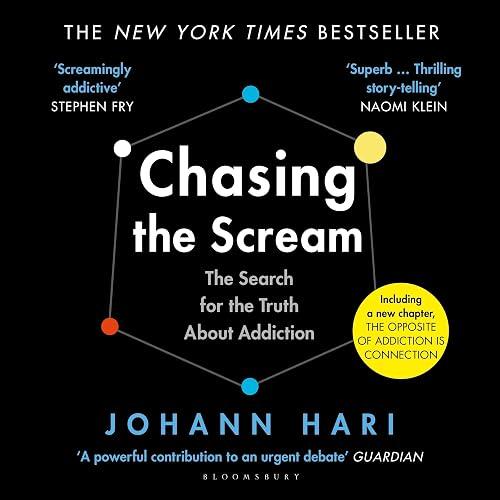
Chasing The Scream is a scathing review of the failed war on drugs, explaining its history with surprising statistics and identifying new ways that we can think about addiction, recovery, and drug laws.
Chasing The Scream is a scathing review of the failed war on drugs, explaining its history with surprising statistics and identifying new ways that we can think about addiction, recovery, and drug laws.
At the beginning of the twentieth century, drugs we now consider illicit were widely used and sold at places like department stores. The crackdown came in 1914 when the US started prohibiting the sale of drugs. It was the outbreak of WWI, and the US was becoming rapidly industrialized.
There was a lot of anxiety about this changing world. One way people felt they could control this, rather than focusing on class tensions or other less tangible problems, was to prohibit drugs.
The primary proponent, Harry Anslinger, cracked down zealously as the first officer of the US Bureau of Narcotics. But when he noticed they still flowed freely in, he suspected communists were selling them to undermine him. He used his position to help convince other countries to crack down too.
More recent campaigns have worked to convince us the war on drugs was for noble reasons, like helping addicts. But in 1914, proponents really just saw it as a way to suppress minorities.
Harry Anslinger made claims in interviews that the increase in drug use was entirely among blacks. He and others pushed the idea it was a black problem. Through this, they were able to tap into people’s prejudices and fear of minorities to garner support for fighting drugs.
When Anslinger started their crusade to ban drugs, they thought they would slowly disappear from the streets. But as it turns out, criminalizing a product doesn’t make it disappear. People instead find ways to get it illegally. This is especially true with drugs because addiction drives people to try to find a way to get their fix at any cost. This is why the biggest legacy of drug criminalization has been the creation of criminal networks controlling the distribution of illegal drugs. And it’s been extremely profitable. Before the criminalization of morphine, it only cost a few cents per grain. After, drug dealers charged a dollar for the same amount. Addicts were forced to pay the higher cost, and their addiction didn’t leave them a choice. Often, they started committing small crimes to pay for their addiction. What we now think of as junkie who spends their days stealing and prostituting is a product of the war on drugs. Cheap, legal drugs allowed addicts to live somewhat normal lives, but after their criminalization, they started quitting jobs and obligations so they could support the addiction. It also has increased violence because of the risky nature of drug dealing. Because they can’t turn to law enforcement, gangs…
Continue reading in the MinuteRead app
Get the complete 5-minute summary of Chasing The Scream
Get the complete summary in the appThe US started the war on drugs during WWI and proponents used it as a way to push racism.
Criminalizing drugs has just made way for more crimes and violence.
Addicts are misunderstood, and criminalizing drugs has made it hard for them to get support.
"Chasing The Scream" is a strong fit if you want practical ideas around culture, happiness, health, especially themes like the us started the war on drugs during wwi and proponents used it as a way to push racism; criminalizing drugs has just made way for more crimes and violence. The MinuteRead summary distills these concepts into a focused read, whether you're deciding whether to buy the book or applying its lessons at work.
Johann Hari is the New York Times best-selling author of 'Chasing The Scream: The First and Last Days of the War on Drugs', and one of the top-rated TED talkers of all time.
View all summaries by Johann HariContinue Reading
Access the complete 5-minute summary and thousands more nonfiction books in the MinuteRead app.

Continue reading the complete summary in the MinuteRead app.