MinuteRead
30 min
Book summary
by Stephen S. Cohen
Premium summary · Opens in the app · 30 min read
Every few decades, Americans convince themselves that the economy runs best when government gets out of the way. The story feels intuitive. Markets allocate resources efficiently. Entrepreneurs create value. Bureaucrats create obstacles. Therefore, the path to prosperity is simple: shrink the state, cut taxes, deregulate, and let the invisible hand do its work.
**Author:** Stephen S. Cohen and J. Bradford DeLong
**Estimated Reading Time:** 45 minutes
**What You'll Learn:** How America's greatest economic successes came from pragmatic government action rather than ideological purity, and why returning to that approach is essential for future prosperity.
**Who This Book Is For:** Anyone who wants to understand how economies actually develop, why the current economic debate is broken, and what history teaches about building shared prosperity.
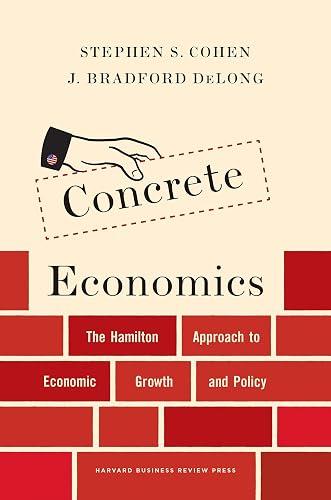
Every few decades, Americans convince themselves that the economy runs best when government gets out of the way. The story feels intuitive. Markets allocate resources efficiently. Entrepreneurs create value. Bureaucrats create obstacles. Therefore, the path to prosperity is simple: shrink the state, cut taxes, deregulate, and let the invisible hand do its work. There is only one problem with this story. It has almost no relationship to how the American economy actually developed. The United States did not become the world's dominant economic power by following laissez-faire principles. It became dominant because government repeatedly stepped in to reshape the economy, opening new spaces for private enterprise to flourish. From Alexander Hamilton's banking system to the transcontinental railroad to the interstate highway system to the internet, American prosperity has been built on a foundation of deliberate, pragmatic government action. This is the central argument of Stephen Cohen and Brad DeLong's book. They call it "concrete economics" because it focuses on what actually happened rather than what theory says should happen. And what actually happened is clear: successful economic policy has been pragmatic, not ideological. It has been concrete, not abstract. The authors are not radicals. They are not calling for central planning or socialism. They are economists who have spent decades studying economic history and development. Their argument is more subversive than any ideological manifesto. They simply point out that the most successful periods in American economic history share a common pattern: government identified a new economic space, created the conditions for growth in that space, and then let private enterprise innovate and expand within it. This pattern repeats throughout American history. Hamilton did it with manufacturing and finance. Lincoln's Republican Party did it with railroads and land-grant colleges. Theodore Roosevelt did it by taming the excesses of industrial capitalism. Franklin Roosevelt did it with the New Deal. Eisenhower did it with highways and suburbanization. The pattern is so consistent that it is remarkable anyone still believes the myth of the self-made American economy. The problem, according to Cohen and DeLong, is that since the 1980s, American economic policy has abandoned this pragmatic tradition. Instead of asking what works, policymakers have asked what fits their ideology. The result has been a shift toward finance-led growth, rising inequality, economic instability, and a…
Continue reading in the MinuteRead app
Get the complete 30-minute summary of Concrete Economics
Get the complete summary in the appAmerican prosperity has always been built on a partnership between government and private enterprise.
Government creates the conditions for economic growth. Private enterprise exploits them.
Successful economic policy is pragmatic, not ideological.
The most successful periods in American history followed a pattern: government opened a new economic space, and entrepre
The shift toward finance-led growth was a policy choice, not a natural evolution.
Finance should serve the real economy, not dominate it.
"Concrete Economics" is a strong fit if you want practical ideas around economics, history, politics, especially themes like american prosperity has always been built on a partnership between government and private enterprise; government creates the conditions for economic growth. private enterprise exploits them. The MinuteRead summary distills these concepts into a focused read, whether you're deciding whether to buy the book or applying its lessons at work.
Motivated to help readers with in successful economies, Stephen S. Cohen wrote “Concrete Economics” to package those ideas for a fast, focused read. In “Concrete Economics”, Stephen S. Cohen focuses on in successful economies. Through “Concrete Economics”, Stephen S. Cohen distills the core ideas on economics into lessons readers can absorb in a single short sitting. Readers turn to this work when they want Stephen S. Cohen's perspective on the subject without working through the entire original…
Continue Reading
Access the complete 30-minute summary and thousands more nonfiction books in the MinuteRead app.

Continue reading the complete summary in the MinuteRead app.