MinuteRead
30 min
Book summary
by Steven Quartz
Premium summary · Opens in the app · 30 min read
Every day, you make hundreds of small decisions that reveal who you are to the people around you. The clothes you put on this morning. The car you drive. The phone in your pocket. The music you stream. The coffee you order. The way you decorate your home. The books on your shelf. Each choice sends a signal, whether you intend it to or not.
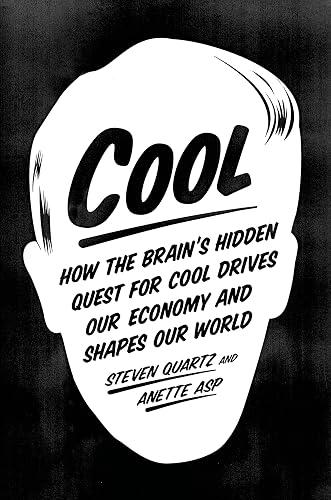
**Author:** Steven Quartz and Annette Asp
**Estimated Reading Time:** 45 minutes
**What You'll Learn:** How the brain's hidden quest for status and social connection drives consumer behavior, why "cool" emerged as a rebellion against hierarchy, and how consumer culture can actually solve the status dilemma by creating diverse routes to esteem and belonging.
**Who This Book Is For:** Anyone who has ever wondered why they buy what they buy, why certain brands feel irresistible, why status matters so much, and how consumer culture shapes identity in the modern world.
Every day, you make hundreds of small decisions that reveal who you are to the people around you. The clothes you put on this morning. The car you drive. The phone in your pocket. The music you stream. The coffee you order. The way you decorate your home. The books on your shelf. Each choice sends a signal, whether you intend it to or not. For decades, economists and social critics have treated these behaviors as evidence of shallow materialism. They have argued that consumer culture exploits our insecurities, creates false needs, and traps us in endless cycles of desire and dissatisfaction. The standard story goes something like this: advertisers manipulate us into wanting things we do not need, status competition drives us to waste resources on conspicuous displays, and the whole system leaves us emptier than before. Steven Quartz and Annette Asp tell a different story. Drawing on neuroscience, evolutionary biology, psychology, and economic history, they argue that consumption is not a corruption of human nature. It is an expression of it. The human brain evolved to navigate complex social worlds. Long before we bought things, we needed to figure out who to trust, who to cooperate with, who to learn from, and who to avoid. We developed sophisticated mental machinery for evaluating other people and for signaling our own qualities to them. When we buy things, we are using that ancient machinery in a modern context. We are not just acquiring objects. We are participating in a vast, ongoing conversation about identity, values, and belonging. This book explains how that conversation works. It traces the evolutionary roots of status-seeking, the neuroscience of pleasure and decision-making, the cultural history of cool, and the surprising ways consumer culture has transformed how we pursue esteem. Along the way, it challenges some deeply held assumptions about consumption, status, and happiness. The central claim is provocative: consumerism, far from being a social disease, may actually be a solution to one of the oldest problems humans face. That problem is the status dilemma. In traditional hierarchical societies, status is a zero-sum game. Only a few people can occupy the top positions. Everyone else must accept…
Continue reading in the MinuteRead app
Get the complete 30-minute summary of Cool
Get the complete summary in the appYour brain has three pleasure machines: survival, habit, and goal. They compete for control of your behavior.
Consumption is social signaling. You buy things to communicate who you are.
Status-seeking is an evolutionary drive shaped by social selection. It is not a moral failing.
Cool emerged as a rebellion against hierarchy. It created new routes to status based on authenticity.
Consumer culture diversifies status routes, reducing zero-sum competition.
The knowledge economy values creativity and innovation. This has transformed cool.
"Cool" is a strong fit if you want practical ideas around psychology, science, sociology, especially themes like your brain has three pleasure machines: survival, habit, and goal. they compete for control of your behavior; consumption is social signaling. you buy things to communicate who you are. The MinuteRead summary distills these concepts into a focused read, whether you're deciding whether to buy the book or applying its lessons at work.
Motivated to help readers with we are awash in these signals: How we style our hair, Steven Quartz wrote “Cool” to package those ideas for a fast, focused read. In “Cool”, Steven Quartz focuses on we are awash in these signals: How we style our hair. Through “Cool”, Steven Quartz distills the core ideas on psychology into lessons readers can absorb in a single short sitting. Readers turn to this work when they want Steven Quartz's perspective on the subject without working through the entire ori…
Continue Reading
Access the complete 30-minute summary and thousands more nonfiction books in the MinuteRead app.

Continue reading the complete summary in the MinuteRead app.