MinuteRead
30 min
Book summary
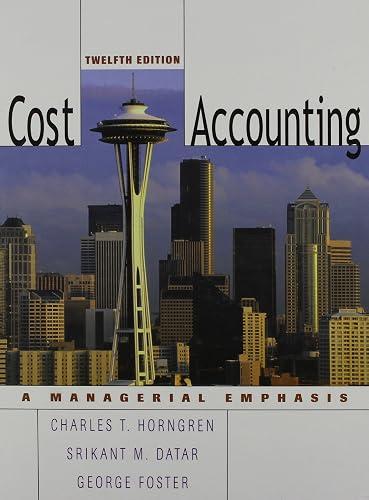
by Charles T. Horngren
Premium summary · Opens in the app · 30 min read
Every business decision involves costs. Whether a company is deciding to launch a new product, enter a new market, outsource a function, or simply adjust prices, the quality of that decision depends on the quality of the cost information behind it. Yet most people think of cost accounting as a technical back-office function, a world of ledgers and spreadsheets disconnected from the real work of running a business.
**Author:** Charles T. Horngren
**Estimated Reading Time:** 45 minutes
**What You'll Learn:**
- How cost accounting serves as the backbone of managerial decision-making - The frameworks that connect costs to strategy, value chains, and performance - How to classify, assign, and analyze costs with precision - The tools for evaluating investments, variances, and customer profitability - How to apply cost accounting principles to real business challenges
**Who This Book Is For:**
This condensed edition is for managers, business students, entrepreneurs, and professionals who need to understand how costs behave, how they are measured, and how they drive decisions. If you have ever wondered why some companies thrive while others struggle despite similar products, the answer often lies in how they understand and manage costs. This book gives you that understanding.
Every business decision involves costs. Whether a company is deciding to launch a new product, enter a new market, outsource a function, or simply adjust prices, the quality of that decision depends on the quality of the cost information behind it. Yet most people think of cost accounting as a technical back-office function, a world of ledgers and spreadsheets disconnected from the real work of running a business. Charles T. Horngren saw it differently. For decades, his work has shaped how managers, accountants, and students understand the relationship between costs and decisions. His central insight is deceptively simple: cost accounting is not about recording what happened. It is about providing the information managers need to make better choices about what happens next. The problem is that cost information is rarely straightforward. A cost can be direct or indirect, fixed or variable, relevant or irrelevant, depending on the question being asked. The same number can mean different things in different contexts. A cost that seems high in one analysis might be perfectly reasonable in another. Without a clear framework for understanding these distinctions, managers make decisions based on incomplete or misleading information. This is why cost accounting matters so much. When a company misunderstands its costs, it misprices its products, invests in the wrong projects, rewards the wrong behaviors, and loses ground to competitors who see the numbers more clearly. When a company understands its costs, it can make strategic choices with confidence, knowing what drives profitability and what erodes it. Horngren's approach is distinctive because it connects cost accounting to strategy. He does not treat cost measurement as an end in itself. Instead, he shows how cost information supports the fundamental strategic choices every company must make: whether to compete on cost leadership or product differentiation, how to configure the value chain, and how to align operations with customer needs. The book also recognizes that cost accounting operates in a…
Continue reading in the MinuteRead app
Get the complete 30-minute summary of Cost Accounting
Get the complete summary in the appCost accounting provides information for decisions, not just reports for compliance.
Different costs serve different purposes. The right cost concept depends on the decision.
The value chain includes all functions that add customer value. Optimizing one function can hurt overall performance.
Direct costs are traced to cost objects; indirect costs are allocated. The allocation base matters.
Variable costs change with activity; fixed costs remain constant within a relevant range.
Absorption costing includes fixed manufacturing costs in inventory; variable costing treats them as period expenses.
"Cost Accounting" is a strong fit if you want practical ideas around accounting, business, management, especially themes like cost accounting provides information for decisions, not just reports for compliance; different costs serve different purposes. the right cost concept depends on the decision. The MinuteRead summary distills these concepts into a focused read, whether you're deciding whether to buy the book or applying its lessons at work.
Motivated to help readers with cost accounting measures and reports financial and nonfinancial information related to the costs of acquiring, Charles T. Horngren wrote “Cost Accounting” to package those ideas for a fast, focused read. In “Cost Accounting”, Charles T. Horngren focuses on cost accounting measures and reports financial and nonfinancial information related to the costs of acquiring. Through “Cost Accounting”, Charles T. Horngren distills the core ideas on accounting into lessons rea…
Continue Reading
Access the complete 30-minute summary and thousands more nonfiction books in the MinuteRead app.

Continue reading the complete summary in the MinuteRead app.