MinuteRead
30 min
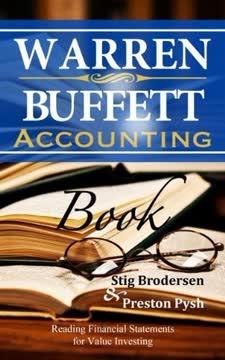
Book summary
Premium summary · Opens in the app · 30 min read
Most people approach the stock market the wrong way. They watch price charts, follow hot tips, and react to news headlines. They treat stocks like lottery tickets, hoping that the ticker symbol they bought will go up because someone else will pay more for it later. This is not investing. This is speculation, and it rarely ends well.
**Author:** Stig Brodersen
**Estimated Reading Time:** 90 minutes
**What You'll Learn:**
- How to read and interpret the three essential financial statements - The four investing principles that guide Warren Buffett's decisions - How to calculate intrinsic value and apply a margin of safety - The key ratios that reveal a company's true financial health - How to think about the stock market as a value investor
**Who This Book Is For:**
This book is for anyone who wants to move beyond speculation and understand how to evaluate businesses through their financial statements. Whether you are a beginner investor, a business student, or someone who has been investing for years without truly understanding balance sheets and income statements, this book will give you the tools to read financial reports with confidence.
Most people approach the stock market the wrong way. They watch price charts, follow hot tips, and react to news headlines. They treat stocks like lottery tickets, hoping that the ticker symbol they bought will go up because someone else will pay more for it later. This is not investing. This is speculation, and it rarely ends well. The problem is not a lack of intelligence. Many smart people lose money in the stock market. The problem is a lack of fundamental understanding. They never learned how to read a balance sheet. They cannot tell you the difference between revenue and cash flow. They do not know what a company is actually worth, so they have no way of knowing whether they are paying a fair price or a foolish one. Warren Buffett, widely regarded as the greatest investor of all time, built his fortune on a simple insight: stocks are not pieces of paper that bounce around on a screen. They are ownership stakes in real businesses. When you buy a share of stock, you become a part-owner of a company that sells products, employs people, owns assets, and generates cash. The question you should be asking is not "What will the stock price do next week?" but rather "Is this a good business, and am I paying a reasonable price to own a piece of it?" To answer that question, you need to understand accounting. Buffett himself has said that accounting is the language of business. If you cannot read financial statements, you cannot understand what a company is telling you about its health, its profitability, and its future prospects. You are investing blind. Stig Brodersen wrote this book to solve that problem. He recognized that most accounting textbooks are dry, technical, and disconnected from the practical needs of investors. They teach accounting as an academic exercise, not as a tool for making better investment decisions. Brodersen…
Continue reading in the MinuteRead app
Get the complete 30-minute summary of Warren Buffett Accounting Book
Get the complete summary in the appStocks are ownership stakes in real businesses, not ticker symbols to be traded.
Price and value are different. Your job is to buy when price is below value.
Mr. Market is emotional and irrational. Use his mood swings to your advantage.
The four investing principles are vigilant leaders, long-term prospects, stock stability, and attractive prices.
The income statement, balance sheet, and cash flow statement each tell a different part of the story. Read all three.
Free cash flow is the cash available for distribution to shareholders. It matters more than net income.
"Warren Buffett Accounting Book" is a strong fit if you want practical ideas around finance, business, accounting, especially themes like stocks are ownership stakes in real businesses, not ticker symbols to be traded; price and value are different. your job is to buy when price is below value. The MinuteRead summary distills these concepts into a focused read, whether you're deciding whether to buy the book or applying its lessons at work.
Stig Brodersen is an author and investor known for his work on value investing and financial education. He co-wrote the Warren Buffett Accounting Book, which aims to teach readers how to analyze financial statements using Warren Buffett's investment principles. Brodersen is also a co-founder of The Investors Podcast, a popular finance and investing podcast. His approach focuses on making complex financial concepts accessible to beginners and helping individuals develop skills for value investing…
View all summaries by Stig BrodersenContinue Reading
Access the complete 30-minute summary and thousands more nonfiction books in the MinuteRead app.

Continue reading the complete summary in the MinuteRead app.