MinuteRead
30 min
We tend to think of creativity as a mysterious gift bestowed upon a lucky few. We imagine the solitary genius struck by lightning in a garret, the inventor shouting "Eureka!" in a bathtub, the artist waiting for the muse to arrive. These images are romantic, but they are also deeply misleading.
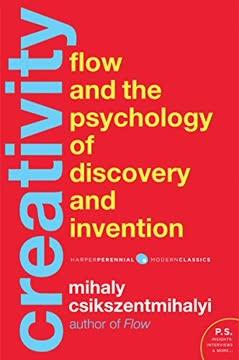
**Author:** Mihály Csíkszentmihályi
**Estimated Reading Time:** 45 minutes
**What You'll Learn:**
- Why creativity is never just about the individual, but about a system of culture, gatekeepers, and talent - The paradoxical personality traits that creative people consistently display - The five stages of the creative process and how to navigate them - How flow states fuel creative work and personal fulfillment - What childhood experiences shape creative potential - How to build environments that foster creativity - Why creativity can flourish at any age
**Who This Book Is For:**
Anyone who wants to understand where real creativity comes from. This book is for artists, scientists, entrepreneurs, educators, parents, and leaders who want to move beyond the myth of the lone genius and understand how creative breakthroughs actually happen. If you have ever wondered why some people sustain creative output across a lifetime while others burn out, or why some environments spark innovation while others crush it, this book provides the answers.
We tend to think of creativity as a mysterious gift bestowed upon a lucky few. We imagine the solitary genius struck by lightning in a garret, the inventor shouting "Eureka!" in a bathtub, the artist waiting for the muse to arrive. These images are romantic, but they are also deeply misleading. Mihály Csíkszentmihályi spent decades studying creative people: Nobel laureates, groundbreaking artists, pioneering scientists, and visionary business leaders. What he discovered is that creativity is not a rare trait possessed by a handful of extraordinary individuals. It is a process that emerges from the interaction between a person, a domain of knowledge, and a field of gatekeepers. It is a system, not a spark. This distinction matters enormously. If creativity is a trait, then most of us are simply out of luck. We either have it or we do not. But if creativity is a system, then it can be understood, cultivated, and improved. We can learn to position ourselves within that system more effectively. We can develop the habits and environments that make creative breakthroughs more likely. The problem is that most people never learn how creativity actually works. They absorb the myth of the lone genius from popular culture and conclude that creativity is beyond their control. They wait for inspiration instead of building the conditions that invite it. They focus on the individual while ignoring the cultural and social forces that determine whether a new idea will be recognized or forgotten. Csíkszentmihályi's approach is different. Rather than speculating about creativity from an armchair, he went directly to the source. He interviewed more than ninety of the most creative people of the twentieth century: scientists like Linus Pauling and Jonas Salk, writers like Madeleine L'Engle and…
Continue reading in the MinuteRead app
Get the complete 30-minute summary of Creativity
Get the complete summary in the appCreativity is a system, not a trait. It emerges from the interaction of domain, field, and person.
Creative people hold contradictory traits in tension. Complexity is the source of their creative power.
The creative process has five stages: preparation, incubation, insight, evaluation, and elaboration.
Flow is the engine of creativity. It occurs when challenges and skills are balanced.
Early experiences shape creative potential. Support plus challenge builds resilience.
Creative people invent their own careers. They do not wait for permission.
"Creativity" is a strong fit if you want practical ideas around psychology, self help, science, especially themes like creativity is a system, not a trait. it emerges from the interaction of domain, field, and person; creative people hold contradictory traits in tension. complexity is the source of their creative power. The MinuteRead summary distills these concepts into a focused read, whether you're deciding whether to buy the book or applying its lessons at work.
Mihaly Csikszentmihalyi is a Hungarian-American psychologist renowned for his research on happiness and creativity. He emigrated to the United States at 22 and has held prominent positions at the University of Chicago and Claremont Graduate University. Csikszentmihalyi is best known for developing the concept of "flow," a state of optimal experience characterized by full immersion in an activity. His work has significantly influenced positive psychology, with former APA president Martin Seligman…
View all summaries by Mihaly CsikszentmihalyiContinue Reading
Access the complete 30-minute summary and thousands more nonfiction books in the MinuteRead app.

Continue reading the complete summary in the MinuteRead app.