MinuteRead
30 min
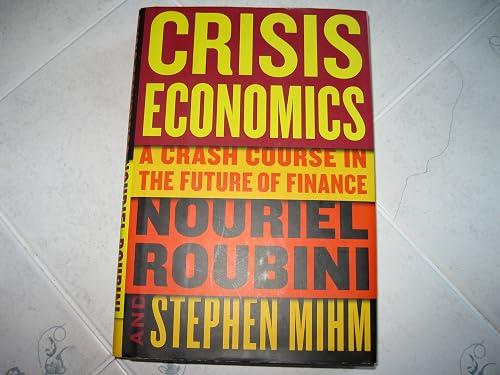
Book summary
by Nouriel Roubini
Premium summary · Opens in the app · 30 min read
In the autumn of 2008, the global financial system came closer to complete collapse than at any point since the Great Depression. Banks that had stood for over a century vanished overnight. Stock markets around the world lost trillions of dollars in value. Governments scrambled to prevent a total meltdown of the international banking system. And yet, for Nouriel Roubini, none of this came as a surprise.
**Author:** Nouriel Roubini
**Estimated Reading Time:** 45 minutes
**What You'll Learn:** Why financial crises are not rare accidents but recurring features of capitalism, how the 2008 crisis revealed deep flaws in the global financial system, and what reforms are necessary to prevent future catastrophes.
**Who This Book Is For:** Anyone who wants to understand the true mechanics of financial crises, from investors and business leaders to policymakers and curious readers who sense that something is fundamentally unstable about the global economy.
In the autumn of 2008, the global financial system came closer to complete collapse than at any point since the Great Depression. Banks that had stood for over a century vanished overnight. Stock markets around the world lost trillions of dollars in value. Governments scrambled to prevent a total meltdown of the international banking system. And yet, for Nouriel Roubini, none of this came as a surprise. Roubini had been warning for years that the American housing market was a bubble waiting to burst, that the financial system had become dangerously overleveraged, and that the complex instruments Wall Street had created were not spreading risk but concentrating it. When his predictions proved correct, he earned the nickname "Dr. Doom." But Roubini insists that his foresight was not the result of pessimism or extraordinary genius. It came from studying history. The central insight of Crisis Economics is both simple and profound: financial crises are not rare "black swan" events that no one could have predicted. They are recurring features of capitalism itself. They follow predictable patterns. They have happened before, and they will happen again. The specific details change, the assets involved differ, and the triggers vary, but the fundamental dynamics remain remarkably consistent across centuries and continents. This matters because the way we think about financial crises shapes how we respond to them. If we believe crises are unpredictable accidents, we treat them as unfortunate surprises to be cleaned up after the fact. But if we understand them as recurring phenomena with identifiable causes, we can anticipate them, prepare for them, and perhaps even prevent the worst excesses. The problem, Roubini argues, is that we have consistently failed to learn this lesson. After every crisis, policymakers promise reform. They vow that this time will be different. They implement new regulations and create new institutions. And then, as the memory of the crisis fades, they dismantle those protections. They convince themselves that the old rules no longer apply, that financial innovation has made the system safer, that this time really is different. It never is. The 2008 crisis was not caused by subprime mortgages alone. It was caused by a subprime financial system. Decades of deregulation had created a shadow…
Continue reading in the MinuteRead app
Get the complete 30-minute summary of Crisis Economics
Get the complete summary in the appFinancial crises are recurring features of capitalism, not rare anomalies.
The 2008 crisis was caused by systemic problems, not just subprime mortgages.
Excessive debt makes the financial system fragile and crisis-prone.
Bailouts create moral hazard, encouraging future risk-taking.
Monetary policy cannot create sustainable growth. It can only stabilize the system.
Comprehensive regulatory reform is essential to prevent future crises.
"Crisis Economics" is a strong fit if you want practical ideas around economics, finance, business, especially themes like financial crises are recurring features of capitalism, not rare anomalies; the 2008 crisis was caused by systemic problems, not just subprime mortgages. The MinuteRead summary distills these concepts into a focused read, whether you're deciding whether to buy the book or applying its lessons at work.
Motivated to help readers with crises—unsustainable booms followed by calamitous busts—have always been with us, Nouriel Roubini wrote “Crisis Economics” to package those ideas for a fast, focused read. In “Crisis Economics”, Nouriel Roubini focuses on crises—unsustainable booms followed by calamitous busts—have always been with us. Through “Crisis Economics”, Nouriel Roubini distills the core ideas on economics into lessons readers can absorb in a single short sitting. Readers turn to this work…
Continue Reading
Access the complete 30-minute summary and thousands more nonfiction books in the MinuteRead app.

Continue reading the complete summary in the MinuteRead app.