MinuteRead
30 min
Book summary
Premium summary · Opens in the app · 30 min read
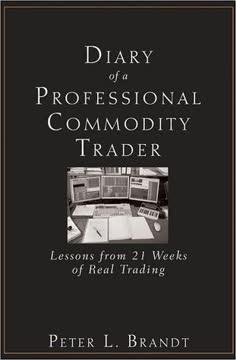
Every year, thousands of people open trading accounts with high hopes. They buy books, attend seminars, subscribe to newsletters, and study charts late into the night. Most of them lose money. Many lose everything. The few who survive often do so not because they found a magic indicator or a secret formula, but because they learned to think differently about what trading actually is.
**Author:** Peter L. Brandt
**Estimated Reading Time:** 45 minutes
**What You'll Learn:** - Why classical chart patterns still matter in modern markets - How to build a complete trading plan that survives losing streaks - The psychological battles every trader faces and how to win them - Why risk management matters more than finding the next big trade - How to think in probabilities rather than predictions
**Who This Book Is For:** This book is for anyone who has ever looked at a price chart and wondered if there is a systematic way to profit from it. It is for traders who have blown up accounts chasing hot tips. It is for investors who want to understand how professional speculators actually think. And it is for anyone who suspects that the hardest part of trading has nothing to do with charts and everything to do with the person staring at the screen.
Every year, thousands of people open trading accounts with high hopes. They buy books, attend seminars, subscribe to newsletters, and study charts late into the night. Most of them lose money. Many lose everything. The few who survive often do so not because they found a magic indicator or a secret formula, but because they learned to think differently about what trading actually is. Peter L. Brandt belongs to a rare group. He has traded commodity futures for over three decades, through bull markets and bear markets, through calm periods and violent crashes. He has generated returns that would make most professional money managers envious. Yet his approach is remarkably simple. He looks at charts. He identifies classical patterns. He manages risk. He waits. This book is not a typical trading book. It is a diary, a record of real trades, real mistakes, real doubts, and real lessons learned over years in the trenches. Brandt does not promise easy riches. He does not claim to have a crystal ball. What he offers is something far more valuable: an honest account of what it takes to survive and thrive as a speculator. The central problem Brandt addresses is the gap between what most people think trading is and what it actually is. Most people think trading is about prediction. They believe that if they can just figure out where the market is going, they will make money. This belief leads them to chase certainty, to seek out gurus who claim to know the future, to overtrade, and to take excessive risks. Brandt's message is different. He argues that trading is not about predicting the future. It is about managing uncertainty. Charts do not tell you what will happen. They tell you what is happening and what has happened. They…
Continue reading in the MinuteRead app
Get the complete 30-minute summary of Diary of a Professional Commodity Trader
Get the complete summary in the appCharts are tools, not crystal balls. They provide an edge, not certainty.
Risk no more than 1% of capital on any single trade.
Write a trading plan and follow it consistently.
The best patterns are immediately obvious. If you have to force it, skip it.
Trading is an upstream swim against human nature. Master your psychology.
Drawdowns are inevitable. Expect them and prepare for them.
"Diary of a Professional Commodity Trader" is a strong fit if you want practical ideas around finance, business, biography, especially themes like charts are tools, not crystal balls. they provide an edge, not certainty; risk no more than 1% of capital on any single trade. The MinuteRead summary distills these concepts into a focused read, whether you're deciding whether to buy the book or applying its lessons at work.
Peter L. Brandt is an experienced commodity trader with over 30 years in futures markets. He has actively traded for 22+ years, earning an impressive average annual return of 68% with relatively low drawdowns. Peter L. Brandt is known for his technical analysis approach, focusing on classic chart patterns. He emphasizes risk management and disciplined trading. Brandt's trading style involves using breakouts and geometric patterns to identify potential trades. His willingness to share detailed in…
View all summaries by Peter L. BrandtContinue Reading
Access the complete 30-minute summary and thousands more nonfiction books in the MinuteRead app.

Continue reading the complete summary in the MinuteRead app.