MinuteRead
30 min
The financial crisis of 2008 was never just about subprime mortgages in California or complex derivatives on Wall Street. It was a global event, but not in the way most people imagine. It was not a single storm that swept across the world in the same form. Instead, it was a series of distinct explosions, each triggered by the same initial spark but shaped by the unique cultural, political, and psychological landscape of each country it touched.
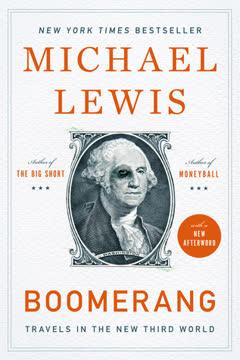
**Author:** Michael Lewis **Estimated Reading Time:** 45 minutes
**What You'll Learn:**
How the 2008 financial crisis was never just an American problem. You will travel through Iceland, Greece, Ireland, Germany, and back to the United States to understand how each nation's culture, history, and psychology shaped its own unique financial disaster. You will see how the same cheap money that inflated American housing prices also inflated entire national economies, and why the aftermath revealed uncomfortable truths about who we are.
**Who This Book Is For:**
Anyone who wants to understand the global financial crisis beyond the headlines. This book is for readers who suspect that economics is never just about numbers, but about people, culture, and the stories nations tell themselves. It is for those who want to see how the financial world actually works, not through abstract theory, but through vivid characters and unforgettable journeys.
The financial crisis of 2008 was never just about subprime mortgages in California or complex derivatives on Wall Street. It was a global event, but not in the way most people imagine. It was not a single storm that swept across the world in the same form. Instead, it was a series of distinct explosions, each triggered by the same initial spark but shaped by the unique cultural, political, and psychological landscape of each country it touched. Michael Lewis spent years trying to understand what happened. He wrote The Big Short, which explained how a handful of outsiders saw the American housing bubble for what it was and bet against it. But after that book, he realized something important. The American story was only one chapter in a much larger narrative. The same cheap money that had inflated American real estate had also flowed across borders, inflating entire national economies. And when the money stopped, each country revealed something profound about itself. The subprime mortgage crisis was more symptom than cause. The deeper social and economic problems that gave rise to it remained. This is the central insight of Boomerang. The financial crisis did not create problems. It exposed them. It revealed the hidden fault lines that had been developing for decades in countries around the world. It showed what happens when a society borrows too much, believes too easily, and refuses to confront uncomfortable truths. Lewis approaches this subject not as an economist but as a storyteller. He travels to the places where the crisis hit hardest. He talks to the people who lived through it, the people who caused it, and the people who are still dealing with the consequences. He finds that the most revealing stories are often not in the financial capitals but in the strange, unexpected places where the…
Continue reading in the MinuteRead app
Get the complete 30-minute summary of Boomerang
Get the complete summary in the appThe 2008 financial crisis was a global event, but each country experienced it differently based on its culture, history,
Iceland transformed from a fishing nation into a giant hedge fund in just a few years, with catastrophic results.
Greece's crisis was caused by systemic corruption and tax evasion that permeated every level of society.
Ireland's economic miracle was built on real estate speculation and collapsed when the bubble burst.
Germany was conservative at home but reckless abroad, buying billions of dollars in toxic American assets.
The U.S. municipal bond market represents a hidden vulnerability with massive unfunded liabilities.
"Boomerang" is a strong fit if you want practical ideas around economics, business, finance, especially themes like the 2008 financial crisis was a global event, but each country experienced it differently based on its culture, history,; iceland transformed from a fishing nation into a giant hedge fund in just a few years, with catastrophic results. The MinuteRead summary distills these concepts into a focused read, whether you're deciding whether to buy the book or applying its lessons at work.
Michael Monroe Lewis is an American author and financial journalist known for his nonfiction work on business, finance, and economics. Born in New Orleans, he graduated from Princeton University and worked on Wall Street before writing his first book, Liar's Poker. Lewis has written several bestsellers, including Moneyball and The Big Short, which have been adapted into successful films. His work often investigates financial crises and behavioral finance, combining in-depth research with engagin…
View all summaries by Michael LewisContinue Reading
Access the complete 30-minute summary and thousands more nonfiction books in the MinuteRead app.

Continue reading the complete summary in the MinuteRead app.