MinuteRead
30 min
Book summary
Premium summary · Opens in the app · 30 min read
Every year, the world produces enough food to feed approximately ten billion people. Every night, nearly one billion people go to bed hungry. This is not a problem of production. It is a problem of design.
### The Failures of Agribusiness and the Promise of Agroecology
**Author:** Vandana Shiva
**Estimated Reading Time:** 45 minutes
**What You'll Learn:**
- Why industrial agriculture has failed to feed the world despite producing more calories than ever before - How living soil, biodiversity, and small-scale farmers form the true foundation of global food security - Why seed freedom and food sovereignty matter more than corporate efficiency - The nine-step transition from a destructive food system to a regenerative one - How to apply agroecological principles in your own life and community
**Who This Book Is For:**
This book is for anyone who eats. It is for people who have sensed that something is deeply wrong with the global food system but could not articulate exactly what. It is for gardeners, farmers, policymakers, students, activists, and concerned citizens who want to understand why hunger persists in a world of abundance. It is for those who suspect that the answer to feeding the world lies not in more chemicals, more patents, and more corporate consolidation, but in working with nature rather than against it.
Every year, the world produces enough food to feed approximately ten billion people. Every night, nearly one billion people go to bed hungry. This is not a problem of production. It is a problem of design. The dominant narrative tells us that industrial agriculture is the only way to feed a growing population. We are told that we need chemical fertilizers to boost yields, pesticides to protect crops, genetically modified seeds to withstand drought, and global supply chains to move food efficiently from farm to table. We are told that small farms are relics of the past, that traditional knowledge is backward, and that the future of food lies in laboratories and corporate boardrooms. Vandana Shiva has spent four decades dismantling this narrative. A physicist by training, she brings scientific rigor to a subject often dominated by ideology. Her conclusion is stark: industrial agriculture is not feeding the world. It is destroying the conditions that make feeding the world possible. The numbers tell a troubling story. Since the Green Revolution of the 1960s, chemical-intensive agriculture has degraded nearly one-third of the world's arable land. Groundwater reserves are being depleted faster than they can recharge. Biodiversity has collapsed in farming regions, with devastating consequences for pollinators, soil organisms, and the wild relatives of cultivated crops. Farmers in the developing world have been pushed into debt by the high cost of seeds and chemicals, leading to hundreds of thousands of suicides in India alone. Meanwhile, the people who actually feed the world remain largely invisible. Small-scale farmers, most of them women, produce approximately seventy percent of the food consumed globally.…
Continue reading in the MinuteRead app
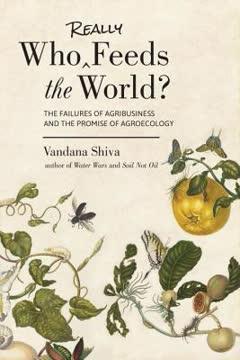
Get the complete 30-minute summary of Who Really Feeds the World? The Failures of Agribusiness and the Promise of Agroecology
Get the complete summary in the appAgroecology feeds the world, not industrial agriculture.
Soil is alive. Chemical agriculture kills it.
Biodiversity is productivity. Monocultures are fragile.
Small farms produce more food per acre than large ones.
Women are the primary food producers and seed savers of the world.
Seed freedom is the foundation of food sovereignty.
"Who Really Feeds the World? The Failures of Agribusiness and the Promise of Agroecology" is a strong fit if you want practical ideas around food, agriculture, ecology, especially themes like agroecology feeds the world, not industrial agriculture; soil is alive. chemical agriculture kills it. The MinuteRead summary distills these concepts into a focused read, whether you're deciding whether to buy the book or applying its lessons at work.
Vandana Shiva is a prominent Indian environmentalist, physicist, and author known for her activism in alter-globalization and ecofeminism. After earning a Ph.D. in physics from the University of Western Ontario in 1978, she shifted her focus to ecological concerns. Shiva has received numerous awards for her work in human rights, ecology, and conservation. She is the founder of Navdanya, an organization promoting biodiversity and organic farming. Her writings and activism challenge industrial agr…
View all summaries by Vandana ShivaContinue Reading
Access the complete 30-minute summary and thousands more nonfiction books in the MinuteRead app.

Continue reading the complete summary in the MinuteRead app.