MinuteRead
30 min
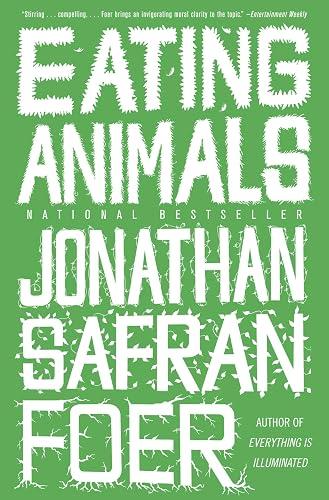
Eating Animals reveals the true burden of the modern-day meat industry that we all bear as a society and details the environmental, health-related, and ethical consequences.
Eating Animals reveals the true burden of the modern-day meat industry that we all bear as a society and details the environmental, health-related, and ethical consequences.
A lot of meat-eaters these days don’t particularly care to know the living conditions of their meat. And if they want to continue eating it – rightly so. If you saw for yourself the production process of the incredibly cheap meat we buy in supermarkets, you’d likely never eat it again.
Children’s books often contain pictures of farm animals. In those pictures, cows, chickens, and pigs usually have a big lot to wander around in. They have smiling, caring farmers looking after them. Surprisingly, this is not far from the image many adults also hold in their imagination when they think about animal agriculture.
Now I need to break it to you: nothing could be further from the truth.
With the amount of meat we consume as a society, the process of “raising” animals is more like “producing” them in factories. There, it is all about efficiency, in terms of both time and money. All that matters is to grow animals as fast and cheap as possible. This means that no one really cares about their wellbeing.
Foer gives multiple examples of the treatment of factory animals, but I will mention just a few. Chickens are often kept in overcrowded spaces, with less than a square foot of space per animal. Piglets that don’t grow fast enough are being smashed against concrete headfirst. Both chickens and pigs have their beaks and teeth removed so that they don’t pick on one another out of frustration.
There are many more ways in which people harm animals just to make the meat business more profitable. But one that is also shooting ourselves in the foot is how we feed them.
The unethical aspects of modern meat production are at the forefront of Foer’s book – but they are not the only reasons you should rethink your meat consumption. If you care about your own health, there are things to consider, too. The drive for efficiency in the factory farms causes them to treat the livestock and meat with all kinds of sh*t. And, unfortunately, this is quite literal. Take poultry farms. The chicken meat, after it is disemboweled and sliced, is immersed in what the author calls “fecal soup,” to absorb 20% additional weight. This is a kind of “broth” consists of dead chickens that contains feces and all sorts of pathogens from individual birds. This virtually ensures contaminating the meat that later goes to the supermarkets. And indeed – one consumer report has shown that 83% of chicken meat available in stores contained either salmonella or…
Continue reading in the MinuteRead app
Get the complete 5-minute summary of Eating Animals
Get the complete summary in the appIn modern times, we don’t “raise animals.” Instead, we “produce meat.”
The mass production of meat poses a threat to the consumers’ health.
Animal farming in its current form destroys the global ecosystem on an unimaginable scale.
"Eating Animals" is a strong fit if you want practical ideas around culture, environment, health, especially themes like in modern times, we don’t “raise animals.” instead, we “produce meat.”; the mass production of meat poses a threat to the consumers’ health. The MinuteRead summary distills these concepts into a focused read, whether you're deciding whether to buy the book or applying its lessons at work.
Jonathan Safran Foer is the author of the bestseller Everything Is Illuminated, named Book of the Year by the Los Angeles Times and the winner of numerous awards, including the Guardian First Book Prize, the National Jewish Book Award, and the New York Public Library Young Lions Prize. Foer was one of Rolling Stone's "People of the Year" and Esquire's "Best and Brightest." Foreign rights to his new novel have already been sold in ten countries. The film of Everything Is Illuminated, directed by …
View all summaries by Jonathan FoerContinue Reading
Access the complete 5-minute summary and thousands more nonfiction books in the MinuteRead app.

Continue reading the complete summary in the MinuteRead app.