MinuteRead
30 min
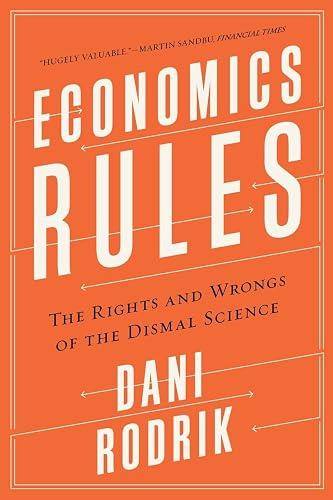
Book summary
by Dani Rodrik
Premium summary · Opens in the app · 30 min read
Economics occupies a strange place in modern life. It is simultaneously revered and reviled, treated as both the queen of the social sciences and the source of endless policy failures. Politicians invoke economic arguments to justify their decisions. Central bankers are treated as oracles whose pronouncements move markets. Yet the same discipline that claims scientific rigor failed to predict the 2008 financial crisis, prescribed development policies that disappointed across much of the developi
**Author:** Dani Rodrik
**Estimated Reading Time:** 45 minutes
**What You'll Learn:**
- Why economics is best understood as a collection of models rather than a single unified theory - How economists select the right model for the right context - Why the world is almost always "second-best" and what that means for policy - How the 2008 financial crisis and the Washington Consensus revealed the dangers of model overconfidence - Practical frameworks for thinking like an economist without falling into common traps
**Who This Book Is For:**
Anyone who has ever felt confused by economists confidently offering contradictory advice. Anyone who wants to understand what economics can and cannot tell us. And anyone who suspects that the real value of economic thinking lies not in universal laws but in the art of matching models to contexts.
Economics occupies a strange place in modern life. It is simultaneously revered and reviled, treated as both the queen of the social sciences and the source of endless policy failures. Politicians invoke economic arguments to justify their decisions. Central bankers are treated as oracles whose pronouncements move markets. Yet the same discipline that claims scientific rigor failed to predict the 2008 financial crisis, prescribed development policies that disappointed across much of the developing world, and remains bitterly divided on questions ranging from minimum wages to trade policy. How can a field be so influential and so frequently wrong? Dani Rodrik offers an answer that cuts through the usual defenses and attacks. Economics, he argues, is neither a universal science of human behavior nor an ideological smoke screen. It is something more interesting: a collection of models. These models are simplified representations of reality, each designed to capture a specific aspect of how economies work. Some models assume perfect competition. Others assume strategic interaction. Some assume rational actors. Others incorporate psychological quirks. Some emphasize market efficiency. Others highlight market failures. The power of economics lies not in any single model but in the diversity of the toolkit. The art of economics lies in knowing which model to apply to which situation. This insight sounds simple, but it has profound implications. It explains why economists so often disagree. It explains why policies that work brilliantly in one context fail disastrously in another. It explains why the public is perpetually confused by economic pronouncements. And it explains why the 2008 financial crisis caught so many experts off guard: they had fallen in love with a particular set of models and forgotten that other models existed. Rodrik is uniquely positioned to make this argument. As a professor at Harvard's Kennedy School, he has spent decades working at the intersection of economic theory and real-world policy. He has advised…
Continue reading in the MinuteRead app
Get the complete 30-minute summary of Economics Rules
Get the complete summary in the appEconomics is a collection of models, not a single theory. Each model captures a different aspect of reality.
Models are deliberate simplifications. The question is not whether a model is realistic but whether it captures the rele
The world is almost always second-best. In a world with multiple distortions, piecemeal reforms can make things worse.
Model selection is the central skill of economics. It requires judgment, empirical investigation, and institutional know
The financial crisis was a failure of model selection. Economists became overconfident in efficient market models and ig
The Washington Consensus failed because it ignored context. Universal policy prescriptions do not work in diverse contex
"Economics Rules" is a strong fit if you want practical ideas around economics, business, finance, especially themes like economics is a collection of models, not a single theory. each model captures a different aspect of reality; models are deliberate simplifications. the question is not whether a model is realistic but whether it captures the rele. The MinuteRead summary distills these concepts into a focused read, whether you're deciding whether to buy the book or applying its lessons at work.
Motivated to help readers with "Economics encompasses a collection of models, Dani Rodrik wrote “Economics Rules” to package those ideas for a fast, focused read. Through “Economics Rules”, Dani Rodrik distills the core ideas on economics into lessons readers can absorb in a single short sitting. Readers turn to this work when they want Dani Rodrik's perspective on the subject without working through the entire original volume. The book is structured so each chapter highlights a practical lesson…
View all summaries by Dani RodrikContinue Reading
Access the complete 30-minute summary and thousands more nonfiction books in the MinuteRead app.

Continue reading the complete summary in the MinuteRead app.