MinuteRead
30 min
We live in an era of unprecedented change. The technologies we use, the jobs we hold, and the ways we connect with one another are transforming at a speed that would have been unimaginable just a few decades ago. A smartphone today contains more computing power than the systems that guided astronauts to the moon. Artificial intelligence is reshaping entire industries. Social media has rewired how we communicate, form relationships, and understand the world.
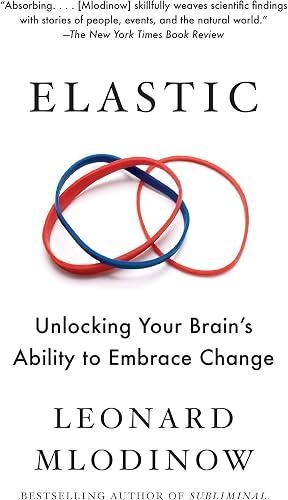
**Author:** Leonard Mlodinow **Estimated Reading Time:** 45 minutes
How your brain generates novel ideas, why flexible thinking matters more than ever in a rapidly changing world, and what you can do to strengthen your capacity for creative problem-solving. You will discover the science behind insight, the hidden mental processes that shape your thoughts, and practical techniques for thinking more adaptively.
This book is for anyone who feels overwhelmed by the pace of change and wants to think more creatively. Whether you are an entrepreneur navigating disruption, a professional seeking innovative solutions, a student preparing for an unpredictable future, or simply someone who wants to understand how your mind works, the ideas in this book will help you become more mentally agile.
We live in an era of unprecedented change. The technologies we use, the jobs we hold, and the ways we connect with one another are transforming at a speed that would have been unimaginable just a few decades ago. A smartphone today contains more computing power than the systems that guided astronauts to the moon. Artificial intelligence is reshaping entire industries. Social media has rewired how we communicate, form relationships, and understand the world. Yet our brains evolved for a very different environment. For most of human history, life was relatively stable. The challenges our ancestors faced were predictable: find food, avoid predators, navigate social hierarchies, raise children. In that world, learning a set of rules and following them consistently was a winning strategy. The brain developed efficient systems for recognizing patterns, automating responses, and conserving mental energy. That approach worked beautifully for thousands of years. It does not work anymore. The problem is not that we lack intelligence. The problem is that many of us are running outdated mental software. We approach novel problems with old frameworks. We rely on habits and assumptions that no longer serve us. We feel stuck, overwhelmed, or anxious when faced with situations that do not fit our existing mental models. Leonard Mlodinow argues that what we need now is a different kind of thinking. He calls it elastic thinking: the ability to generate novel ideas, make unusual connections, and adapt quickly to changing circumstances. Elastic thinking is not the same as analytical intelligence, which involves solving well-defined problems through logical steps. It is also not the same as scripted thinking, which relies on automatic responses to familiar situations. Elastic thinking is the capacity to let go of what we think we know and see the world with fresh eyes. Mlodinow brings a unique perspective to this subject. As a theoretical physicist, he has spent his career grappling with problems that require radical new ways of thinking. As a bestselling science writer, he…
Continue reading in the MinuteRead app
Get the complete 30-minute summary of Elastic
Get the complete summary in the appThe brain has three modes of thinking: scripted, analytical, and elastic. Elastic thinking is essential for adapting to
The brain's reward system makes thinking pleasurable. The struggle of grappling with a challenge can be intrinsically sa
The default mode network is active when the mind is at rest. Mind-wandering is essential for creative thinking.
Insight occurs when hidden connections break through into consciousness. It cannot be forced, but the conditions can be
Cognitive filters decide which thoughts reach conscious awareness. These filters can screen out valuable ideas.
Positive mood, mental fatigue, and relaxation loosen cognitive filters and enhance elastic thinking.
"Elastic" is a strong fit if you want practical ideas around psychology, science, self help, especially themes like the brain has three modes of thinking: scripted, analytical, and elastic. elastic thinking is essential for adapting to; the brain's reward system makes thinking pleasurable. the struggle of grappling with a challenge can be intrinsically sa. The MinuteRead summary distills these concepts into a focused read, whether you're deciding whether to buy the book or applying its lessons at work.
Motivated to help readers with "To succeed in life today, Leonard Mlodinow wrote “Elastic” to package those ideas for a fast, focused read. In “Elastic”, Leonard Mlodinow focuses on "To succeed in life today. Through “Elastic”, Leonard Mlodinow distills the core ideas on psychology into lessons readers can absorb in a single short sitting. Readers turn to this work when they want Leonard Mlodinow's perspective on the subject without working through the entire original volume. Leonard Mlodinow (b…
View all summaries by Leonard MlodinowContinue Reading
Access the complete 30-minute summary and thousands more nonfiction books in the MinuteRead app.

Continue reading the complete summary in the MinuteRead app.