MinuteRead
30 min
Book summary
Premium summary · Opens in the app · 30 min read
Most people believe that success comes from being smart. They assume that the person with the highest IQ, the best technical skills, or the most impressive credentials will naturally rise to the top. But spend enough time in any workplace and you will notice something strange. The most brilliant person in the room is not always the most successful. The person who gets promoted is not always the one with the best ideas. The leader people actually want to follow is not always the one with the most
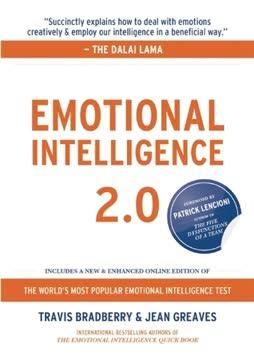
**Author:** Travis Bradberry
**Estimated Reading Time:** 45 minutes
**What You'll Learn:**
* Why emotional intelligence matters more than raw intelligence for career success * How to develop self-awareness as the foundation of emotional mastery * Practical strategies for managing your emotions under pressure * How to read social situations and build stronger workplace relationships * The specific habits that separate emotionally intelligent people from everyone else
**Who This Book Is For:**
This book is for professionals who feel stuck despite being good at what they do. It is for leaders who struggle to connect with their teams. It is for anyone who has ever reacted emotionally in a difficult moment and regretted it later. If you have ever wondered why some people seem to navigate workplace challenges with ease while others crumble, this book will show you what those people know and what you can learn.
Most people believe that success comes from being smart. They assume that the person with the highest IQ, the best technical skills, or the most impressive credentials will naturally rise to the top. But spend enough time in any workplace and you will notice something strange. The most brilliant person in the room is not always the most successful. The person who gets promoted is not always the one with the best ideas. The leader people actually want to follow is not always the one with the most experience. Something else is at work. Something that does not show up on a resume or a performance review. Something that determines whether people trust you, whether they listen to you, and whether they want to work with you. That something is emotional intelligence. The concept has been around for decades, but it has often been misunderstood. Some people think emotional intelligence means being nice. Others think it means being emotional. Still others dismiss it as a soft skill that cannot be measured or developed. All of these assumptions are wrong. Emotional intelligence is not about being agreeable. It is about being aware. It is not about expressing every feeling that crosses your mind. It is about understanding your feelings well enough to choose your response instead of being controlled by it. And it is absolutely something you can develop, regardless of where you are starting from. The research is clear. Emotional intelligence is responsible for 58 percent of performance in all types of jobs. People with high emotional intelligence earn an average of $29,000 more per year than those with low emotional intelligence. It is the single biggest predictor of workplace performance and the strongest driver of leadership excellence. These numbers hold across industries, across job types, and across levels of seniority. But the numbers…
Continue reading in the MinuteRead app
Get the complete 30-minute summary of Emotional Intelligence Power Point
Get the complete summary in the appEmotional intelligence is the ability to recognize and understand emotions in yourself and others, and to use this aware
Emotional intelligence is responsible for 58 percent of job performance and is the single biggest predictor of workplace
Emotional intelligence consists of four skills: self-awareness, self-management, social awareness, and relationship mana
Self-awareness is the foundation. You cannot manage what you do not notice.
Self-management is not suppression. It is choosing how to express emotions constructively.
The pause between stimulus and response is the key to managing emotional reactions.
"Emotional Intelligence Power Point" is a strong fit if you want practical ideas around psychology, self help, business, especially themes like emotional intelligence is the ability to recognize and understand emotions in yourself and others, and to use this aware; emotional intelligence is responsible for 58 percent of job performance and is the single biggest predictor of workplace. The MinuteRead summary distills these concepts into a focused read, whether you're deciding whether to buy the book or applying its lessons at work.
Dr. Travis Bradberry is a renowned expert in emotional intelligence and the bestselling author of Emotional Intelligence Habits. With over 3 million copies of his books sold, he has established himself as a leading voice in the field. Bradberry's work has been featured in major publications such as Newsweek, Fortune, and The Wall Street Journal. He has a significant online presence, with 2.5 million followers on LinkedIn, where he is recognized as a Top Voice. His expertise in emotional intellig…
View all summaries by Travis BradberryContinue Reading
Access the complete 30-minute summary and thousands more nonfiction books in the MinuteRead app.

Continue reading the complete summary in the MinuteRead app.