MinuteRead
30 min
Book summary
by Stephen Smith
Premium summary · Opens in the app · 30 min read
Every day, somewhere in the world, a government makes a decision that affects the environment. A city imposes a congestion charge on drivers. A country sets a limit on sulfur dioxide emissions from power plants. A regulatory agency decides whether to require expensive pollution control equipment on factories. A fishing quota is established, or a carbon tax is introduced.
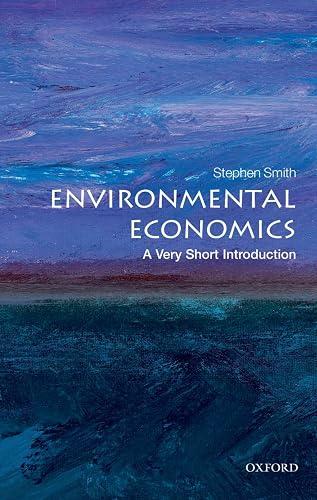
### A Very Short Introduction
**Author:** Stephen Smith
**Estimated Reading Time:** 45 minutes
**What You'll Learn:**
- Why markets fail to protect the environment and what this means for policy - How economists determine the right level of pollution control - Why some environmental regulations cost far more than necessary - How emissions trading and pollution taxes actually work - What makes climate change uniquely difficult to address economically - How to value things that have no price tag, like clean air and biodiversity
**Who This Book Is For:**
Anyone who wants to understand the economic logic behind environmental policy. Whether you are a student, a policymaker, a business professional, or simply someone who cares about the environment and wants to think clearly about solutions, this book provides the essential framework. No prior economics background is required.
Every day, somewhere in the world, a government makes a decision that affects the environment. A city imposes a congestion charge on drivers. A country sets a limit on sulfur dioxide emissions from power plants. A regulatory agency decides whether to require expensive pollution control equipment on factories. A fishing quota is established, or a carbon tax is introduced. These decisions are rarely popular. They impose costs on businesses, workers, and consumers. They spark fierce debates about jobs, economic growth, and the proper role of government. And yet, they are made because there is a widespread recognition that something must be done about environmental degradation. The question is not whether we should protect the environment. The question is how much protection we should have, at what cost, and through what means. This is where environmental economics enters the picture. For many people, economics seems like an unlikely ally in the fight for a cleaner planet. Economics is often associated with profit-seeking, growth, and consumption. The environment, by contrast, is associated with preservation, restraint, and values that transcend money. It is tempting to see these as opposing worldviews. But this is a fundamental misunderstanding of what economics actually offers. Environmental economics is not about putting a price tag on nature so that corporations can exploit it more efficiently. It is about recognizing a simple truth: environmental protection requires resources. Those resources have alternative uses. When we spend money on pollution control, we cannot spend that same money on schools, hospitals, or housing. When we restrict industrial activity to protect a river, we give up some economic output. These tradeoffs are real, and pretending they do not exist does not make them disappear. The contribution of environmental economics is to provide a framework for thinking clearly about these tradeoffs. It helps us ask better questions. How much environmental improvement do we actually get from a…
Continue reading in the MinuteRead app
Get the complete 30-minute summary of Environmental Economics
Get the complete summary in the appEnvironmental problems are caused by market failures, not moral failings. Externalities occur when costs are imposed on
The goal of environmental policy is not zero pollution but the optimal level, where marginal abatement cost equals margi
Market-based instruments, such as pollution taxes and emissions trading, achieve environmental goals at lower cost than
Making pollution costly creates incentives for cost-effective reductions and technological innovation.
The US Acid Rain Program proved that emissions trading can work in practice, achieving faster and cheaper emissions redu
Environmental goods and services have value even without market prices. Failing to value them leads to underinvestment i
"Environmental Economics" is a strong fit if you want practical ideas around economics, environment, science, especially themes like environmental problems are caused by market failures, not moral failings. externalities occur when costs are imposed on; the goal of environmental policy is not zero pollution but the optimal level, where marginal abatement cost equals margi. The MinuteRead summary distills these concepts into a focused read, whether you're deciding whether to buy the book or applying its lessons at work.
Motivated to help readers with environmental economics provides a framework for thinking about these issues, Stephen Smith wrote “Environmental Economics” to package those ideas for a fast, focused read. In “Environmental Economics”, Stephen Smith focuses on environmental economics provides a framework for thinking about these issues. Through “Environmental Economics”, Stephen Smith distills the core ideas on economics into lessons readers can absorb in a single short sitting. Readers turn to th…
Continue Reading
Access the complete 30-minute summary and thousands more nonfiction books in the MinuteRead app.

Continue reading the complete summary in the MinuteRead app.