MinuteRead
30 min
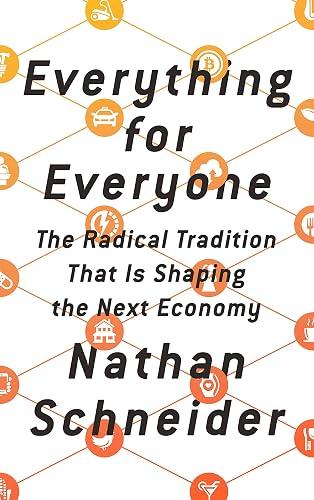
Book summary
by Nathan Schneider
Premium summary · Opens in the app · 30 min read
There is a story we tell ourselves about the economy. It goes something like this: businesses are started by entrepreneurs who raise capital from investors, compete in markets, and grow until they dominate their industries. Workers trade their time for wages. Consumers choose from what corporations offer. The system is efficient, if imperfect, and alternatives are naive fantasies that collapse under real-world pressures.
**Author:** Nathan Schneider **Estimated Reading Time:** 42 minutes
The hidden history of cooperative enterprise that stretches back centuries and shapes economies worldwide. The story of how ordinary people have built democratic businesses that serve their needs rather than extract profit. The emerging movement to bring cooperative principles into the digital economy. And practical insight into how cooperation offers a viable path between unfettered capitalism and centralized state control.
This book is for anyone who has felt that the economy is rigged against ordinary people. For entrepreneurs seeking alternatives to venture capital and corporate ownership. For technologists wondering if the internet could have developed differently. For community organizers looking for proven models of economic empowerment. And for readers who sense that something fundamental is broken in how we organize work, ownership, and value.
There is a story we tell ourselves about the economy. It goes something like this: businesses are started by entrepreneurs who raise capital from investors, compete in markets, and grow until they dominate their industries. Workers trade their time for wages. Consumers choose from what corporations offer. The system is efficient, if imperfect, and alternatives are naive fantasies that collapse under real-world pressures. Nathan Schneider spent years investigating this story and found it to be incomplete in ways that matter enormously. While reporting on the Occupy Wall Street movement, he kept encountering people who were not just protesting the existing system but building something different. They were creating businesses owned by their workers, platforms governed by their users, and financial institutions accountable to their members. These were not utopian experiments destined to fail. Many had been operating successfully for decades, even centuries. The cooperative tradition, Schneider discovered, is both ancient and urgently relevant. It predates modern capitalism and has repeatedly emerged as a response to economic crises. It has electrified rural America, provided banking services to communities abandoned by commercial banks, and enabled farmers to compete against industrial agriculture. Today, over one billion people worldwide are members of cooperatives. The largest worker-owned businesses employ thousands of people. Credit unions serve hundreds of millions of members. Yet this tradition remains largely invisible in mainstream economic discourse. Business schools rarely teach cooperative models. Journalists rarely cover them. Politicians rarely champion them. The result is a collective amnesia about one of humanity's most enduring and successful approaches to organizing economic life. This book is an attempt to recover that memory and apply it to our current moment. Schneider argues that we are living through a period of economic disruption comparable to the Industrial Revolution. The rise of digital platforms has concentrated unprecedented wealth and power in a handful of corporations. The internet, once imagined as a decentralized commons, has become a…
Continue reading in the MinuteRead app
Get the complete 30-minute summary of Everything for Everyone
Get the complete summary in the appCooperation is an ancient human practice with roots in diverse cultures and traditions, not a modern invention.
The Rochdale Pioneers created a sustainable model for cooperative enterprise that now guides cooperatives serving over o
Rural electric cooperatives demonstrated that cooperation can provide essential infrastructure at scale.
Economic crises create conditions for cooperative innovation, as people turn to cooperation when existing systems fail.
The internet's promise of decentralization has been betrayed by platform monopolies that centralize control and extract
Platform cooperativism offers an alternative by building digital platforms owned and governed by their users.
"Everything for Everyone" is a strong fit if you want practical ideas around economics, history, business, especially themes like cooperation is an ancient human practice with roots in diverse cultures and traditions, not a modern invention; the rochdale pioneers created a sustainable model for cooperative enterprise that now guides cooperatives serving over o. The MinuteRead summary distills these concepts into a focused read, whether you're deciding whether to buy the book or applying its lessons at work.
Motivated to help readers with "Cooperation is tradition and innovation, Nathan Schneider wrote “Everything for Everyone” to package those ideas for a fast, focused read. In “Everything for Everyone”, Nathan Schneider focuses on "Cooperation is tradition and innovation. Through “Everything for Everyone”, Nathan Schneider distills the core ideas on economics into lessons readers can absorb in a single short sitting. Readers turn to this work when they want Nathan Schneider's perspective on the su…
Continue Reading
Access the complete 30-minute summary and thousands more nonfiction books in the MinuteRead app.

Continue reading the complete summary in the MinuteRead app.