MinuteRead
30 min
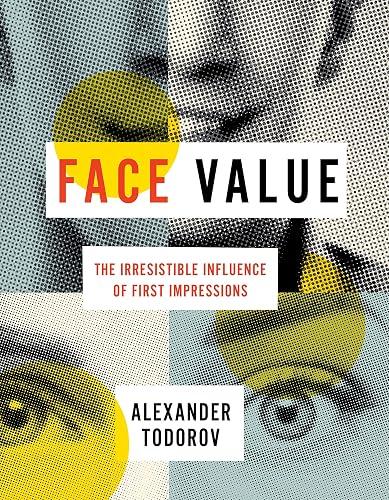
Book summary
by Alexander Todorov
Premium summary · Opens in the app · 30 min read
You have never met the person in the photograph, yet you already have opinions about them. You can tell, with a confidence that feels almost like perception, whether they seem trustworthy, competent, aggressive, or kind. These impressions arrive effortlessly, automatically, and with remarkable speed. They feel less like judgments and more like observations, as if the face simply reveals its truth to anyone willing to look.
**Author:** Alexander Todorov
**Estimated Reading Time:** 45 minutes
**What You'll Learn:**
- Why we form instant judgments about people from their faces - How these snap judgments shape elections, courtrooms, and financial decisions - What science reveals about the accuracy and limits of face reading - Why the ancient practice of physiognomy keeps returning in modern disguise - How to make better decisions by understanding your own biases
**Who This Book Is For:**
Anyone who has ever formed an opinion about someone within seconds of meeting them. Anyone who makes hiring decisions, votes in elections, serves on juries, or simply wants to understand why certain faces inspire trust while others provoke suspicion. This book is for people who want to see clearly in a world where appearances constantly shape judgment.
You have never met the person in the photograph, yet you already have opinions about them. You can tell, with a confidence that feels almost like perception, whether they seem trustworthy, competent, aggressive, or kind. These impressions arrive effortlessly, automatically, and with remarkable speed. They feel less like judgments and more like observations, as if the face simply reveals its truth to anyone willing to look. This experience is universal. Every human being forms impressions from faces. We do it within milliseconds of seeing someone. We do it before we are consciously aware of what we are looking at. And we do it with a conviction that feels deeply justified, even when we have no evidence to support our conclusions. The promise that we can read character from faces is ancient. The Greeks called it physiognomy. Aristotle wrote about it. In the eighteenth and nineteenth centuries, it became a popular science, complete with elaborate systems for decoding the meaning of facial features. Lavater's illustrated guides taught readers how to identify the wise, the foolish, the virtuous, and the criminal by examining the shape of a nose or the set of a jaw. Galton used composite photography to create visual archetypes of criminals and the diseased, believing the camera could reveal what the eye might miss. These systems were eventually debunked. Early psychologists demonstrated that physiognomy had no scientific foundation. The practice became associated with scientific racism, eugenics, and some of the darkest chapters in the history of pseudoscience. By the mid-twentieth century, physiognomy was discredited, a cautionary tale about the dangers of reading too much into appearances. And yet the appeal never disappeared. Today, companies claim their algorithms can identify terrorists, pedophiles, and fraudsters from facial analysis. Dating apps promise to match people based on facial compatibility. Political consultants obsess over candidate photographs. The underlying belief remains the same: that the face contains hidden information about the person, and that…
Continue reading in the MinuteRead app
Get the complete 30-minute summary of Face Value
Get the complete summary in the appWe form impressions from faces automatically and effortlessly, in as little as 30 to 40 milliseconds.
First impressions are remarkably consistent across people, but agreement does not guarantee accuracy.
Facial appearance shapes decisions about elections, legal cases, and economic transactions, often without our awareness.
Most face impressions reduce to two dimensions: trustworthiness and dominance.
Our impressions are shaped by our own experiences, preferences, and appearance, including a bias toward faces that resem
Still images are misleading sources of information about character. They capture moments, not people.
"Face Value" is a strong fit if you want practical ideas around psychology, science, sociology, especially themes like we form impressions from faces automatically and effortlessly, in as little as 30 to 40 milliseconds; first impressions are remarkably consistent across people, but agreement does not guarantee accuracy. The MinuteRead summary distills these concepts into a focused read, whether you're deciding whether to buy the book or applying its lessons at work.
Motivated to help readers with the appeal of this promise is that we can't help but form impressions, Alexander Todorov wrote “Face Value” to package those ideas for a fast, focused read. In “Face Value”, Alexander Todorov focuses on the appeal of this promise is that we can't help but form impressions. Through “Face Value”, Alexander Todorov distills the core ideas on psychology into lessons readers can absorb in a single short sitting. Readers turn to this work when they want Alexander Todorov…
Continue Reading
Access the complete 30-minute summary and thousands more nonfiction books in the MinuteRead app.

Continue reading the complete summary in the MinuteRead app.