MinuteRead
30 min
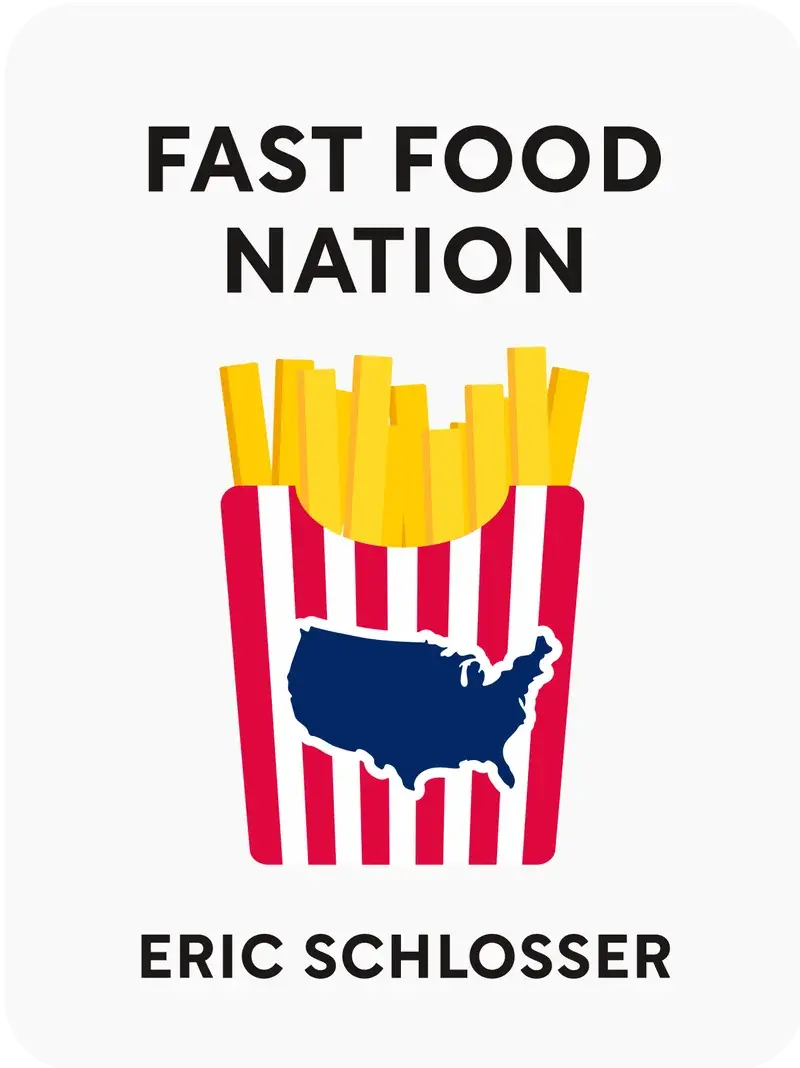
Fast Food Nation describes how the fast food industry has reduced the overall food quality worldwide, created poor working conditions for millions of people and ruined public health.
Fast Food Nation describes how the fast food industry has reduced the overall food quality worldwide, created poor working conditions for millions of people and ruined public health.
When you think about who to market a product to, one of the first questions that comes up is usually: “Who has the money to buy this?” But the fast food industry found a group of customers that helped them go around this question: children.
Children are responsive, easy to impress and can be convinced with very simple incentives. You show them a bunch of toys and funny characters plus a savory burger and they’re sold. Speaking of sold, how do they come up with the money to pay for the food?
They don’t. They simply annoy their parents until they buy it for them. There’s hardly anything more convincing for a parent than a child’s plea and since the tendency of parents to compensate a lack of attention with spending more money on their kids has gone up since the 80s, this kind of advertising made for the perfect combination of desire and guilt.
Just think of all the colors at a McDonald’s. The playground outside. The naming of “Happy Meals.” The toys. They’re a children’s paradise. Adding the toys alone can double or triple sales in any given week.
A shocking result of their deliberate marketing to children is that 90% of all children in the US between the ages of three and nine go to McDonald’s at least once a month. Of course, today people use DoorDash and Grubhub to order in.
Oh and the food has long snuck into schools too. Fast food chains like Subway are often the main suppliers of cafeteria food.
How is it even possible for one cheeseburger to cost $1? I mean, think about how much of the work that goes into one burger you could do if I gave you $1. And that’s not even thinking about profit! Of course mass production is the main driver behind these prices, but even with that in mind the race for cheaper could hardly be any closer to the bottom, could it? The meat processing industry has long adopted the same assembly line, highly standardized process the fast food industry uses to make the food. This has made skilled workers unnecessary. Instead, they hire cheap, replaceable employees, often illegal migrants, homeless people or refugees and pay them next to nothing. For example, since an employer must only offer paid holidays and health insurance after at least six months of work time, many meat companies fire their workers shortly before passing this mark. Another thing meat packagers love about hiring illegal immigrants (like the 25% of…
Continue reading in the MinuteRead app
Get the complete 5-minute summary of Fast Food Nation
Get the complete summary in the appFast food companies target children in their marketing, because they’re impressionable.
Wherever big meat packaging companies go, crime and poverty are on the rise.
There’s a worse health issue than obesity that the fast food industry creates, and it affects 130,000 people a DAY.
"Fast Food Nation" is a strong fit if you want practical ideas around culture, food, health, especially themes like fast food companies target children in their marketing, because they’re impressionable; wherever big meat packaging companies go, crime and poverty are on the rise. The MinuteRead summary distills these concepts into a focused read, whether you're deciding whether to buy the book or applying its lessons at work.
ERIC SCHLOSSER is the author of The New York Times bestsellers Fast Food Nation and Reefer Madness. His work has appeared in The Atlantic Monthly, Rolling Stone, The New Yorker, Vanity Fair, and The Nation.
View all summaries by Eric SchlosserContinue Reading
Access the complete 5-minute summary and thousands more nonfiction books in the MinuteRead app.

Continue reading the complete summary in the MinuteRead app.