MinuteRead
30 min
Book summary
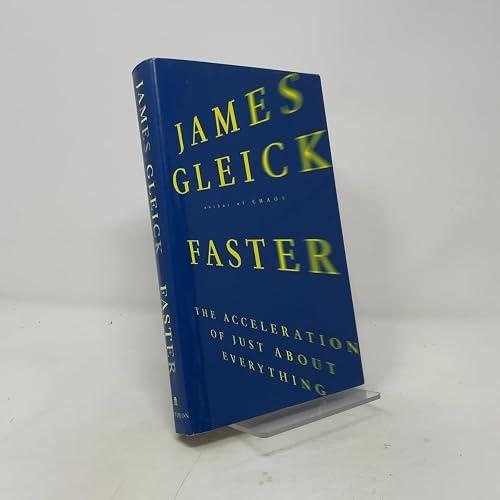
by James Gleick
Premium summary · Opens in the app · 30 min read
You are sitting in traffic. The light turns green. For half a second, the car ahead of you does not move. Your hand twitches toward the horn. Your jaw tightens. Somewhere in your chest, a small engine of impatience revs.
**Author:** James Gleick **Estimated Reading Time:** 45 minutes
**What You'll Learn:** How the obsession with speed has reshaped human consciousness, why saving time makes us feel busier, what the acceleration of daily life does to our minds and bodies, and how to think clearly about the pace of modern existence.
**Who This Book Is For:** Anyone who has ever felt rushed while standing still, overwhelmed by notifications, guilty about doing nothing, or curious about why life feels faster than it used to. This book is for people who want to understand the hidden architecture of hurry.
You are sitting in traffic. The light turns green. For half a second, the car ahead of you does not move. Your hand twitches toward the horn. Your jaw tightens. Somewhere in your chest, a small engine of impatience revs. That half-second pause would have been invisible to your great-grandparents. They would not have noticed it. They would not have felt it as an interruption, a delay, a theft of time. But you feel it. You feel it because you live in a world that has taught you, with extraordinary precision, that time is always running out. James Gleick wrote *Faster* to understand how this happened. Not the obvious story of technology making things quicker. That story is familiar. The deeper question is stranger and more unsettling: why, in an age of unprecedented speed and convenience, do we feel more pressed for time than any generation in history? The book begins with a simple observation. We have entered the epoch of the nanosecond. A nanosecond is one billionth of a second. It is the timescale on which modern computers operate. It is a unit of time so small that human experience cannot register it. Light travels about one foot in a nanosecond. A thought takes hundreds of millions of times longer to form. And yet this invisible, unimaginable unit now governs the machinery of our lives. Gleick is not a self-help guru. He is a science writer and historian, and *Faster* is a work of cultural investigation. He examines elevators and remote controls, telephone hold times and television pacing, airline schedules and microwave ovens. He looks at how we became a society that cannot wait, that taps our fingers while files download, that checks our phones dozens of times an hour, that has turned the act of saving time into a full-time occupation. The paradox at the heart of the book is this: every technology designed to save time creates new expectations that consume the time saved. The washing machine freed hours from laundry, so we raised our standards for cleanliness and did laundry more often. Email made communication instantaneous, so we now receive…
Continue reading in the MinuteRead app
Get the complete 30-minute summary of Faster
Get the complete summary in the appWe live in the epoch of the nanosecond, where time is measured in units too small for human perception.
Time-saving technologies create new expectations that consume the time saved, making us feel busier despite unprecedente
Multitasking is a myth. Task-switching reduces productivity and increases stress.
Attention has become the scarce resource in an age of information abundance.
Time and money are not interchangeable. Time can only be spent, never saved or accumulated.
Hurry sickness is real. Chronic time urgency damages physical and mental health.
"Faster" is a strong fit if you want practical ideas around science, technology, psychology, especially themes like we live in the epoch of the nanosecond, where time is measured in units too small for human perception; time-saving technologies create new expectations that consume the time saved, making us feel busier despite unprecedente. The MinuteRead summary distills these concepts into a focused read, whether you're deciding whether to buy the book or applying its lessons at work.
Motivated to help readers with "We have reached the epoch of the nanosecond, James Gleick wrote “Faster” to package those ideas for a fast, focused read. Through “Faster”, James Gleick distills the core ideas on science into lessons readers can absorb in a single short sitting. Readers turn to this work when they want James Gleick's perspective on the subject without working through the entire original volume. The book is structured so each chapter highlights a practical lesson from James Gleick…
View all summaries by James GleickContinue Reading
Access the complete 30-minute summary and thousands more nonfiction books in the MinuteRead app.

Continue reading the complete summary in the MinuteRead app.