MinuteRead
30 min
Book summary
by Tim Harford
Premium summary · Opens in the app · 30 min read
Every day, you interact with dozens of inventions that quietly shape your life. The coffee you drink traveled across an ocean in a standardized steel box. The money you spend exists as entries in a digital ledger, a system that traces its roots to Renaissance bookkeeping. The food on your plate was grown using techniques that began with a simple wooden tool pulled through soil thousands of years ago.
**Author:** Tim Harford
**Estimated Reading Time:** 45 minutes
**What You'll Learn:**
- How ordinary objects like barbed wire and the plow quietly built the modern world - Why some inventions change everything while others fade into obscurity - The hidden economic forces that determine who wins and who loses from innovation - How seemingly simple ideas create vast, interconnected systems - What history teaches us about navigating today's technological disruptions
**Who This Book Is For:**
This book is for anyone curious about how the modern economy came to be. It is for readers who sense that the world around them, from the shipping container to the smartphone, did not appear by accident. It is for professionals who want to understand the deeper patterns behind technological change. And it is for anyone who has ever wondered why some inventions transform society while others, equally clever, disappear without a trace.
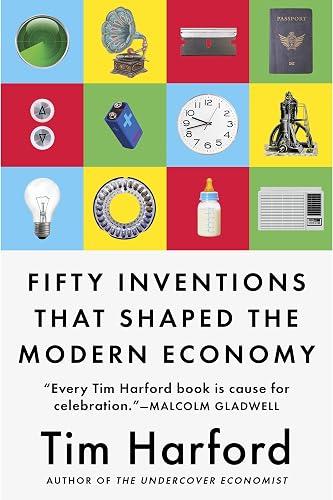
Every day, you interact with dozens of inventions that quietly shape your life. The coffee you drink traveled across an ocean in a standardized steel box. The money you spend exists as entries in a digital ledger, a system that traces its roots to Renaissance bookkeeping. The food on your plate was grown using techniques that began with a simple wooden tool pulled through soil thousands of years ago. None of these inventions announce themselves. They do not demand attention. They simply work, invisibly, in the background of daily life. Yet each one represents a moment when human ingenuity changed the rules of the game. Tim Harford, an economist and journalist known for making complex ideas accessible, set out to explore these quiet revolutions. He wanted to understand not just what inventions did, but how they reshaped economies, societies, and the lives of ordinary people. The result is a journey through fifty objects and ideas, from the ancient plow to the modern smartphone, each one a thread in the fabric of contemporary life. The problem Harford addresses is simple but profound. Most people think of invention as a story of heroic individuals and dramatic breakthroughs. The lone genius in a garage. The eureka moment in a laboratory. The sudden flash of insight that changes everything overnight. This narrative is compelling. It is also mostly wrong. The real story of invention is messier, more interesting, and far more useful. It is a story of incremental improvements and unexpected combinations. It is a story of failures that became foundations for later successes. It is a story of resistance from people who had good reasons to fear change. And it is a story of unintended consequences that no one could have predicted. Consider the plow. It seems almost too simple to matter. A blade pulled…
Continue reading in the MinuteRead app
Get the complete 30-minute summary of Fifty Inventions That Shaped the Modern Economy
Get the complete summary in the appThe plow created agricultural surpluses that made civilization possible.
Barbed wire made property rights enforceable on the American prairie.
The shipping container made global supply chains economically viable.
The S-bend enabled modern sanitation and saved millions of lives.
Patents create incentives for innovation but can also stifle it.
Double-entry bookkeeping enabled the development of modern capitalism.
"Fifty Inventions That Shaped the Modern Economy" is a strong fit if you want practical ideas around economics, history, technology, especially themes like the plow created agricultural surpluses that made civilization possible; barbed wire made property rights enforceable on the american prairie. The MinuteRead summary distills these concepts into a focused read, whether you're deciding whether to buy the book or applying its lessons at work.
Motivated to help readers with the plow, Tim Harford wrote “Fifty Inventions That Shaped the Modern Economy” to package those ideas for a fast, focused read. In “Fifty Inventions That Shaped the Modern Economy”, Tim Harford focuses on the plow. Through “Fifty Inventions That Shaped the Modern Economy”, Tim Harford distills the core ideas on economics into lessons readers can absorb in a single short sitting. Readers turn to this work when they want Tim Harford's perspective on the subject withou…
View all summaries by Tim HarfordContinue Reading
Access the complete 30-minute summary and thousands more nonfiction books in the MinuteRead app.

Continue reading the complete summary in the MinuteRead app.