MinuteRead
30 min
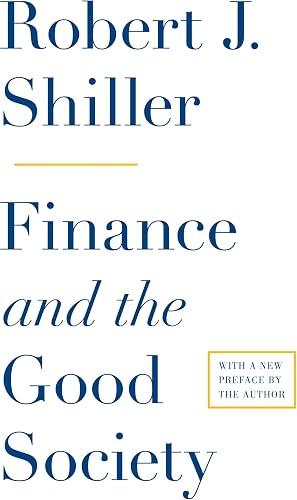
Book summary
Premium summary · Opens in the app · 30 min read
Most people have a deeply ambivalent relationship with finance. They use financial services every day. They have bank accounts, credit cards, mortgages, retirement plans, and insurance policies. They may invest in stocks or bonds. Yet when asked what finance contributes to society, many struggle to articulate a positive answer. They see headlines about financial crises, predatory lending, excessive bonuses, and market manipulation. They sense that something is wrong, that the financial system ha
**Author:** Robert J. Shiller
**Estimated Reading Time:** 45 minutes
**What You'll Learn:**
- Why finance is fundamentally a tool for human progress, not just wealth accumulation - How financial innovation has democratized opportunity across centuries and continents - The essential roles different professionals play in creating a healthy financial system - Why speculation, properly understood, drives economic advancement - How risk management protects both individuals and societies - What real solutions to inequality look like from a financial perspective - Why philanthropy needs a fundamental redesign - How ownership shapes democratic participation - The psychological foundations of financial behavior - Why moral purpose belongs at the center of finance
**Who This Book Is For:**
This book is for anyone who has ever felt uneasy about the role of finance in modern life. It is for the student wondering whether a career in finance can be meaningful. It is for the citizen trying to understand what banks, markets, and financial institutions actually do for society. It is for the policymaker seeking a framework for reform. And it is for the skeptic who suspects finance is nothing more than sophisticated gambling. Robert Shiller, a Nobel laureate who has spent decades studying markets, offers a different vision: finance as a force for human flourishing.
Most people have a deeply ambivalent relationship with finance. They use financial services every day. They have bank accounts, credit cards, mortgages, retirement plans, and insurance policies. They may invest in stocks or bonds. Yet when asked what finance contributes to society, many struggle to articulate a positive answer. They see headlines about financial crises, predatory lending, excessive bonuses, and market manipulation. They sense that something is wrong, that the financial system has grown too large, too complex, too disconnected from the real economy of goods, services, and human needs. This unease is not new. For centuries, philosophers, religious leaders, and social critics have questioned whether finance serves any genuine purpose. Aristotle condemned usury. Medieval theologians debated whether charging interest was sinful. Karl Marx saw finance as parasitic on productive labor. In the twentieth century, John Maynard Keynes worried about the casino-like character of financial markets. More recently, after the 2008 financial crisis, public anger toward bankers reached levels not seen since the Great Depression. Robert Shiller understands this anger. He has spent his career studying financial markets, and he has been among the first to warn about speculative bubbles. He predicted the dot-com crash and the housing bubble that led to the 2008 crisis. He knows better than most how finance can go wrong, how greed and herd behavior can distort markets, how complexity can hide risk, and how ordinary people can be harmed by the failures of…
Continue reading in the MinuteRead app
Get the complete 30-minute summary of Finance and the Good Society
Get the complete summary in the appFinance is goal architecture. It exists to help people achieve their aspirations, not just to make money.
Stewardship is the core ethic of finance. Financial professionals manage assets on behalf of others and have a duty to a
Financial innovation has democratized opportunity. From microfinance to mutual funds, innovation has expanded access to
Speculation serves an information function. Markets aggregate knowledge and help society allocate resources, even though
Risk management is about resilience. The goal is to build systems that can absorb shocks and continue functioning.
Inequality requires structural solutions. Progressive taxation, financial education, and broader ownership can create ge
"Finance and the Good Society" is a strong fit if you want practical ideas around economics, finance, business, especially themes like finance is goal architecture. it exists to help people achieve their aspirations, not just to make money; stewardship is the core ethic of finance. financial professionals manage assets on behalf of others and have a duty to a. The MinuteRead summary distills these concepts into a focused read, whether you're deciding whether to buy the book or applying its lessons at work.
Motivated to help readers with "Finance is the science of goal architecture—of the structuring of the economic arrangements necessary to, Robert J. Shiller wrote “Finance and the Good Society” to package those ideas for a fast, focused read. In “Finance and the Good Society”, Robert J. Shiller focuses on "Finance is the science of goal architecture—of the structuring of the economic arrangements necessary to. Through “Finance and the Good Society”, Robert J. Shiller distills the core ideas on ec…
View all summaries by Robert J. ShillerContinue Reading
Access the complete 30-minute summary and thousands more nonfiction books in the MinuteRead app.

Continue reading the complete summary in the MinuteRead app.