MinuteRead
30 min
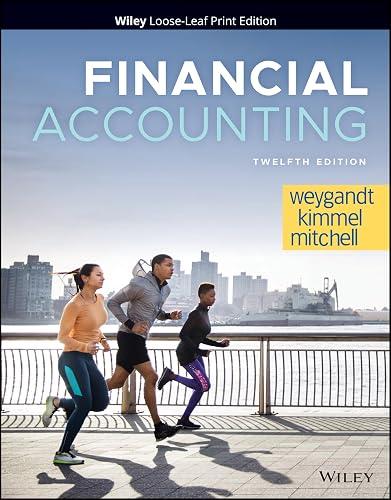
Book summary
by Jerry J. Weygandt
Premium summary · Opens in the app · 30 min read
Every business tells a story. Some stories are about growth and ambition. Others are about survival and adaptation. But beneath every business story lies a deeper narrative, one written not in words but in numbers. That narrative is the story of resources, obligations, revenues, expenses, cash flows, and ownership claims. It is the story of what a business owns, what it owes, and what it has earned. Learning to read that story is not a technical skill reserved for accountants. It is a fundamenta
**Author:** Jerry J. Weygandt
**Estimated Reading Time:** 45 minutes
**What You'll Learn:**
- Why accounting is the essential language of business and how to speak it fluently - How the accounting equation forms the foundation of every financial statement - How to read, interpret, and analyze financial statements with confidence - How ethical judgment shapes financial reporting and why it matters - How internal controls protect organizations from fraud and error - How inventory decisions affect profitability and financial position - How corporations raise capital and account for share transactions - How to evaluate a company's liquidity, profitability, and solvency
**Who This Book Is For:**
This book is for anyone who wants to understand how businesses measure, communicate, and use financial information. Whether you are a manager making operational decisions, an investor evaluating opportunities, a student building foundational knowledge, or an entrepreneur trying to understand your own company's numbers, the principles in this book will give you the tools to see clearly through the numbers. No prior accounting knowledge is required. What is required is a willingness to think carefully about how economic activity gets recorded, reported, and interpreted.
Every business tells a story. Some stories are about growth and ambition. Others are about survival and adaptation. But beneath every business story lies a deeper narrative, one written not in words but in numbers. That narrative is the story of resources, obligations, revenues, expenses, cash flows, and ownership claims. It is the story of what a business owns, what it owes, and what it has earned. Learning to read that story is not a technical skill reserved for accountants. It is a fundamental capability for anyone who wants to understand how organizations actually work. Most people encounter accounting through its outputs. They see income statements in annual reports, balance sheets in investor presentations, or cash flow statements in credit applications. These documents can seem dense, formal, and intimidating. The terminology feels foreign. The numbers appear disconnected from the lived reality of running a business. As a result, many people treat financial statements as something to be delegated to specialists, something to glance at rather than genuinely understand. This is a costly mistake. The people who build successful careers, make wise investments, and lead thriving organizations share a common trait: they know their numbers cold. They understand what the financial statements are telling them about performance, risk, and opportunity. They can see the relationship between a pricing decision and a profit margin. They can trace the connection between inventory management and cash flow. They can recognize when a balance sheet signals strength and when it signals hidden fragility. Jerry Weygandt wrote Financial Accounting to bridge the gap between accounting as a…
Continue reading in the MinuteRead app
Get the complete 30-minute summary of Financial Accounting
Get the complete summary in the app**The accounting equation is the foundation.** Assets equal liabilities plus equity. Every transaction affects this equa
**Revenue is recognized when earned, not when cash is received.** This is the essence of accrual accounting.
**Expenses are recognized when incurred, not when cash is paid.** This is the matching principle.
**Ethical behavior is essential for credible financial reporting.** Without integrity, the numbers mean nothing.
**Adjusting entries ensure that revenues and expenses are recorded in the correct period.** They are essential for accur
**Internal controls protect assets and ensure reliable records.** Segregation of duties is one of the most important con
"Financial Accounting" is a strong fit if you want practical ideas around accounting, business, finance, especially themes like **the accounting equation is the foundation.** assets equal liabilities plus equity. every transaction affects this equa; **revenue is recognized when earned, not when cash is received.** this is the essence of accrual accounting. The MinuteRead summary distills these concepts into a focused read, whether you're deciding whether to buy the book or applying its lessons at work.
Motivated to help readers with to be good at your business, Jerry J. Weygandt wrote “Financial Accounting” to package those ideas for a fast, focused read. In “Financial Accounting”, Jerry J. Weygandt focuses on to be good at your business. Through “Financial Accounting”, Jerry J. Weygandt distills the core ideas on accounting into lessons readers can absorb in a single short sitting. Readers turn to this work when they want Jerry J. Weygandt's perspective on the subject without working through …
Continue Reading
Access the complete 30-minute summary and thousands more nonfiction books in the MinuteRead app.

Continue reading the complete summary in the MinuteRead app.