MinuteRead
30 min
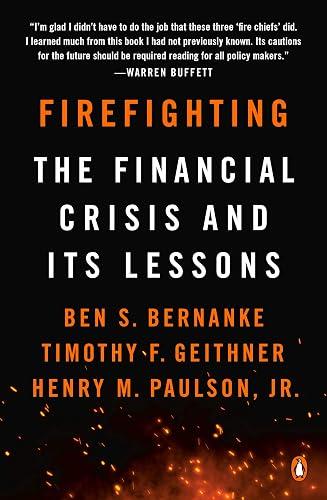
In the autumn of 2008, the global financial system came closer to complete collapse than at any point since the Great Depression. Banks stopped lending to one another. Money market funds, long considered as safe as cash, experienced runs. Major financial institutions that had survived wars, depressions, and decades of market turbulence vanished overnight or were absorbed in emergency mergers. The credit markets that businesses rely on to meet payroll, finance inventory, and fund expansion simply
**Author:** Ben S. Bernanke
**Estimated Reading Time:** 45 minutes
**What You'll Learn:** How the 2008 financial crisis unfolded from the inside, why the financial system proved so fragile, what emergency measures prevented a second Great Depression, and why future crises remain inevitable despite regulatory reforms.
**Who This Book Is For:** Anyone who wants to understand how modern finance actually works, why economies collapse, and what it takes to stop a global panic. This is essential reading for investors, policymakers, students of economics, and citizens who want to grasp the forces that shape their financial lives.
In the autumn of 2008, the global financial system came closer to complete collapse than at any point since the Great Depression. Banks stopped lending to one another. Money market funds, long considered as safe as cash, experienced runs. Major financial institutions that had survived wars, depressions, and decades of market turbulence vanished overnight or were absorbed in emergency mergers. The credit markets that businesses rely on to meet payroll, finance inventory, and fund expansion simply froze. Most people remember the headlines: Lehman Brothers collapsing, Congress debating a $700 billion bailout, stock markets plunging around the world. But few understand what actually happened behind the scenes, why the crisis unfolded the way it did, and how close the world came to a catastrophic economic depression. Ben Bernanke was there. As chairman of the Federal Reserve from 2006 to 2014, he sat at the center of the storm. He made decisions that affected hundreds of millions of people. He worked around the clock with Treasury secretaries, foreign central bankers, and regulators to prevent a complete meltdown of the global economy. And in this book, he offers something rare: an honest, detailed account of what it actually takes to fight a financial fire. The book's central metaphor is apt. Financial crises are like fires. They start small, often in overlooked corners of the system. They spread through interconnected structures. They feed on fear and uncertainty. And if they are not contained early, they can consume everything in their path. But fighting financial fires requires tools that are not obvious to the casual observer. You cannot simply pour water on a panic. You cannot tell frightened depositors to calm down. You need specific authorities, adequate resources, and the willingness to act decisively before the flames spread beyond control. Bernanke wrote this book with two colleagues, Timothy Geithner and Henry Paulson, who served respectively as Treasury Secretary and Federal Reserve Bank of New York President during the crisis. Together, they formed the core team that designed and executed the American response to the worst financial disaster in generations. Their account is not defensive or self-congratulatory. It is a clear-eyed…
Continue reading in the MinuteRead app
Get the complete 30-minute summary of Firefighting
Get the complete summary in the appFinance is inherently fragile because banks borrow short-term and lend long-term. This mismatch creates a vulnerability
Financial crises build slowly through the accumulation of vulnerabilities that are often invisible until it is too late.
The 2008 crisis was systemic, not the result of a single cause or bad actor. It emerged from the interaction of many fac
Early crisis response was limited by inadequate tools. The Federal Reserve could lend, but it could not inject capital o
The Lehman Brothers bankruptcy marked the turning point. It transformed a financial disruption into a full-scale panic.
TARP and other emergency measures prevented a second Great Depression. Stabilization must take priority over retribution
"Firefighting" is a strong fit if you want practical ideas around economics, finance, business, especially themes like finance is inherently fragile because banks borrow short-term and lend long-term. this mismatch creates a vulnerability; financial crises build slowly through the accumulation of vulnerabilities that are often invisible until it is too late. The MinuteRead summary distills these concepts into a focused read, whether you're deciding whether to buy the book or applying its lessons at work.
Motivated to help readers with finance, Ben S. Bernanke wrote “Firefighting” to package those ideas for a fast, focused read. In “Firefighting”, Ben S. Bernanke focuses on finance. Through “Firefighting”, Ben S. Bernanke distills the core ideas on economics into lessons readers can absorb in a single short sitting. Readers turn to this work when they want Ben S. Bernanke's perspective on the subject without working through the entire original volume. Ben Shalom Bernanke ( bər-NANG-kee; born Dece…
View all summaries by Ben S. BernankeContinue Reading
Access the complete 30-minute summary and thousands more nonfiction books in the MinuteRead app.

Continue reading the complete summary in the MinuteRead app.