MinuteRead
30 min
Book summary
Premium summary · Opens in the app · 30 min read
We live under the illusion that we understand the world far better than we actually do. We build models, consult experts, read forecasts, and make plans as if the future will unfold in an orderly, predictable manner. Then something happens that no one anticipated. A market collapses. A pandemic sweeps the globe. A technology emerges from nowhere and rewrites entire industries. A political revolution topples what seemed like a permanent order.
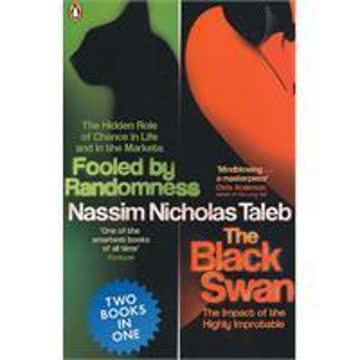
**Author:** Nassim Nicholas Taleb
**Estimated Reading Time:** 45 minutes
**What You'll Learn:**
- Why some systems break under pressure while others grow stronger - How randomness and unpredictability shape history, markets, and life - Why experts and forecasters are usually wrong about big events - How to build a life that benefits from uncertainty instead of fearing it - The hidden ethical failures that arise when risk and reward are separated
**Who This Book Is For:**
Anyone who has ever been surprised by a market crash, a career setback, a medical misdiagnosis, or a world event that no one saw coming. If you make decisions under uncertainty, which is everyone, this book will change how you think about risk, knowledge, and the future.
We live under the illusion that we understand the world far better than we actually do. We build models, consult experts, read forecasts, and make plans as if the future will unfold in an orderly, predictable manner. Then something happens that no one anticipated. A market collapses. A pandemic sweeps the globe. A technology emerges from nowhere and rewrites entire industries. A political revolution topples what seemed like a permanent order. These events are not anomalies. They are the norm. Nassim Nicholas Taleb spent two decades as a quantitative trader, watching brilliant people with sophisticated models lose fortunes while others, often less credentialed and less articulate, quietly prospered. The difference was not intelligence or information. It was a fundamental misunderstanding of randomness. The losers believed they could predict. The winners understood they could not, and positioned themselves accordingly. The problem runs deeper than finance. Modern society has become extraordinarily fragile precisely because we have convinced ourselves that we can control volatility, eliminate uncertainty, and engineer away risk. We have built systems that appear stable in calm conditions but collapse catastrophically when real randomness arrives. We have created institutions where decision-makers enjoy the upside of their choices while others bear the downside. We have developed an intellectual culture that rewards confident predictions over humble ignorance, even though the predictions fail again and again. Taleb's work addresses a simple question: How do we live wisely in a world we cannot fully understand or predict? His answer is not to despair or retreat into passivity. It is to recognize that uncertainty is not merely something to endure. It is something to use. Some things benefit from shocks. They thrive and grow when exposed to volatility, randomness, disorder, and stressors. They love adventure, risk, and uncertainty. This property, which Taleb calls antifragility, is the key to understanding why some systems survive and evolve while others collapse. Consider the difference between a candle and a fire. A candle is fragile. A gust…
Continue reading in the MinuteRead app
Get the complete 30-minute summary of Fooled By Randomness & The Black Swan
Get the complete summary in the appSome things benefit from shocks. They are antifragile. Seek to be one of them.
The most important events are the ones that have never happened before. Do not trust predictions based on past data.
Your mind weaves stories to explain randomness. Be suspicious of your own narratives.
Never benefit from the upside while others bear the downside. Demand skin in the game.
Create optionality: limited downside, unlimited upside. You do not need to predict the future to benefit from it.
Subtraction is often more powerful than addition. Remove what is harmful before adding what might be helpful.
"Fooled By Randomness & The Black Swan" is a strong fit if you want practical ideas around psychology, economics, business, especially themes like some things benefit from shocks. they are antifragile. seek to be one of them; the most important events are the ones that have never happened before. do not trust predictions based on past data. The MinuteRead summary distills these concepts into a focused read, whether you're deciding whether to buy the book or applying its lessons at work.
Nassim Nicholas Taleb is a former quantitative trader turned researcher and author. He spent 21 years in risk-taking before focusing on philosophical and probabilistic problems. Taleb's main work is the Incerto, a multivolume essay exploring uncertainty, risk, and decision-making. He has also published numerous scholarly papers on related topics. Currently, Taleb serves as Distinguished Professor of Risk Engineering at NYU's Tandon School of Engineering. His research focuses on systems that can …
View all summaries by Nassim Nicholas TalebContinue Reading
Access the complete 30-minute summary and thousands more nonfiction books in the MinuteRead app.

Continue reading the complete summary in the MinuteRead app.