MinuteRead
30 min
Book summary
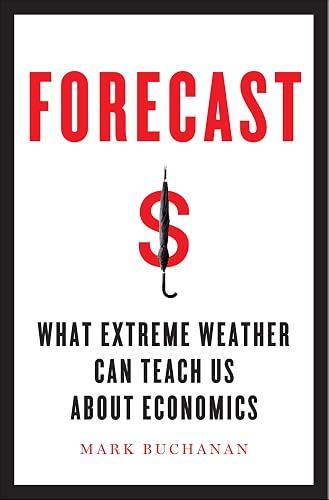
by Mark Buchanan
Premium summary · Opens in the app · 30 min read
In the autumn of 2008, the global financial system came closer to complete collapse than at any point since the Great Depression. Trillions of dollars in wealth evaporated. Major financial institutions that had seemed permanent, institutions that had survived wars and depressions, either failed or required government rescue. Millions of people lost homes, jobs, and savings.
### By Mark Buchanan
**Estimated Reading Time:** 42 minutes
**What You'll Learn:**
Why markets crash despite our best theories. How positive feedback loops create booms and busts. What weather forecasting can teach us about economic prediction. Why equilibrium economics fails and what should replace it. How hidden leverage and interconnectedness create systemic risk. What physics reveals about the true nature of financial markets.
**Who This Book Is For:**
Anyone who has ever wondered why economists failed to predict the 2008 financial crisis. Investors seeking a deeper understanding of market behavior. Policymakers and regulators grappling with systemic risk. Students of economics looking for alternatives to traditional equilibrium theory. Curious readers who sense that something is fundamentally wrong with how we think about markets.
In the autumn of 2008, the global financial system came closer to complete collapse than at any point since the Great Depression. Trillions of dollars in wealth evaporated. Major financial institutions that had seemed permanent, institutions that had survived wars and depressions, either failed or required government rescue. Millions of people lost homes, jobs, and savings. What made this crisis particularly disturbing was not just its severity but its unexpectedness. In the years leading up to the collapse, the dominant economic models suggested that such a thing could not happen. The prevailing wisdom held that markets were efficient, self-correcting mechanisms that would always return to equilibrium. Risk, according to the sophisticated mathematical models used by banks and regulators, was well understood and properly managed. The crisis revealed these beliefs to be dangerously wrong. Mark Buchanan, a physicist by training, argues that the failure was not merely a matter of poor execution or insufficient data. The failure was conceptual. The entire framework through which economists understood markets was built on assumptions that had been abandoned by the natural sciences decades earlier. For more than a century, physics has grappled with systems that defy simple equilibrium analysis. Weather systems, earthquakes, ecosystems, and turbulent fluids all exhibit behavior that cannot be understood by assuming they naturally settle into stable states. These systems are complex, adaptive, and prone to sudden, dramatic shifts. They are characterized by feedback loops, cascading failures, and emergent phenomena that cannot be predicted by analyzing their components in isolation. Financial markets, Buchanan argues, are such systems. They are not machines that tend toward balance. They are more like weather systems: complex, dynamic, and capable of generating storms that no one predicted. The problem is that economics, unlike physics, never fully absorbed this lesson. While physicists abandoned the search for simple, universal equilibrium theories decades ago, economists continued to build increasingly elaborate models based on assumptions that real markets repeatedly violate. The result is a discipline that has become…
Continue reading in the MinuteRead app
Get the complete 30-minute summary of Forecast
Get the complete summary in the appMarkets are complex systems prone to sudden shifts and extreme events, not stable machines that tend toward equilibrium.
Positive feedback loops drive market dynamics: rising prices attract buyers, which pushes prices higher, which attracts
Equilibrium economics fails because it rests on assumptions that are mathematically convenient but empirically false.
Leverage and interconnectedness create hidden fragilities that can amplify small shocks into systemic crises.
High-frequency trading introduces new vulnerabilities, including flash crashes and liquidity illusion.
Human psychology and social influence shape market outcomes in ways that rational choice theory cannot capture.
"Forecast" is a strong fit if you want practical ideas around economics, science, finance, especially themes like markets are complex systems prone to sudden shifts and extreme events, not stable machines that tend toward equilibrium; positive feedback loops drive market dynamics: rising prices attract buyers, which pushes prices higher, which attracts. The MinuteRead summary distills these concepts into a focused read, whether you're deciding whether to buy the book or applying its lessons at work.
Motivated to help readers with there is nothing like a revolution, Mark Buchanan wrote “Forecast” to package those ideas for a fast, focused read. In “Forecast”, Mark Buchanan focuses on there is nothing like a revolution. Through “Forecast”, Mark Buchanan distills the core ideas on economics into lessons readers can absorb in a single short sitting. Readers turn to this work when they want Mark Buchanan's perspective on the subject without working through the entire original volume. Mark Buchan…
Continue Reading
Access the complete 30-minute summary and thousands more nonfiction books in the MinuteRead app.

Continue reading the complete summary in the MinuteRead app.