MinuteRead
30 min
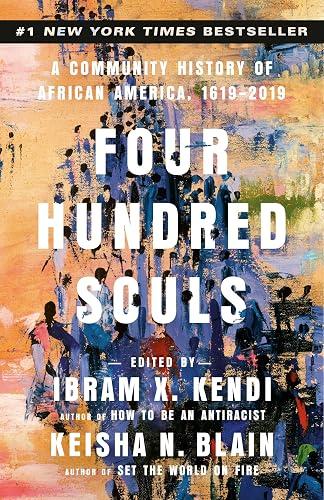
Four Hundred Souls tells the history of African Americans from the perspective of 90 authors who share insights on 400 years of conflict, oppression, and faith that with all the hard work of those fighting for equality, things would get better someday.
Four Hundred Souls tells the history of African Americans from the perspective of 90 authors who share insights on 400 years of conflict, oppression, and faith that with all the hard work of those fighting for equality, things would get better someday.
In the 17th century, ships leaving Liverpool transported an estimated 1.5 million enslaved African people to the Americas. Their motive? Money.
The elite in England was running a very profitable business with their American colonies. They were able to bring back valuable natural resources to sell in foreign markets. These goods were produced by slaves, meaning it was cheap but exploitative.
In 1676, tensions between the colonial working class and the upper class grew worse. Together, Black and white slaves led a rebellion against their colonial governor. The elite crushed the insurrection but became scared of a multiracial rebellion.
The Virginia Assembly created laws to make sure this couldn’t happen. They put limits on Black residents, such as restricting their freedom to move or carry anything that could be considered a weapon. Meanwhile, the white insurrectionists did not have such restrictions, making them feel empowered against their former allies.
Laws like these fixed Black people in the spot of lowest class on society’s hierarchy. Another law in 1667 said that Christian baptism didn’t mean an enslaved person had freedoms. This meant the church couldn’t protect Black people, though it did give them community and hope.
Unfortunately, this was only the beginning of Black oppression in America. In 1789, America elected its first president, George Washington. But in reality, only a small fraction of the population elected him: only white males over age 21. Naturally, their choice was a wealthy white war hero who was also a slave owner. Slave ownership was common among presidents before the Civil War. In fact, 12 of them held enslaved people. So much for “leaders of the free world.” But if the truth is told, even the documents that America was built around enshrined the institution of slavery. While the word slavery isn’t said, it basically allowed slave owners to keep enslaved people under the guise of upholding citizens’ property rights. From there, subsequent laws only strengthened the institution of slavery. In 1793, the Fugitive Slave Act was passed. This meant that if an enslaved individual could escape their bondage and move to a “free” state, they could be recaptured and brought back into slavery. In addition, it also made it illegal to help an escapee. So as America grew, slavery grew too. People from the South became extremely wealthy as a result of their slave labor on cotton plantations. Many places across America were funded and built by the work of the…
Continue reading in the MinuteRead app
Get the complete 5-minute summary of Four Hundred Souls
Get the complete summary in the appAnti-Black laws slowly entrenched slavery into society.
After the American Revolution, slavery exploded.
The struggle for equality has been going on for a long time and continues today through Black Lives Matter.
"Four Hundred Souls" is a strong fit if you want practical ideas around culture, history, mindfulness, especially themes like anti-black laws slowly entrenched slavery into society; after the american revolution, slavery exploded. The MinuteRead summary distills these concepts into a focused read, whether you're deciding whether to buy the book or applying its lessons at work.
Motivated to help readers with four Hundred Souls tells the history of African Americans from the perspective of 90 authors who share, telling us the insights on the 400 years of oppression and conflict wrote “Four Hundred Souls” to package those ideas for a fast, focused read. In “Four Hundred Souls”, telling us the insights on the 400 years of oppression and conflict focuses on four Hundred Souls tells the history of African Americans from the perspective of 90 authors who share. Through “Four…
View all summaries by Ibram X. Kendi - editorContinue Reading
Access the complete 5-minute summary and thousands more nonfiction books in the MinuteRead app.

Continue reading the complete summary in the MinuteRead app.