MinuteRead
30 min
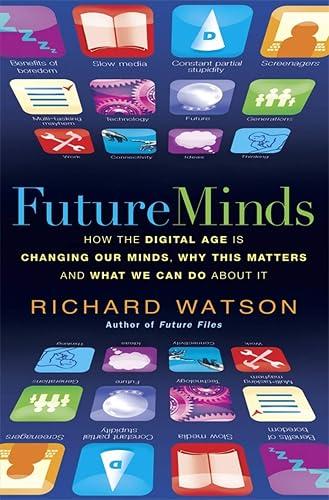
Book summary
by Richard Watson
Premium summary · Opens in the app · 30 min read
There is a quiet crisis unfolding inside our heads. It does not make headlines. It does not trigger emergency alerts. But it is reshaping how we think, how we create, how we solve problems, and how we understand ourselves.
**Author:** Richard Watson **Estimated Reading Time:** 42 minutes
**What You'll Learn:**
- Why the digital age is rewiring your brain in ways you may not notice - How constant connectivity undermines focus, creativity, and deep thought - Why physical spaces, sleep, and boredom matter more than you think - What education systems are getting wrong and how to fix them - How to reclaim your cognitive abilities in an age of distraction
**Who This Book Is For:**
Anyone who has ever felt their attention fragment while scrolling a feed, struggled to read a book without reaching for a phone, or wondered whether technology is making us smarter or simply more distracted. If you sense that something important is being lost in the rush toward digital everything, this book will help you understand what is happening and what you can do about it.
There is a quiet crisis unfolding inside our heads. It does not make headlines. It does not trigger emergency alerts. But it is reshaping how we think, how we create, how we solve problems, and how we understand ourselves. The crisis is this: we are trading deep thought for shallow distraction, and most of us do not even realize the exchange is happening. Richard Watson wrote Future Minds to sound an alarm about this transformation. He is not anti-technology. He is not nostalgic for a pre-digital past. He is a futurist who has spent decades studying trends and helping organizations think about what comes next. But in his work, he noticed something troubling. The very tools that promised to make us smarter were, in many cases, making us less capable of the kind of thinking that actually solves hard problems. Consider a simple question: when was the last time you sat with a difficult idea for an hour without checking a device? When did you last let your mind wander without reaching for a screen to fill the empty space? When did you last read something longer than a few paragraphs and truly absorb it? For most people, the honest answer is uncomfortable. The digital era has given us extraordinary gifts. We carry the sum of human knowledge in our pockets. We can connect with anyone, anywhere, instantly. We can access information that would have required a library visit just twenty years ago. These are genuine miracles. But every gift comes with a cost. The cost here is our attention. Our ability to focus. Our capacity for the kind of slow, patient, unstructured thinking that produces genuine insight. Watson argues that the human brain is being reshaped by our digital environment. Neuroplasticity, the brain's ability to rewire itself based on experience, means that our mental habits are not…
Continue reading in the MinuteRead app
Get the complete 30-minute summary of Future Minds
Get the complete summary in the appYour brain is constantly rewiring itself based on how you use it. Choose your habits wisely.
Multitasking is a myth. It reduces productivity, quality, and well-being.
Your physical environment shapes your thinking. Create spaces that support focus and creativity.
Sleep and boredom are essential for cognitive function. Do not sacrifice them.
Analog experiences offer unique cognitive benefits. Maintain a balance between digital and analog.
Education needs to foster creativity and critical thinking, not just memorization.
"Future Minds" is a strong fit if you want practical ideas around psychology, technology, science, especially themes like your brain is constantly rewiring itself based on how you use it. choose your habits wisely; multitasking is a myth. it reduces productivity, quality, and well-being. The MinuteRead summary distills these concepts into a focused read, whether you're deciding whether to buy the book or applying its lessons at work.
Motivated to help readers with "Given enough eyeballs, Richard Watson wrote “Future Minds” to package those ideas for a fast, focused read. In “Future Minds”, Richard Watson focuses on "Given enough eyeballs. Through “Future Minds”, Richard Watson distills the core ideas on psychology into lessons readers can absorb in a single short sitting. Readers turn to this work when they want Richard Watson's perspective on the subject without working through the entire original volume. Richard Watson (17…
Continue Reading
Access the complete 30-minute summary and thousands more nonfiction books in the MinuteRead app.

Continue reading the complete summary in the MinuteRead app.