MinuteRead
30 min
Book summary
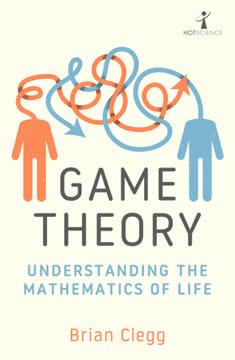
by Brian Clegg
Premium summary · Opens in the app · 30 min read
Every day you make decisions that depend on what other people will do. Should you trust a business partner? How much should you bid in an auction? When should you compete and when should you cooperate? These questions feel deeply human, shaped by intuition, emotion, and experience. Yet beneath them lies a mathematical structure that can be understood, modeled, and sometimes predicted.
### By Brian Clegg
**Estimated Reading Time:** 45 minutes
**What You'll Learn**
How mathematical models reveal the hidden structure of everyday decisions. Why cooperation sometimes beats competition. What the Prisoner's Dilemma teaches about trust. How auctions can be designed to reveal truth. Where game theory succeeds and where it fails in predicting human behavior.
**Who This Book Is For**
Anyone who makes decisions in situations where other people's choices matter. Business leaders, negotiators, policymakers, students of economics and biology, and curious readers who want to understand why people cooperate, compete, and sometimes act against their own interests.
Every day you make decisions that depend on what other people will do. Should you trust a business partner? How much should you bid in an auction? When should you compete and when should you cooperate? These questions feel deeply human, shaped by intuition, emotion, and experience. Yet beneath them lies a mathematical structure that can be understood, modeled, and sometimes predicted. Game theory emerged from a simple observation. The logic used to analyze games like poker or chess, where players make strategic choices with defined outcomes, can be applied to real-world situations. A business negotiation is a game. A political campaign is a game. The evolution of animal behavior is a game. In each case, players make decisions that affect not only their own outcomes but the outcomes of others. The field began with mathematicians and economists who wanted to understand how rational people make choices. What they discovered was both powerful and surprising. Sometimes rational individual decisions lead to terrible collective outcomes. Sometimes cooperation emerges naturally from self-interest. Sometimes the best strategy is to be unpredictable. Brian Clegg's exploration of game theory reveals why this mathematical approach to decision-making has become essential across disciplines. Economists use it to understand markets. Biologists use it to explain why animals cooperate. Military strategists use it to plan conflicts. Computer scientists use it to design algorithms and auction systems. The central insight is that game theory provides a way to think clearly about strategic situations. It strips away irrelevant details and exposes the underlying structure of a decision. It shows what information matters, what incentives drive behavior, and what outcomes are possible. But game theory is not a crystal ball. It cannot perfectly predict human behavior because humans are not perfectly rational. We are influenced by emotions, biases, social norms, and cognitive limitations. Game theory acknowledges this complexity even as it provides a framework for understanding it. This book will take you through the essential ideas of game theory. You will learn about the Nash equilibrium, a concept that explains why people often get stuck in suboptimal situations. You will explore the Prisoner's Dilemma, the…
Continue reading in the MinuteRead app
Get the complete 30-minute summary of Game Theory
Get the complete summary in the appGame theory models strategic interactions as games with players, strategies, and payoffs.
A Nash equilibrium is a state where no player can improve their outcome by changing strategy alone.
The Prisoner's Dilemma shows that individual rationality can lead to collectively bad outcomes.
Repeated interactions can make cooperation rational, even in Prisoner's Dilemma situations.
Tit-for-tat is a simple winning strategy: cooperate first, then mirror your opponent.
The shadow of the future constrains present behavior.
"Game Theory" is a strong fit if you want practical ideas around science, economics, mathematics, especially themes like game theory models strategic interactions as games with players, strategies, and payoffs; a nash equilibrium is a state where no player can improve their outcome by changing strategy alone. The MinuteRead summary distills these concepts into a focused read, whether you're deciding whether to buy the book or applying its lessons at work.
Brian Clegg is a prolific science writer with multiple bestselling books, including "Inflight Science" and "The God Effect." He holds Masters degrees from Cambridge and Lancaster Universities in Natural Sciences and Operational Research, respectively. Clegg is a popular speaker at academic institutions and science festivals, and has contributed to various media outlets. He edits a science book review website and is a Fellow of the Royal Society of Arts. His works have been translated into numero…
View all summaries by Brian CleggContinue Reading
Access the complete 30-minute summary and thousands more nonfiction books in the MinuteRead app.

Continue reading the complete summary in the MinuteRead app.