MinuteRead
30 min
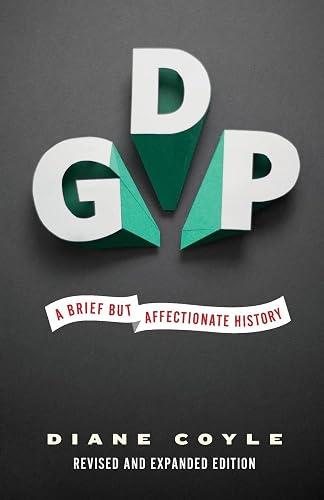
Book summary
by Diane Coyle
Premium summary · Opens in the app · 30 min read
Every three months, a number appears in newspapers, on television screens, and in government briefings around the world. That number, Gross Domestic Product, tells us whether the economy is growing or shrinking. It shapes interest rates, stock markets, election campaigns, and the daily decisions of businesses and households. A good GDP report can lift a government's fortunes. A bad one can end careers.
**A Brief but Affectionate History**
*By Diane Coyle*
**Estimated Reading Time:** 2 hours 15 minutes
**What You'll Learn**
How a statistic invented to fight a war became the most influential number in modern politics. Why GDP shapes government policy, financial markets, and public debate. What GDP actually measures, what it misses, and why its limitations matter more now than ever before. How economists have struggled for centuries to define the boundaries of the economy. And what the future of economic measurement might look like in a world of digital services, environmental crisis, and growing inequality.
**Who This Book Is For**
Anyone who has ever wondered why politicians obsess over a single number. Readers curious about how economic statistics shape the world they live in. Students, professionals, and citizens who want to understand the hidden assumptions behind headlines about growth, recessions, and prosperity. And anyone who suspects that measuring the economy is more complicated, and more interesting, than it appears.
Every three months, a number appears in newspapers, on television screens, and in government briefings around the world. That number, Gross Domestic Product, tells us whether the economy is growing or shrinking. It shapes interest rates, stock markets, election campaigns, and the daily decisions of businesses and households. A good GDP report can lift a government's fortunes. A bad one can end careers. Yet almost nobody knows where this number comes from, what it actually measures, or how it came to dominate public life. We treat GDP as if it were a natural phenomenon, like the weather or the tides. We assume it simply exists, waiting to be measured. But GDP is not a fact of nature. It is an invention. More precisely, it is one of the many inventions of World War II. Diane Coyle's book tells the story of that invention. It traces how a wartime necessity became the defining statistic of modern government. It explains why the way we measure the economy shapes the way we think about it, and why the way we think about it shapes the policies we pursue. The book is not an attack on GDP. It is an affectionate history of a powerful but imperfect tool. The problem Coyle addresses is straightforward. We have built our economic policies, our political debates, and our understanding of progress around a single number that was never designed to carry so much weight. GDP was created to answer a specific question: how much can this country produce in a war? It was not designed to measure welfare, happiness, sustainability, or the quality of life. Yet over time, it has become a proxy for all of these things. This matters because what we measure influences what we value.…
Continue reading in the MinuteRead app
Get the complete 30-minute summary of GDP
Get the complete summary in the appGDP was invented during World War II to measure a nation's productive capacity for war, not its welfare.
GDP is a construction, not a natural phenomenon. It is based on choices about what to include and what to exclude.
GDP can be measured in three ways: output, expenditure, and income. The expenditure approach is the most familiar: GDP =
The production boundary defines what counts as economic activity. It excludes unpaid work and includes some activities t
GDP and Keynesian economics were mutually reinforcing. GDP provided the measure of aggregate economic activity that Keyn
The 1970s stagflation crisis challenged the confidence in macroeconomic management and revealed the limitations of GDP.
"GDP" is a strong fit if you want practical ideas around economics, history, business, especially themes like gdp was invented during world war ii to measure a nation's productive capacity for war, not its welfare; gdp is a construction, not a natural phenomenon. it is based on choices about what to include and what to exclude. The MinuteRead summary distills these concepts into a focused read, whether you're deciding whether to buy the book or applying its lessons at work.
Motivated to help readers with one of the many inventions of World War II, Diane Coyle wrote “GDP” to package those ideas for a fast, focused read. Through “GDP”, Diane Coyle distills the core ideas on economics into lessons readers can absorb in a single short sitting. Readers turn to this work when they want Diane Coyle's perspective on the subject without working through the entire original volume. The book is structured so each chapter highlights a practical lesson from Diane Coyle's work. D…
Continue Reading
Access the complete 30-minute summary and thousands more nonfiction books in the MinuteRead app.

Continue reading the complete summary in the MinuteRead app.