MinuteRead
30 min
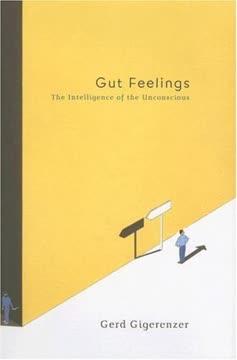
For decades, the prevailing wisdom about human decision-making has been remarkably consistent: we are flawed. Our intuitions are biased. Our gut feelings are unreliable. Our snap judgments are the enemy of good choices. The rational ideal, we are told, is to gather as much information as possible, weigh every option carefully, and reach a conclusion through deliberate analysis.
### By Gerd Gigerenzer
**Estimated Reading Time:** 42 minutes
**What You'll Learn**
Why your snap judgments are often smarter than weeks of careful analysis. How ignorance can be a competitive advantage. When to trust your instincts and when to reach for more information. The hidden rules your brain uses to make fast, accurate decisions. Why simple strategies beat complex ones in an uncertain world.
**Who This Book Is For**
Anyone who has ever been told to "think things through" and found that more analysis made the decision harder. Professionals who make high-stakes calls under time pressure. Curious minds who want to understand what really happens in the brain when we decide in a split second. And anyone tired of the myth that human intuition is inherently flawed.
For decades, the prevailing wisdom about human decision-making has been remarkably consistent: we are flawed. Our intuitions are biased. Our gut feelings are unreliable. Our snap judgments are the enemy of good choices. The rational ideal, we are told, is to gather as much information as possible, weigh every option carefully, and reach a conclusion through deliberate analysis. There is just one problem with this story. It does not match how successful decisions actually happen. Consider a baseball player trying to catch a fly ball. The ball leaves the bat at high speed, arcs through the air, and descends toward the outfield. A physicist could calculate the ball's trajectory using equations involving initial velocity, launch angle, air resistance, and spin. But no outfielder has ever caught a ball this way. Instead, players rely on a simple unconscious rule: fix your gaze on the ball and adjust your running speed so that the angle of gaze remains constant. If the ball appears to be dropping, run back. If it appears to be rising, run forward. This simple rule, which ignores almost all available information, reliably gets the player to the right spot at the right time. This is not a story about athletic intuition being special. It is a story about how intelligent decision-making actually works. Gerd Gigerenzer, a psychologist who has spent his career studying how real people make real decisions, argues that our gut feelings are not the irrational impulses they are often made out to be. They are intelligent judgments based on unconscious rules of thumb that have been shaped by evolution and tuned to the structure of our environment. These rules are fast. They are frugal. They ignore most available information. And in many situations, they outperform the most sophisticated analytical methods available. The problem is not that intuition is flawed. The problem is that we have been taught to distrust it without understanding when it works and when it…
Continue reading in the MinuteRead app
Get the complete 30-minute summary of Gut Feelings
Get the complete summary in the appGut feelings are intelligent judgments based on unconscious rules of thumb.
Less information often leads to better decisions in uncertain environments.
The recognition heuristic: if you recognize one option but not the other, choose the recognized one.
One-reason decision making often outperforms complex analysis.
Ecological rationality: a strategy is rational relative to its environment.
The mind is an adaptive toolbox containing many heuristics for different situations.
"Gut Feelings" is a strong fit if you want practical ideas around psychology, science, neuroscience, especially themes like gut feelings are intelligent judgments based on unconscious rules of thumb; less information often leads to better decisions in uncertain environments. The MinuteRead summary distills these concepts into a focused read, whether you're deciding whether to buy the book or applying its lessons at work.
Gerd Gigerenzer is a German psychologist renowned for his work on decision-making, heuristics, and bounded rationality. As the Director of the Center for Adaptive Behavior and Cognition at the Max Planck Institute for Human Development in Berlin, he challenges the notion that cognitive biases lead to irrationality. Instead, Gigerenzer argues that heuristics are adaptive tools for efficient decision-making. His research spans various fields, including medicine and risk communication. Gigerenzer's…
View all summaries by Gerd GigerenzerContinue Reading
Access the complete 30-minute summary and thousands more nonfiction books in the MinuteRead app.

Continue reading the complete summary in the MinuteRead app.