MinuteRead
30 min
Book summary
by Richard Layard
Premium summary · Opens in the app · 30 min read
Most of us want to be happy. We organize our lives around this quiet, persistent goal. We choose careers, partners, homes, and hobbies based on a simple calculation: will this make my life better? Will this make me happier?
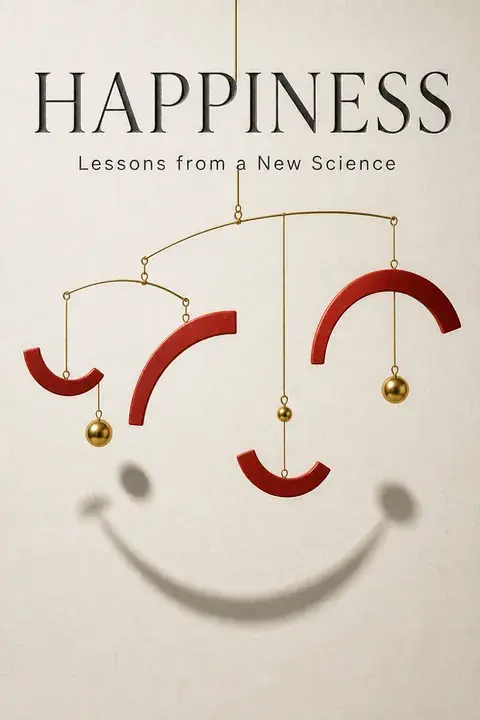
**Lessons from a New Science** *By Richard Layard*
**Estimated Reading Time:** 45 minutes
**What You'll Learn** Why happiness can and should be measured scientifically. How economic growth stopped making us happier. What actually drives well-being according to decades of research. Why social comparison poisons satisfaction. How mental health became the largest source of misery in modern societies. What governments, communities, and individuals can do to build genuinely happier lives.
**Who This Book Is For** Anyone who has ever wondered why more money does not bring more joy. Policy makers searching for better measures of progress than GDP. People struggling to understand why life feels harder despite material abundance. And anyone ready to rethink what truly matters.
Most of us want to be happy. We organize our lives around this quiet, persistent goal. We choose careers, partners, homes, and hobbies based on a simple calculation: will this make my life better? Will this make me happier? Yet something strange has happened in the wealthiest societies on earth. Over the past fifty years, incomes have risen dramatically. Houses have grown larger. Cars have become safer and more luxurious. Televisions have multiplied. Food has become more abundant and varied. Medical care has extended our lives. By almost every material measure, life in developed countries has improved beyond what previous generations could have imagined. And yet, when researchers ask people how happy they are, the numbers have barely moved. In the United States, the United Kingdom, Japan, and across Western Europe, average happiness has remained stubbornly flat despite decades of economic growth. Something is clearly wrong. Richard Layard, one of Britain's most respected economists, spent years studying labor markets, unemployment, and inequality. But gradually he realized that the ultimate question underlying all economic policy was simpler and more fundamental than he had been trained to ask: does any of this actually make people happier? This book is his answer. It brings together decades of research from psychology, neuroscience, economics, and sociology to build a new science of happiness. Layard argues that happiness is not a vague, subjective feeling that resists measurement. It is a real phenomenon, rooted in brain activity, shaped by evolution, and measurable through careful scientific methods. And once we accept that happiness can be measured, we must confront an uncomfortable truth: our societies are not designed to maximize it. The problem is not just personal. It is structural. Our economies reward endless striving. Our cultures encourage constant comparison. Our policies prioritize growth over well-being. Our healthcare systems treat physical illness while neglecting the mental suffering that causes more misery than poverty or unemployment. Layard does not offer simple solutions or cheerful platitudes. He offers evidence. He shows why social relationships matter…
Continue reading in the MinuteRead app
Get the complete 30-minute summary of Happiness
Get the complete summary in the appHappiness can be measured scientifically through self-reports, brain scans, and observable behavior.
Economic growth has not increased happiness in developed countries for over fifty years.
Social comparison and habituation explain why more money stops helping beyond a certain point.
Close relationships are the single strongest predictor of happiness.
Unemployment causes psychological damage far beyond the loss of income.
Mental illness is the largest source of misery in modern societies and is systematically undertreated.
"Happiness" is a strong fit if you want practical ideas around psychology—especially themes like happiness can be measured scientifically through self-reports, brain scans, and observable behavior; economic growth has not increased happiness in developed countries for over fifty years. The MinuteRead summary distills these concepts into a focused read, whether you're deciding whether to buy the book or applying its lessons at work.
Peter Richard Grenville Layard, Baron Layard FBA , is a British labour economist and programme director at the London School of Economics' Centre for Economic Performance. His career began with efforts to reduce unemployment and inequality, including work on the influential Robbins Committee. Layard later shifted focus to the economics of happiness, emphasizing non-income factors affecting well-being. His research on mental health led to the establishment of the Improving Access to Psychological…
Continue Reading
Access the complete 30-minute summary and thousands more nonfiction books in the MinuteRead app.

Continue reading the complete summary in the MinuteRead app.